
Why Students Need Fidget Tools: A Parent's Guide
Discover why students need fidget tools in this parent’s guide. Learn how these sensory aids enhance focus and learning for all students!
Why Students Need Fidget Tools: A Parent’s Guide
TL;DR:
- Fidget tools are handheld sensory aids that help students focus and regulate energy through controlled movement. They benefit a wide range of learners by modulating arousal, releasing mood-stabilizing chemicals, and supporting self-regulation. Effective implementation depends on intentional selection, clear expectations, and collaboration with professionals.
Fidget tools are small, handheld sensory aids designed to help students focus and regulate their energy through controlled, repetitive movement. Spinners, stress balls, magnetic sliders, and resistance bands all fall under this category, and each one works by giving the body something productive to do while the mind stays on task. The question of why students need fidget tools is not just relevant for children with ADHD or sensory processing differences. Research and occupational therapy practice show these tools benefit a wide range of learners who struggle to maintain attention in demanding classroom environments.
Why students need fidget tools: the science behind focus
Fidget tools work by modulating physiological arousal, which is the brain’s readiness to pay attention. Hand fidgeting during cognitively demanding tasks increases pupil diameter, a reliable indicator of heightened arousal, without reducing task performance. This means the body’s restless energy gets redirected into a small, controlled outlet rather than disrupting the student’s thinking or the classroom around them.
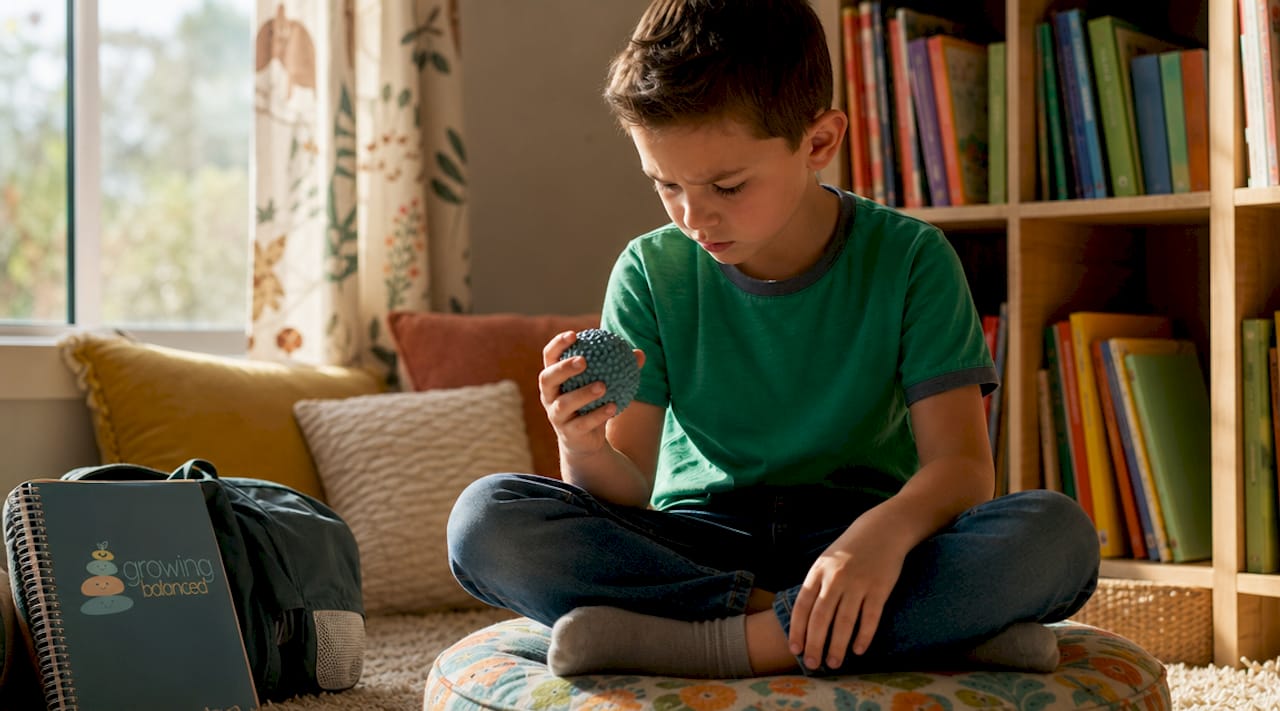
At the neurochemical level, small repetitive movements release dopamine and norepinephrine, two neurotransmitters that stabilize attention and regulate mood. Students with ADHD, anxiety, or sensory processing differences often have lower baseline levels of these chemicals, which is why they fidget naturally in the first place. Giving them a structured tool channels that impulse into something that supports rather than interrupts learning.
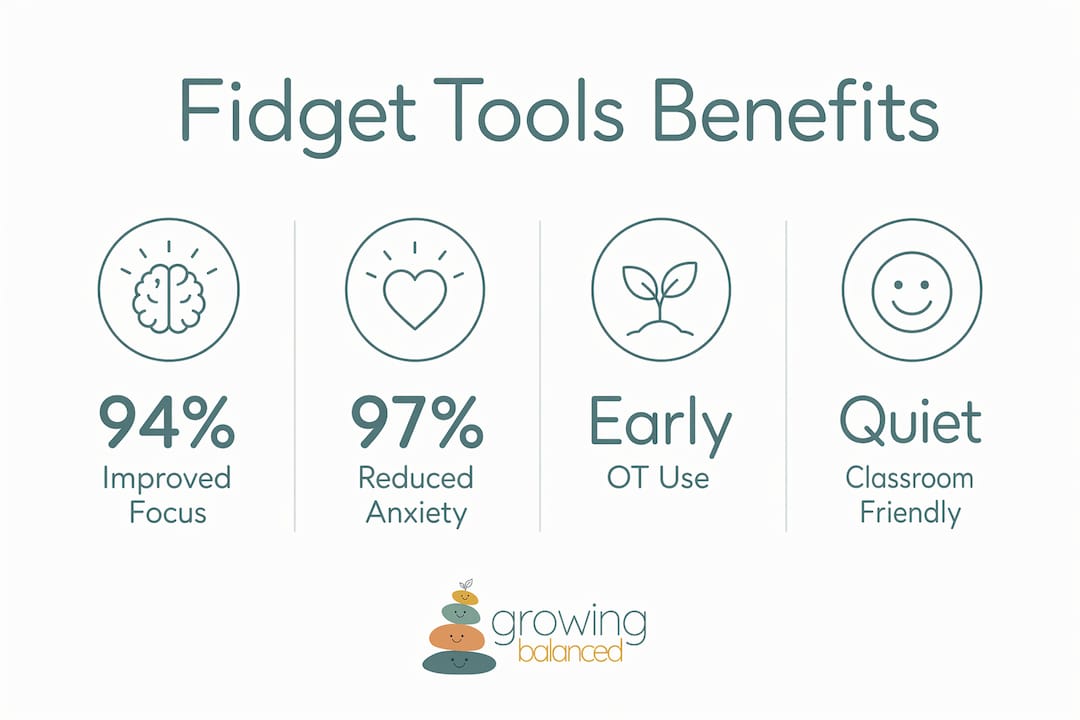
The user-reported data backs this up. 94% of users report improved focus from magnetic fidget tools, and 97% report reduced stress and anxiety. Those numbers reflect what occupational therapists observe in practice: when the right tool matches the right student, the effect on attention is real and measurable.
Pro Tip: If a student is already fidgeting with pencils, clothing, or chair legs, that behavior is a signal, not a problem. A structured fidget tool simply gives that impulse a better home.
What the research says about fidgeting for concentration
The concept of arousal regulation explains why fidgeting for concentration is not counterintuitive. The brain operates best within a specific arousal window. Too little stimulation and a student zones out. Too much and they become dysregulated. Fidget tools provide just enough sensory input to keep the nervous system in that productive middle zone.
This is especially true for students with sensory processing differences, who may need more proprioceptive or tactile input than a standard classroom provides. A resistance-based tool like a therapy putty or a squeeze ball delivers deep pressure input that calms the nervous system. A magnetic slider or spinner provides lighter tactile feedback that keeps the hands occupied without demanding visual attention. The type of input matters as much as the act of fidgeting itself.
Fidget tools are self-regulation strategies, not treatments. That distinction matters for parents and teachers. They do not fix attention deficits or replace therapeutic intervention. They give students an active role in managing their own focus and energy, which builds self-awareness over time.
Common misconceptions about fidget tools in classrooms
The biggest misconception is that any fidget tool helps any student. Unrestricted or improperly introduced fidget use frequently becomes a distraction rather than a support. Spinners that catch light, toys that click or rattle, and anything that requires visual attention pull focus away from instruction rather than anchoring it.
A second misconception is that fidget tools are only for students with formal diagnoses. Many neurotypical students benefit from tactile input during listening tasks, test-taking, or independent reading. The tool does not need a label to be useful. What it does need is intentional introduction and clear expectations.
Here are the most common pitfalls educators and caregivers report:
- Choosing visually stimulating tools like light-up spinners that attract peer attention
- Skipping the introduction and handing tools out without explaining when and how to use them
- Using one tool for all students rather than matching the fidget to individual sensory profiles
- Treating fidgets as rewards rather than regulation supports, which undermines their purpose
- Ignoring peer dynamics in classrooms where fidget use draws unwanted social attention
“Fidget tools require a system, not just a supply. Without clear expectations, even the best tool becomes a toy.” — Little Victories in Learning
Comparing fidget tool types for different sensory needs
Not all fidget aids are created equal. The table below compares common types by sensory input, noise level, visual distraction, and best use case.
| Tool type | Sensory input | Noise level | Visual distraction | Best use case |
|---|---|---|---|---|
| Stress ball / putty | Tactile, proprioceptive | Silent | Low | Listening tasks, test-taking |
| Magnetic slider | Tactile, light resistance | Silent | Low | Sustained desk work |
| Fidget spinner | Tactile, visual | Low to moderate | High | Not recommended for classrooms |
| Resistance band (chair) | Proprioceptive, movement | Silent | None | Students who need to move |
| Textured ring / bracelet | Tactile | Silent | None | Discreet use during instruction |
| Therapy putty | Tactile, proprioceptive | Silent | Low | Anxiety, fine motor support |
Discreet, silent fidgets consistently outperform visually stimulating options in classroom settings because they do not pull the student’s gaze or attract peer curiosity. A textured ring worn on the finger or a resistance band looped around a chair leg provides continuous sensory input with zero social visibility.
Matching fidgets to individual sensory profiles through trial and error is the most reliable method for finding what works. Clinical psychologists recommend offering a sensory menu of three to five options and letting the student identify which one helps them focus without becoming a distraction. You can explore adaptive tools for special education to expand that menu with OT-informed options.
Pro Tip: Start with the quietest, least visually interesting tool available. If it helps, great. If the student needs more input, move up the sensory ladder from there.
How to implement fidget tools effectively at home and school
Effective implementation depends far more on the system around the tool than on the tool itself. Teaching students clear rules and expectations about when and how to use fidgets is the single most important step. Without that foundation, even a well-chosen tool becomes a distraction.
Follow these steps to build a structure that works:
- Introduce the tool with a purpose statement. Tell the student: “This is a focus tool, not a toy. We use it when we need help keeping our hands busy so our brain can listen.”
- Let the student choose from a small selection. Ownership increases buy-in. Offer two or three options and let them identify what feels helpful.
- Set clear boundaries. Define when the tool is available, such as during independent work or read-aloud time, and when it goes away.
- Pair fidget use with other regulation supports. Fidget tools work best alongside movement breaks, predictable routines, and emotional coaching rather than as standalone fixes.
- Monitor and adjust. Check whether the student is more focused or more distracted. If the tool is becoming a toy, swap it out or revisit expectations.
- Collaborate with an occupational therapist if the student has an IEP or 504 plan. Fidget tools can be formally included as sensory supports with specific usage guidelines.
For classroom-level guidance, Growingbalanced’s resource on building a behavior support plan walks through how to integrate sensory tools into broader classroom systems.
What I’ve learned from watching fidget tools succeed and fail
After spending years working alongside occupational therapists and educators, the pattern I see most often is this: fidget tools work brilliantly for some students and do nothing for others, and the difference almost never comes down to the tool itself. It comes down to whether the adult in the room took time to teach the student how to use it.
The students who benefit most are the ones who understand what the tool is for. They can tell you, “I squeeze this when I need to focus during reading.” That self-awareness does not appear automatically. It develops when caregivers and teachers treat the fidget as a skill to practice, not a gadget to hand out. I have seen a simple textured bracelet transform a student’s ability to sit through a 20-minute lesson, and I have seen a spinner turn a quiet classroom into chaos. The tool was not the variable. The preparation was.
My honest recommendation: resist the urge to buy the most interesting-looking fidget. Start with something silent, discreet, and tactile. Build the expectation around it before the student ever touches it. And if it does not work after two weeks of consistent use, try something else. A printable sensory toolkit can help you document what works and what does not, which is especially useful when communicating with a child’s school or therapist.
— Kelsey
Explore sensory tools and routines with Growingbalanced
If you are ready to move beyond trial and error, Growingbalanced offers OT-informed resources built specifically for parents, teachers, and caregivers navigating sensory and focus challenges.
Growingbalanced’s platform includes sensory tools for classrooms, printable sensory profiles, and visual scheduling tools that make it easier to build the kind of predictable, supportive routines that help fidget tools actually work. The site also connects you with OT home program recommendations grounded in evidence-based practice. Start building a personalized sensory support plan at Growingbalanced and give your student the structure that turns a small tool into a real focus strategy.
FAQ
What are fidget tools used for in school?
Fidget tools give students a controlled sensory outlet that helps regulate arousal and maintain attention during demanding tasks. They are most effective during listening activities, independent work, and test-taking when used with clear expectations.
Do fidget tools actually help students focus?
Research shows that hand fidgeting increases physiological arousal without reducing task performance, and 94% of users of magnetic fidget tools report improved focus. Results depend heavily on matching the right tool to the individual student’s sensory needs.
Which fidget tools work best for students with ADHD?
Silent, tactile tools like stress balls, therapy putty, and textured rings work best for most students with ADHD because they provide proprioceptive input without visual distraction. Spinners and noisy toys tend to increase off-task behavior in classroom settings.
At what age can students start using fidget tools?
Occupational therapists introduce fidget tools as early as preschool age, typically starting with simple tactile items like textured balls or putty. The key factor is whether the child can follow basic instructions about when and how to use the tool.
Should fidget tools be part of an IEP or 504 plan?
Yes, when a student consistently benefits from fidget use, including the tool in an IEP or 504 plan formalizes access and sets clear usage guidelines across all classroom settings. An occupational therapist can recommend specific tools and document their therapeutic purpose.
Recommended
- Sensory Tools in Classrooms: What Educators Need to Know · Growing Balanced Blog
- Adaptive Equipment in Pediatric OT: A Parent’s Guide · Growing Balanced Blog
- Create Printable Sensory Toolkit for Your Child · Growing Balanced Blog
- What Is a Visual Timer for Kids: A Parent’s Guide · Growing Balanced Blog