
Adaptive Equipment in Pediatric OT: A Parent's Guide
Discover what adaptive equipment in pediatric OT is and how it empowers children facing sensory and developmental challenges. Explore now!
Adaptive Equipment in Pediatric OT: A Parent’s Guide
TL;DR:
- Adaptive equipment in pediatric OT includes tools that support children’s movement, sensory regulation, and independence in daily activities. These devices help bridge skill gaps and are selected based on individualized assessments, not just age, to promote participation and confidence. Proper use at home, with therapist guidance and integration into routines, enhances skill retention and reduces reliance on supports over time.
When your child struggles to hold a pencil, sit still at the table, or get through a meal without a meltdown, you want answers. Understanding what is adaptive equipment in pediatric OT is often the first step toward real, practical support. Many parents assume these tools are only for children with severe physical disabilities. That is not true. Adaptive equipment covers a broad range of pediatric occupational therapy aids that help children with sensory challenges, developmental delays, and motor difficulties participate more fully in everyday life.
Table of Contents
- What is adaptive equipment in pediatric OT
- How therapists choose the right equipment
- Sensory tools and nervous system regulation
- Using adaptive equipment at home
- My honest take on adaptive equipment fears
- Support your child’s OT goals at home with Growingbalanced
- FAQ
What is adaptive equipment in pediatric OT
Adaptive equipment for kids includes specialized tools and devices designed to help children improve movement, stability, strength, and independence in daily activities. Think of it as a category of supports that closes the gap between what a child can currently do and what they need to do to function at home, at school, and in play.
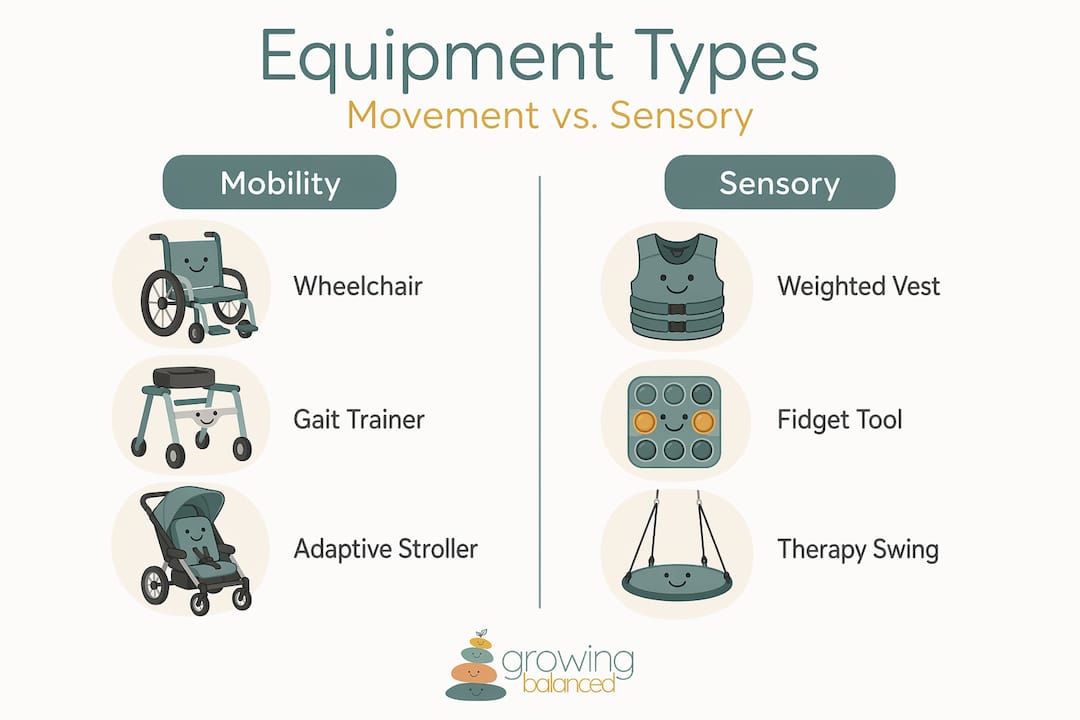
The types of adaptive devices used in pediatric OT fall into several main categories. Here is how they break down:
| Device type | Examples | Primary benefit |
|---|---|---|
| Mobility aids | Wheelchairs, gait trainers | Support movement and access |
| Fine motor supports | Pencil grips, adapted scissors | Build hand strength and control |
| Sensory regulation tools | Weighted vests, therapy swings | Calm or alert the nervous system |
| Specialized seating | Corner chairs, wedge cushions | Improve posture and stability |
| Communication devices | AAC devices, picture boards | Support expressive language |
| Personal care tools | Adapted utensils, button hooks | Promote self-care independence |
Mobility aids and fine motor supports address a wide range of daily living activities. Advanced adaptive technology for therapy now includes robotic devices like the Trexo Plus, which supports walking and trunk control for children ages 3 to 6 with neurological conditions, tracking progress in real time.
Pro Tip: Before buying any adaptive tool you see online, ask your child’s OT first. Many items look helpful but may not match your child’s specific developmental needs, and the wrong fit can actually set progress back.
How therapists choose the right equipment
Not every tool works for every child, and that is exactly why the selection process matters so much. Pediatric occupational therapists use a goal-first approach when evaluating which adaptive tools for children will be most effective. They assess strength, range of motion, sensory processing patterns, and cognitive ability before recommending anything.
Here is what that evaluation process typically looks like:
- Identify the functional goal. The therapist determines what skill the child is working toward, such as independent feeding, improved handwriting, or sitting through a classroom lesson.
- Assess current abilities. The child’s strength, coordination, and sensory tolerance are measured to understand what level of support they actually need.
- Consider developmental age. Therapists prioritize developmental age over chronological age when sizing and selecting equipment. A 7-year-old functioning at a 4-year-old level developmentally needs equipment suited to that stage.
- Choose adjustable designs. Equipment that grows with the child avoids the need for frequent replacements and supports progress without creating a ceiling.
- Plan for reassessment. As skills improve, the level of support should decrease. Good equipment selection accounts for that progression from the start.
The importance of adaptive equipment selection done right cannot be overstated. The wrong tool either makes tasks too easy (removing the challenge that builds skills) or too hard (creating frustration that kills motivation). Both outcomes slow development.
Pro Tip: Ask your child’s therapist to show you how the equipment works during a session before you take it home. Watching it in use once is worth more than reading a manual three times.
Sensory tools and nervous system regulation
This is where a lot of parents are surprised. Many adaptive tools for children are not about physical assistance at all. They are about regulating the nervous system so the child can actually learn, focus, and participate.
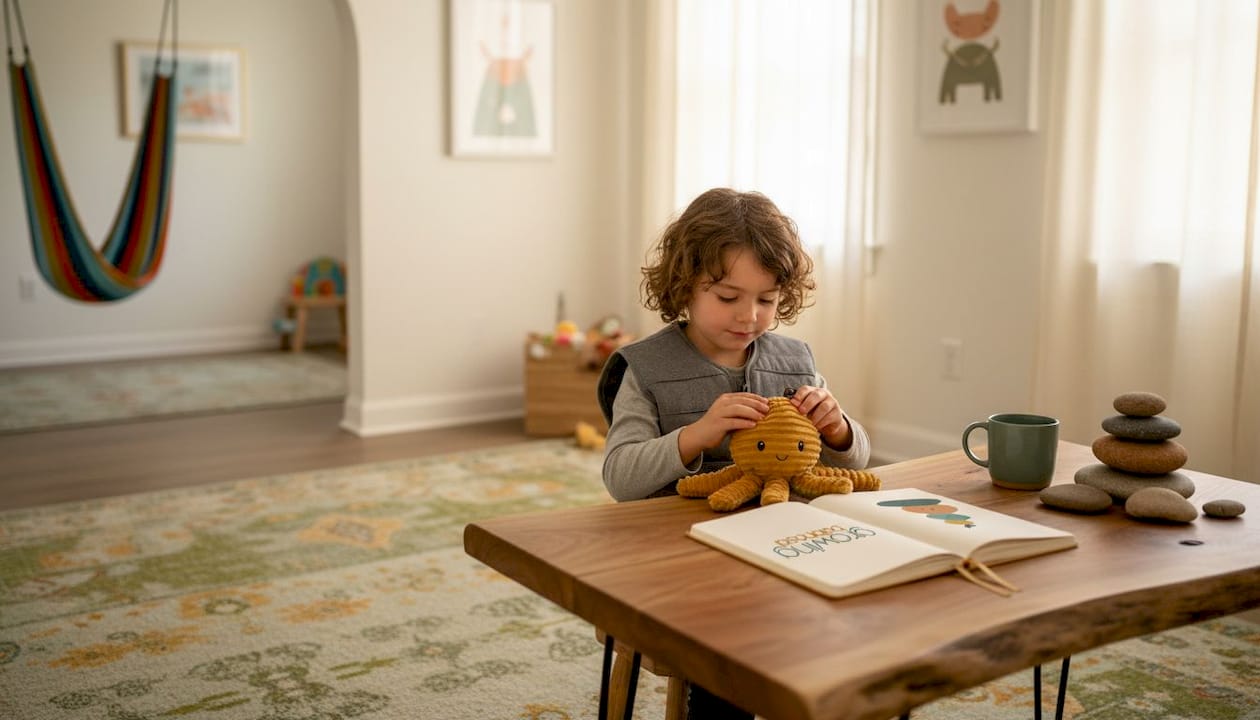
Sensory tools like weighted vests and therapy swings work by regulating the body’s alertness level, improving body awareness, and creating the kind of calm or engagement a child needs to be ready for learning and play. They are not just physical aids. For children who are frequently overwhelmed, shut down, or seeking movement constantly, these tools address the root cause of those behaviors.
Here are the sensory adaptive tools most commonly recommended in pediatric OT and what they actually do:
- Weighted vests: Provide deep pressure input that calms an overactive nervous system, helping children focus during structured activities
- Therapy swings: Deliver vestibular input that can either calm or energize, depending on how they are used
- Fidget tools: Give hands something appropriate to do, freeing up the brain for listening and processing
- Vibrating tools: Offer proprioceptive feedback that increases body awareness in children with low sensory registration
- Sensory brushes: Used in structured protocols to reduce tactile defensiveness and improve tolerance to touch
For more on how these tools fit into a home sensory program, the practical guidance from OT-informed resources can help you apply them consistently outside of clinic sessions.
“Sensory tools and adaptive equipment are not only for children with diagnosed disabilities. Any child who struggles with nervous system regulation and body awareness can benefit.” NAPA Center
If you want to understand the broader context behind these approaches, neurodiversity-affirming OT reframes adaptive tools as ways of honoring how your child’s brain works rather than fixing something broken.
Using adaptive equipment at home
The clinic is where skills are introduced. Home is where they stick. Successful therapy outcomes depend on skills being practiced in both clinical sessions and at home, with caregivers actively involved in using adaptive equipment.
Follow these steps to make home use actually work:
- Get trained by the therapist. Ask for a hands-on demonstration before the session ends. Proper fitting matters for both safety and effectiveness.
- Build equipment use into existing routines. A wedge cushion at the homework table, a pencil grip during journaling, a weighted lap pad at meals. These become invisible when they are part of the normal flow of the day.
- Track what you notice. Keep short notes on how your child responds. Did the weighted vest help them settle at dinner? Did the fidget tool disappear after five minutes? Your observations help the therapist refine the plan.
- Stay in contact with the therapist. Home carryover plans work best when caregivers and therapists communicate regularly about what is and is not working.
- Normalize the tools. Avoid framing equipment as “special” in a way that makes your child feel different. Present it the same way you would glasses or a favorite chair.
Pro Tip: If your child resists using a tool at home that they accept in therapy, do not push. Tell the therapist. Resistance at home often reveals something important about the environment, the routine, or the fit that the therapist needs to know.
My honest take on adaptive equipment fears
I have seen this pattern more times than I can count: a parent hesitates to pursue adaptive equipment because they are afraid it will make their child dependent on it forever. That fear is understandable. But in my experience, it is almost always backwards.
Adaptive equipment builds independence by closing the gap between a child’s current ability and what participation requires. A child who cannot sit upright long enough to eat a meal is not building self-feeding skills. Give them the right seating support and suddenly they can practice that skill every single day. The equipment is not the destination. It is what gets them there.
What I have also learned is that therapists view these tools as gateways to inclusion and confidence, not as permanent crutches. The goal is always to reduce reliance as skills grow. Sometimes a child uses a tool for a year. Sometimes six months is enough. The outcome that matters is a child who can participate.
— Kelsey
Support your child’s OT goals at home with Growingbalanced
Understanding the benefits of assistive devices in OT is one thing. Knowing how to build those benefits into your child’s daily routine at home is another challenge entirely.
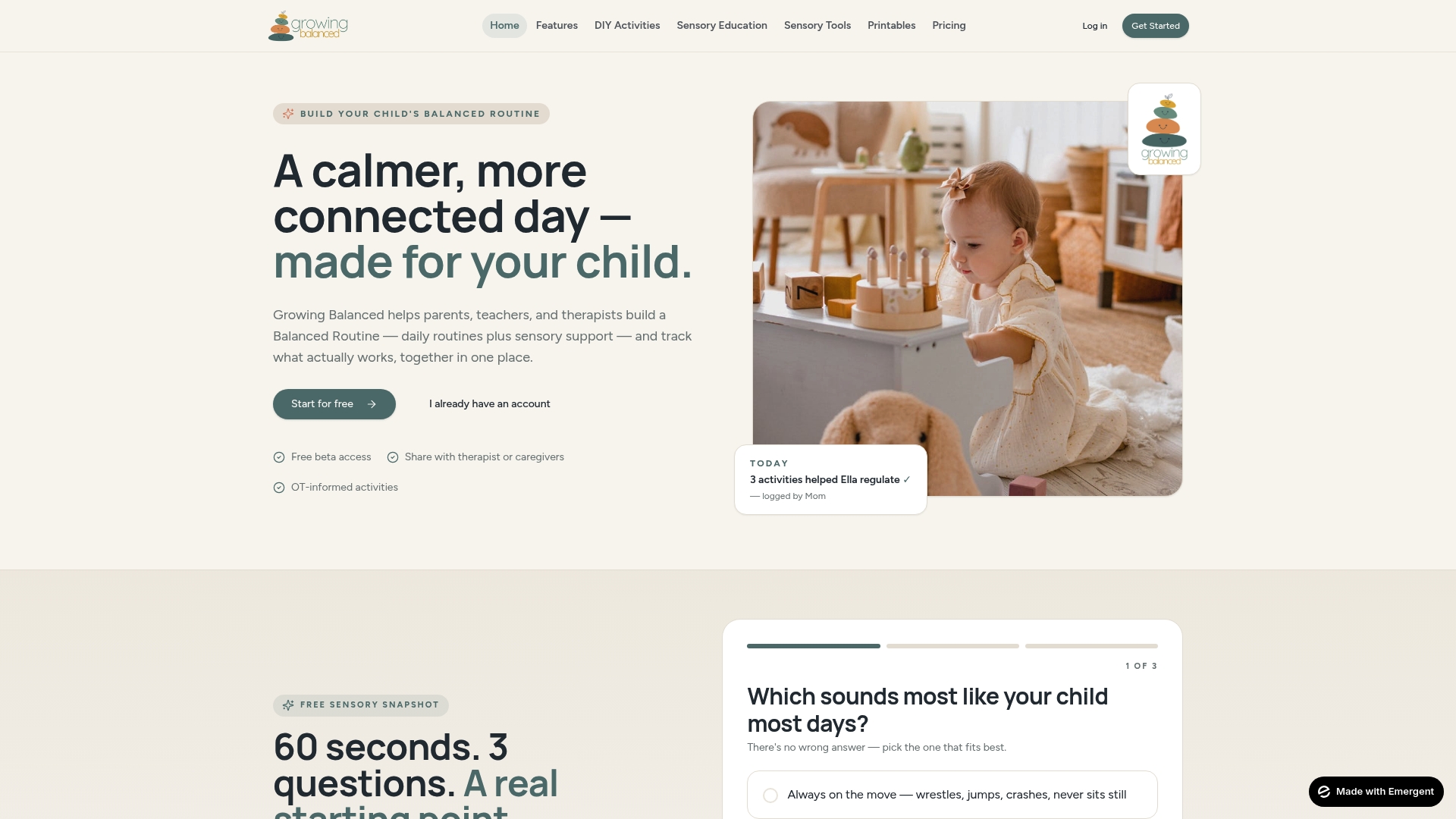
Growingbalanced was built specifically for parents who want to carry OT goals into real life. The platform offers visual daily schedules, sensory activity suggestions, and resource libraries designed with OT strategies at their core. You can create personalized routines that naturally incorporate the adaptive tools your child’s therapist recommends, track how your child responds, and share progress with your care team. Explore daily visual schedules and sensory tools at Growingbalanced to start building a home routine that actually supports your child’s development.
FAQ
What is adaptive equipment in pediatric OT?
Adaptive equipment in pediatric occupational therapy refers to specialized tools and devices that help children improve movement, sensory regulation, and independence in daily activities. Common examples include weighted vests, pencil grips, therapy swings, gait trainers, and specialized seating.
Does adaptive equipment cause dependency in children?
Research and clinical experience consistently show the opposite. Adaptive equipment builds independence by bridging ability gaps, allowing children to practice skills they could not access without support, and reducing that support as their abilities grow.
How does a therapist decide which adaptive tools to use?
Therapists use a goal-focused evaluation that looks at the child’s strength, sensory needs, cognitive ability, and developmental age, not just chronological age, to select equipment that challenges without frustrating and adjusts as the child progresses.
Can sensory tools really help my child focus and learn?
Yes. Weighted vests, fidget tools, and therapy swings regulate the nervous system by providing deep pressure or vestibular input, which directly affects a child’s alertness level and readiness to learn and participate.
How do I use adaptive equipment effectively at home?
Get hands-on training from your child’s therapist, integrate tools naturally into existing daily routines, keep notes on your child’s responses, and communicate regularly with the therapist to adjust the approach as your child develops.
Recommended
- Neurodiversity-affirming OT: a complete parent’s guide · Growing Balanced Blog
- Home program components: OT recommendations for sensory kids · Growing Balanced Blog
- Growing Balanced — daily visual schedules & balanced routines
- How to build a behavior support plan for your classroom · Growing Balanced Blog