
Sensory Tools in Classrooms: What Educators Need to Know
Discover the vital role of sensory tools in classrooms to enhance student focus, behavior, and learning outcomes. Learn more now!
Sensory Tools in Classrooms: What Educators Need to Know
TL;DR:
- Sensory tools in classrooms provide targeted input that helps children regulate their nervous systems and improve participation. Their success depends on individualized matching, environmental factors, and consistent implementation, supported by ongoing monitoring. Effective use requires collaboration among educators, therapists, and families, focusing on long-term, personalized strategies.
Sensory tools in classrooms are defined as physical objects and environmental modifications that provide targeted sensory input to help children regulate their nervous systems during the school day. The role of sensory tools in classrooms spans far beyond calming a distressed child. Weighted vests, fidget tools, noise-canceling headphones, alternative seating, and multisensory rooms each address distinct sensory processing needs that directly affect attention, behavior, and participation. The American Occupational Therapy Association (AOTA) and recent 2026 research from Frontiers in Psychiatry and MDPI confirm that when these tools are matched to individual students and classroom conditions, they produce measurable improvements in learning outcomes.
What evidence supports the use of sensory tools in classrooms?
The research base for sensory tools is growing, but it demands careful reading. A systematic review of nine studies found that sensory activity schedules can improve school performance by reducing disruptive behavior and increasing on-task behavior. The evidence is rated low strength, which means the direction is promising but the certainty is not yet high enough to apply any single protocol universally.
A 2026 case-series study published in Frontiers in Psychiatry found that multisensory rooms as mid-morning breaks reduced sensory overload and challenging behaviors in autistic students in public schools. The key variable was timing. Breaks scheduled during peak sensory demand periods, not randomly throughout the day, produced the strongest results.
AOTA’s 2026 framework for school-based sensory integration explicitly links sensory interventions to Common Core Standards, positioning occupational therapists as curriculum partners rather than peripheral support staff. This reframes sensory integration in education as an academic access issue, not just a behavioral one.
Key takeaways from the current evidence base:
- Sensory activity schedules show the most consistent results when outcomes are tracked individually over time.
- Multisensory room effectiveness depends on controlled input and flexible access during high-demand periods.
- Caregiver and teacher training produces stronger functional improvements than tool provision alone.
- The distinction between Ayres Sensory Integration (a clinical protocol) and general sensory-based interventions matters. They are not interchangeable.
How do sensory tools differ and what classroom sensory equipment is commonly used?
Sensory-based interventions is the umbrella term for any strategy that uses sensory input to influence a child’s arousal, attention, or behavior. Ayres Sensory Integration, developed by occupational therapist A. Jean Ayres, is a specific clinical protocol delivered by trained therapists in controlled environments. Most classroom sensory equipment falls under the broader sensory-based interventions category, not the clinical Ayres protocol.
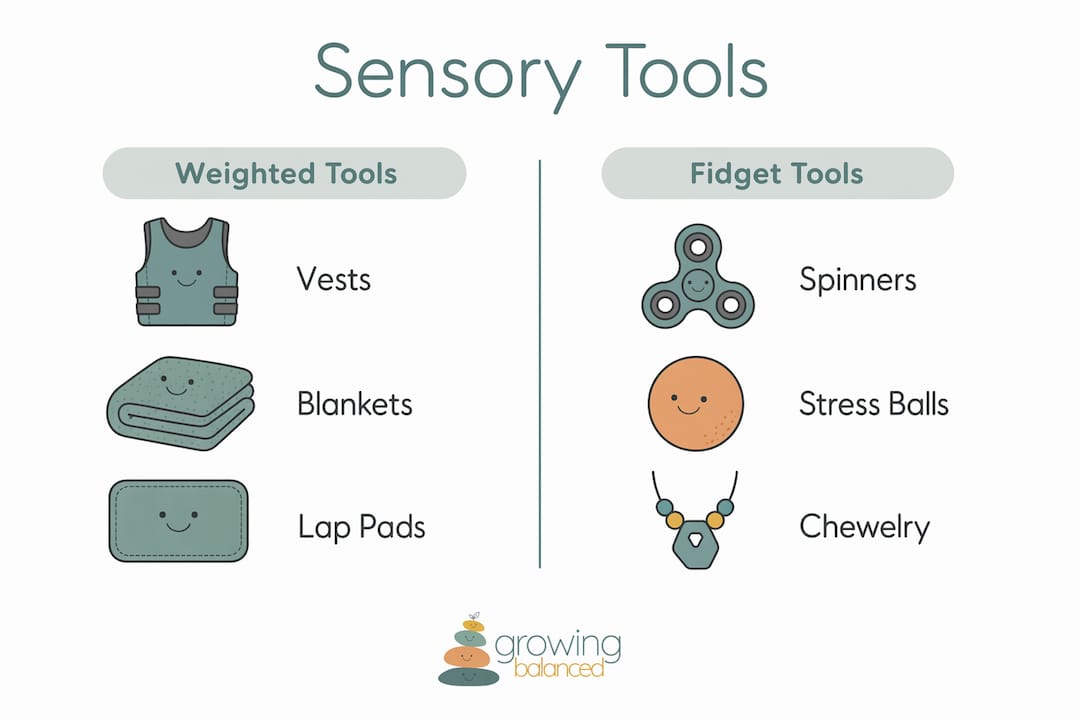
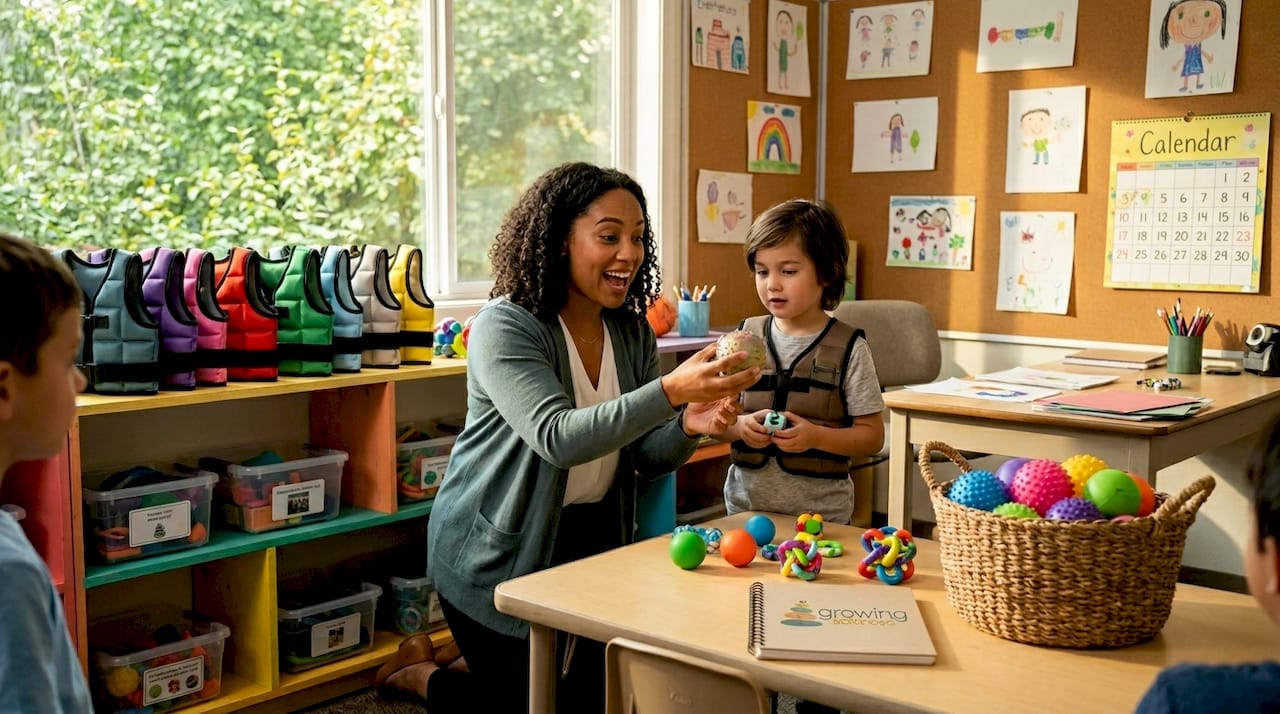
| Tool type | Sensory input targeted | Evidence of classroom impact |
|---|---|---|
| Weighted vests/blankets | Proprioceptive, deep pressure | Mixed; benefits are individual and time-limited |
| Fidget tools | Tactile, proprioceptive | Moderate for attention; risk of distraction if misused |
| Alternative seating (wobble stools, floor cushions) | Vestibular, proprioceptive | Limited evidence for attention improvement broadly |
| Noise-canceling headphones | Auditory filtering | Practical for sensory-sensitive students; widely used |
| Multisensory rooms | Multi-modal, controlled | Promising 2026 data for autistic students |
| Visual schedules | Cognitive/visual predictability | Strong evidence for reducing anxiety and transitions |
The most common pitfall with classroom sensory equipment is over-provision without purpose. Giving every student a fidget spinner because one child benefited is not sensory integration in education. It is noise. The adaptive equipment guide from Growingbalanced explains how to match tool type to individual sensory profiles rather than applying tools by diagnosis.
Pro Tip: Before introducing any new sensory tool, define the specific behavior or skill you are targeting and set a two-week observation window to track whether the tool is producing the intended change. Without this step, you cannot tell if the tool is helping or simply being tolerated.
What environmental factors shape how sensory tools work?
The classroom itself is a sensory tool. Research published in Education Sciences (MDPI, 2025) found that sensory conditions and spatial organization explain approximately 31% of the variance in teachers’ perceptions of autistic student inclusion. That figure means nearly a third of whether a child feels included in a classroom is determined by the physical environment before any individual tool is introduced.
Factors that shape sensory tool effectiveness in the classroom environment include:
- Lighting: Fluorescent overhead lighting increases sensory load for many neurodiverse learners. Natural light or warm-toned alternatives reduce this significantly.
- Noise levels: Ambient classroom noise, including HVAC systems and hallway traffic, compounds auditory sensitivity. Soft furnishings and acoustic panels reduce reverberation.
- Visual clutter: Heavily decorated walls increase cognitive and visual load. Neutral display zones near workstations help students with sensory processing differences maintain focus.
- Spatial predictability: Clearly defined zones for different activities (quiet work, group work, movement breaks) give students environmental cues that reduce the need for adult redirection.
Classroom sensory evaluation tools like the C-SEA assess visual, auditory, and movement domains to guide environment modifications. This kind of structured assessment gives teachers and therapists a shared language for identifying what is driving a student’s dysregulation before reaching for a tool.
Student agency matters as much as the tools themselves. When children can choose when and how to access sensory supports, the predictability that choice provides reduces escalation. Structured access beats unrestricted access for most students, particularly those who seek sensory input and need redirection toward functionally appropriate alternatives.
How can educators and therapists implement sensory tools effectively?
Effective implementation follows a sequence, not a shopping list. Here is a practical framework for educators, parents, and therapists working together:
- Complete a sensory profile. Use a validated tool or work with an occupational therapist to identify each student’s sensory processing patterns before selecting any equipment. Growingbalanced’s resources on OT recommendations for sensory kids outline what a home and school sensory program should include.
- Match tools to classroom functions. Pair proprioceptive input (a wobble stool or resistance band on a chair leg) with seated work periods. Schedule multisensory room access before transitions or high-demand tasks, not as a reward.
- Set a monitoring schedule. A case study involving twice-daily 20-minute proprioceptive sessions showed significant reductions in negative behavior. The sessions worked because outcomes were tracked and the program was adjusted based on data, not intuition.
- Train the adults in the room. Research shows that many teachers use sensory strategies without recognizing them as sensory supports. Naming the strategy and connecting it to self-regulation outcomes closes the gap between instinct and intentional practice.
- Build a behavior support plan. Sensory tools work best when embedded in a broader support structure. Growingbalanced’s guide on building a behavior support plan walks educators through this process step by step.
Pro Tip: Schedule a five-minute debrief between the classroom teacher and the occupational therapist every two weeks. This single habit prevents tool drift, where a sensory strategy that was introduced for one purpose gradually gets used for everything and loses its specificity.
What I have learned from watching sensory tools succeed and fail
The most common mistake I see is treating sensory tools as a category of classroom furniture rather than as clinical decisions. A wobble stool in every classroom sounds inclusive. In practice, it means some children are sitting on equipment that increases their arousal when they needed to decrease it.
The second mistake is ignoring the room before addressing the child. I have watched a student struggle through a full morning with a weighted lap pad while sitting under flickering fluorescent lights next to a noisy HVAC vent. The lap pad was not the problem. The environment was working against every tool in the toolkit.
What actually works is the combination of a lower-stimulation environment, student choice in accessing supports, and an adult who understands why a specific tool was chosen for a specific child. That combination requires collaboration between teachers, occupational therapists, and parents. It also requires patience. Sensory tools rarely produce dramatic changes in week one. The neurodiversity-affirming OT approach that Growingbalanced describes reflects this reality: individualized, evidence-informed, and built for the long game.
— Kelsey
Build better sensory routines with Growingbalanced
Sensory tools work best when they are embedded in predictable daily routines, and that is exactly what Growingbalanced is built for. The platform offers visual schedules and sensory support plans designed by occupational therapists for use across home, school, and clinical settings. Teachers can use the visual scheduling tools to anchor sensory breaks at the right points in the school day. Therapists can share sensory profiles and co-regulation scripts directly with classroom staff. Parents can track what is working and communicate changes to the team. Explore Growingbalanced’s free and premium resources to put structure behind the sensory strategies you are already using.
FAQ
What is the role of sensory tools in classrooms?
Sensory tools in classrooms provide targeted sensory input that helps children regulate their nervous systems, improving attention, reducing disruptive behavior, and increasing participation in learning tasks. Their effectiveness depends on matching the tool to the individual student’s sensory profile and the specific demands of the classroom environment.
Are sensory tools backed by research?
Current research, including a systematic review of nine studies published by AOTA, shows sensory activity schedules can improve on-task behavior and reduce disruption, though the evidence is rated low strength and requires individualized tracking to confirm benefit for each student.
What sensory equipment is most commonly used in classrooms?
The most widely used classroom sensory equipment includes fidget tools, weighted vests or lap pads, alternative seating such as wobble stools, noise-canceling headphones, and visual schedules. Each targets a different type of sensory input and works best when selected based on a student’s specific sensory processing needs.
How do teachers know if a sensory tool is working?
Teachers should define a target behavior before introducing any tool and observe the student over a structured two-week period. Pairing this observation with input from an occupational therapist and a documented behavior support plan produces the most reliable picture of whether the tool is producing the intended change.
What is the difference between sensory-based interventions and Ayres Sensory Integration?
Ayres Sensory Integration is a specific clinical protocol delivered by trained occupational therapists in a controlled therapeutic setting. Sensory-based interventions is the broader category that includes classroom tools and strategies. Most school-based sensory supports fall under sensory-based interventions, not the formal Ayres protocol.
Recommended
- Types of Adaptive Tools for Special Education · Growing Balanced Blog
- How to build a behavior support plan for your classroom · Growing Balanced Blog
- Sensory Seeking Behavior Explained for Parents · Growing Balanced Blog
- Home program components: OT recommendations for sensory kids · Growing Balanced Blog