Behavioral Support Strategies for Elementary Teachers
Discover effective behavioral support strategies for elementary teachers. Learn how to teach SEBH skills and foster a positive classroom environment.
Behavioral Support Strategies for Elementary Teachers
TL;DR:
- Proactive behavioral support strategies in elementary classrooms focus on teaching social-emotional skills and establishing clear expectations through consistent instruction. Tiered supports like PBIS organize interventions across different student needs, while family partnerships reinforce positive behaviors outside school. Visual tools such as schedules and behavior charts help sustain predictable routines, reducing disruptions and promoting self-regulation.
Behavioral support strategies for elementary teachers are proactive, instructional approaches that teach social-emotional-behavioral (SEBH) skills rather than simply reacting to problems after they occur. The recognized industry term for this work is positive behavior support, formalized through frameworks like PBIS (Positive Behavioral Interventions and Supports). OSPI guidance confirms that embedding SEBH instruction into daily classroom practice reduces interfering behavior and lowers the need for restraint or isolation. When you treat behavior as something to teach rather than something to punish, you change the entire climate of your classroom.
1. Behavioral support strategies every elementary teacher should start with
The single most important shift in classroom management techniques is moving from reactive discipline to proactive instruction. Understood.org recommends co-creating 3 to 5 clear, positive, and observable classroom expectations with students rather than posting a list of rules and assuming students understand them. This distinction matters because ownership increases compliance. When students help define what “respectful” or “responsible” looks like in your room, they are far more likely to meet that standard.
Many teachers assume that posting rules is sufficient. Explicit teaching and continuous practice are what actually produce lasting behavior change. Treat your classroom expectations the same way you treat a reading skill: introduce them, model them, practice them repeatedly, and revisit them after breaks.
Pro Tip: Reteach your classroom expectations every Monday morning for the first six weeks of school. Students need repetition, not reminders.
2. Explicitly teaching routines and procedures
Routines are not just organizational tools. They are behavioral interventions for kids. Every transition, every material pickup, every group work protocol is an opportunity to reduce ambiguity and prevent the low-level disruptions that drain instructional time. OSPI’s framework treats planned teaching of routines as a core prevention strategy, not an add-on.
Walk students through each routine step by step. Use physical practice, not just verbal explanation. A student who has physically practiced the pencil sharpening routine five times will not disrupt a lesson to figure it out on the fly. The investment of ten minutes in September saves hours across the school year.
3. Embedding social-emotional-behavioral skill instruction daily
SEBH skill instruction belongs inside your regular teaching schedule, not only in a Friday morning circle. Planned SEBH teaching increases positive behavior and student wellbeing across the school day. Skills like self-regulation, perspective-taking, and frustration tolerance can be taught through brief, structured lessons tied to real classroom situations.
Connect SEBH instruction to content whenever possible. A math lesson on fair sharing is also a lesson in equity and patience. A science lab is a lesson in managing disappointment when results are unexpected. You do not need a separate curriculum to teach these skills. You need intentional framing.
4. How positive behavior reinforcement improves classroom management
Behavior-specific praise is the most underused tool in elementary classrooms. General praise like “good job” tells a student nothing actionable. Behavior-specific praise like “I noticed you stayed in your seat during the whole group lesson” names the exact behavior, which makes it repeatable. Research supports a 4:1 ratio of positive to corrective feedback for effective classroom management. That ratio means for every correction you give, four specific positive statements should precede it.
Most teachers operate at a 1:1 ratio or lower without realizing it. Monitoring your praise-to-reprimand ratio and deliberately increasing positive feedback improves classroom behavior even when nothing else changes. The data on this is consistent: more positive reinforcement produces better engagement, not just better compliance.
“Behavior-specific praise names the exact skill a student demonstrated. That specificity is what makes the behavior stick.” — PBIS Rewards
Practical tools that support positive behavior reinforcement include:
- Punch cards: Students earn a punch for each observed target behavior. A completed card earns a small reward or privilege.
- Behavior incentive charts: Visual behavior charts track progress toward a class or individual goal and make improvement visible.
- Class-wide tallies: A shared counter on the board builds community and shifts focus from individual correction to collective success.
Pro Tip: Tie your behavior incentive chart to a skill you are actively teaching, not just to compliance. “We earned 10 tallies for using kind words” reinforces the skill, not just the rule.
5. What role tiered supports like PBIS play in your classroom
PBIS provides a tiered framework that organizes prevention, teaching, and response practices across three levels of intensity. PBIS practice guides support evidence-based, proactive approaches to social, emotional, and behavioral classroom needs. Understanding this continuum helps you match your response to the actual level of need rather than defaulting to the same intervention for every student.
| Support tier | Who it serves | What it looks like in practice |
|---|---|---|
| Tier 1 (Universal) | All students | Clear expectations, consistent routines, behavior-specific praise, engagement strategies |
| Tier 2 (Targeted) | 10–15% of students | Check-in/check-out systems, small group social skills instruction, increased monitoring |
| Tier 3 (Intensive) | 1–5% of students | Individualized behavior support plans tied to specific SEBH skill deficits |
Tiered behavioral supports prevent over-reliance on reactive discipline and better serve students with diverse behavioral needs. The most common mistake is skipping Tier 1 and jumping to intensive interventions for students who actually need stronger universal supports first. A student who disrupts transitions may simply need a clearer visual schedule, not a behavior contract.
Behavioral support plans tied to specific SEBH skill deficits, with instructional replacements built in, outperform consequence-only plans. Learn how to build a behavior support plan that targets the skill gap rather than just the surface behavior.
6. How family partnership strengthens behavioral supports
Family engagement is not a courtesy. It is a clinical strategy. Understood.org identifies ongoing communication and alignment with families as critical to consistent behavioral improvement. When the language and expectations you use at school match what families reinforce at home, students receive a coherent message rather than two competing ones.
Practical steps for building this partnership include:
- Gather context early. Ask families at the start of the year what behavioral triggers, strengths, and strategies they have already identified. This information is faster and more accurate than waiting to observe.
- Share your classroom language. Send home the exact phrases you use for expectations so families can mirror them. “We use a calm body in our classroom” means more when a parent says the same thing at dinner.
- Report positive behaviors, not just problems. A weekly text or note about a specific behavioral win builds trust and motivates students who know their family will hear about it.
- Collaborate on consistent strategies. When a student needs Tier 2 support, loop families into the plan so the check-in/check-out system has a home component.
For families navigating more complex behavioral needs, resources like iMind Mental Health Solutions offer structured parenting support that complements school-based strategies.
7. Practical tools for implementing behavioral strategies effectively
The common failure in elementary classrooms is responding to behavior without a consistent teaching package in place. That package has three parts: clear expectations, explicit instruction, and a response system. Understood.org identifies this gap as the primary reason well-intentioned behavior plans collapse within weeks.
Visual tools close that gap faster than verbal reminders. Visual supports reduce cognitive load for students who struggle with working memory or language processing, making expectations accessible without requiring teacher repetition. A daily visual schedule posted at eye level tells students what comes next before anxiety about transitions builds.
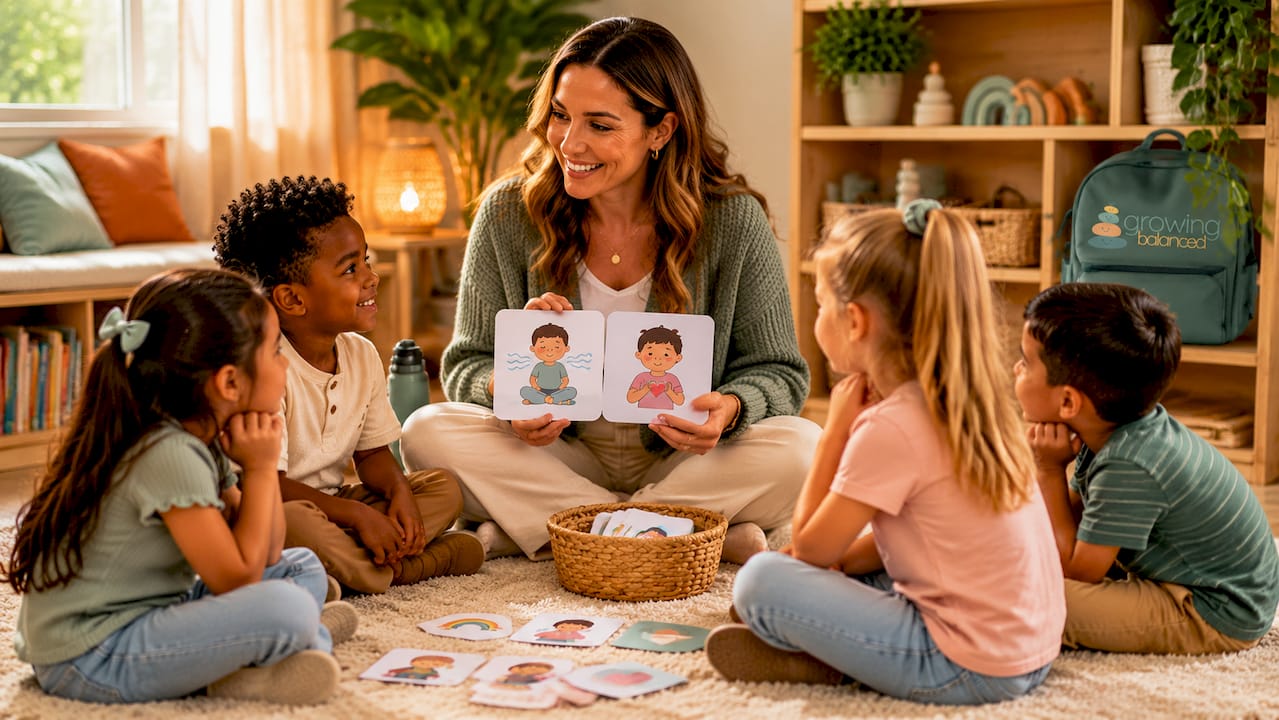
Co-regulation scripts give you a reliable, calm script for de-escalation moments. Rather than improvising during a student meltdown, a co-regulation script keeps your tone regulated and your language consistent. Regulated teachers produce regulated students. That is not a metaphor. It is how the nervous system works.
Why behavior is always a teaching opportunity, not a discipline problem
After years of working with teachers and OT-informed classroom tools, the pattern I see most often is this: teachers who struggle most with classroom behavior are the ones who have the clearest consequences and the least explicit instruction. They have a discipline ladder. They do not have a teaching plan.
The teachers whose classrooms run smoothly are not the strictest. They are the most consistent and the most instructional. They treat a student who cannot regulate frustration the same way they treat a student who cannot decode a word. They identify the skill gap and teach into it. They use positive behavior support as a framework, not a buzzword.
Consistency and clarity in expectations do more for classroom climate than any reward system. Positive reinforcement builds the relationship that makes correction land without resentment. Tiered supports and family collaboration are not extras for the most challenging students. They are the structure that makes the whole system work for every student in your room.
— Kelsey
Build better classroom routines with Growingbalanced
If you are ready to put these strategies into daily practice, Growingbalanced offers OT-informed tools designed specifically for teachers managing diverse classroom needs.
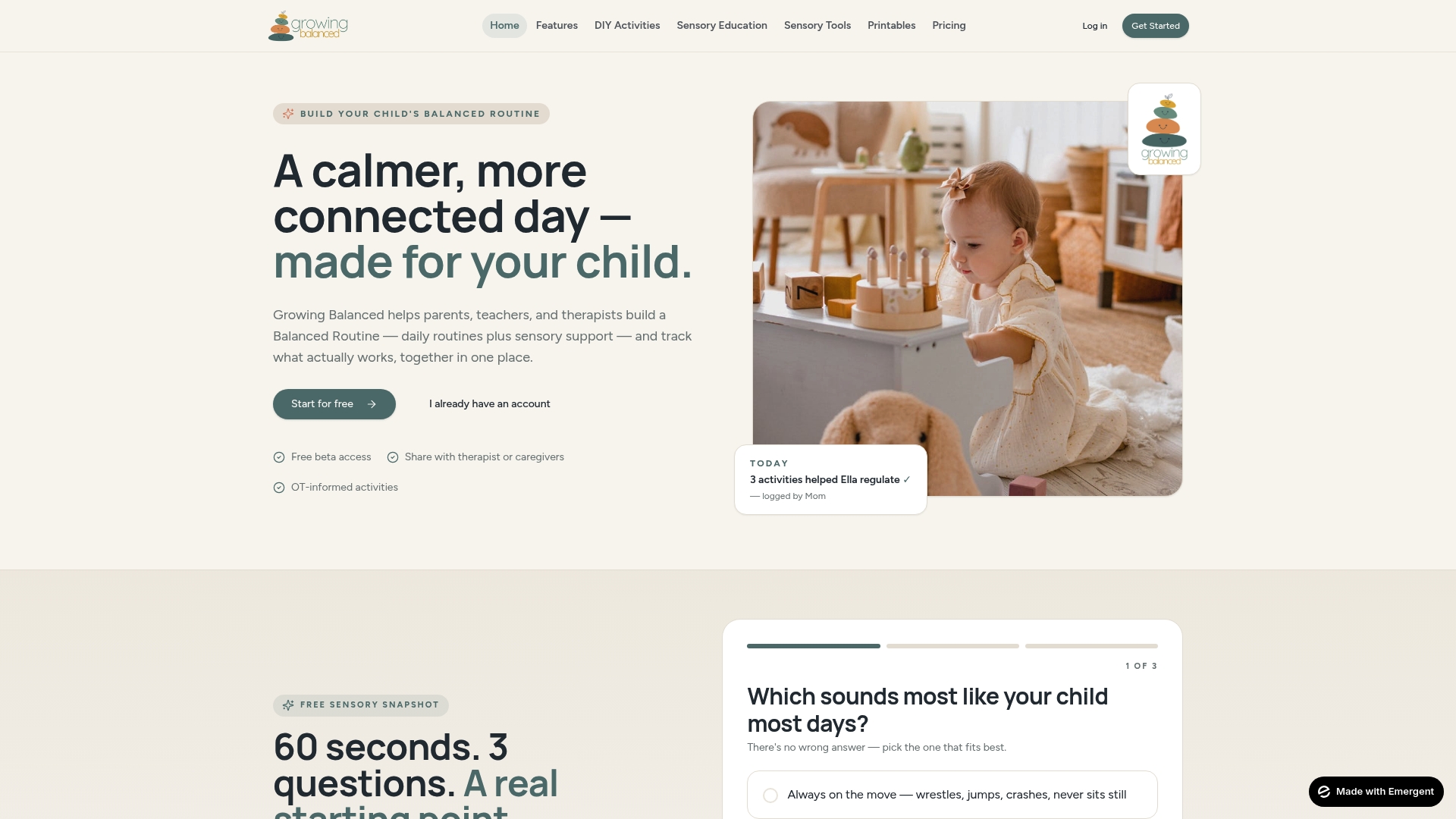
The platform’s daily visual schedules and balanced routines give students a clear, predictable structure that reduces transition anxiety and supports self-regulation before behavior problems start. Visual schedules work because they make expectations concrete and visible, which is exactly what proactive behavioral support requires. Growingbalanced also provides co-regulation scripts, sensory profiles, and printable behavior resources that connect classroom strategies to home routines. When teachers and families use the same tools, behavioral progress compounds.
FAQ
What are behavioral support strategies for elementary teachers?
Behavioral support strategies for elementary teachers are proactive, instructional approaches that teach social-emotional-behavioral skills, set clear expectations, and use positive reinforcement to prevent and address challenging behaviors. They are grounded in frameworks like PBIS and focus on skill-building rather than reactive discipline.
How does the 4:1 praise ratio work in classrooms?
The 4:1 ratio means delivering four specific positive feedback statements for every one corrective statement. Research confirms that maintaining this ratio improves both student engagement and overall classroom behavior.
What is the difference between Tier 1 and Tier 2 behavioral supports?
Tier 1 supports are universal strategies for all students, including clear expectations, routines, and behavior-specific praise. Tier 2 supports target the 10 to 15 percent of students who need additional structured interventions like check-in/check-out systems or small group social skills instruction.
Why is family partnership important for classroom behavior plans?
Consistent communication with families aligns the behavioral language and expectations students hear at school with what they experience at home, which produces more durable behavioral improvements than school-only interventions.
What visual tools help with elementary classroom behavior management?
Visual behavior charts, daily visual schedules, and co-regulation scripts are the three most practical tools. They reduce reliance on verbal reminders, support students with working memory challenges, and give teachers a consistent structure for both proactive support and in-the-moment de-escalation.