
The Role of ABA Therapy in Behavior Support
Discover the vital role of ABA therapy in behavior support, empowering children to communicate, connect socially, and gain independence.
The Role of ABA Therapy in Behavior Support
TL;DR:
- ABA therapy extends beyond reducing challenging behaviors to teaching communication, social skills, and independence. The effectiveness of ABA depends on high-fidelity implementation, individualized programs, and early intervention, with quality being more important than hours. Integrating ABA with other therapies and ensuring transparency in progress tracking leads to better outcomes for children.
Most people hear “ABA therapy” and picture a child being drilled on flashcards or redirected away from problem behaviors. That framing misses most of what Applied Behavior Analysis actually does. The role of ABA therapy in behavior support goes far beyond reducing challenging behaviors. It teaches children how to communicate, build social connections, and manage daily routines with greater independence. For parents and educators trying to make sense of a child’s behavioral challenges, understanding what ABA truly offers, and what separates effective therapy from ineffective therapy, makes all the difference.
Table of Contents
- The role of ABA therapy in behavior support
- What the research actually shows
- Why quality matters more than hours
- Integrating ABA with broader behavior support plans
- My take on choosing and evaluating ABA therapy
- Tools that support your child’s ABA goals at home
- FAQ
The role of ABA therapy in behavior support
At its core, ABA therapy uses the science of learning and behavior to understand why a child acts the way they do and then systematically builds skills to help them function better. The American Academy of Pediatrics and the American Psychological Association both recommend ABA therapy as an evidence-based practice for children with autism. That endorsement matters because it reflects decades of research, not just clinical opinion.
One of the most useful reframes in ABA is this: behavior is communication. A child who melts down at transitions is not being defiant. They are communicating that the shift feels overwhelming and they do not have a better tool to express that yet. ABA intervention methods work by identifying the function of a behavior and then teaching a more appropriate, effective alternative.
Here is what a well-designed ABA program typically targets:
- Communication skills: Helping children request what they need, express emotions, and respond to others
- Social skills: Teaching turn-taking, reading social cues, and initiating interactions
- Daily living skills: Building independence in routines like dressing, eating, and hygiene
- Reduction of harmful behaviors: Replacing dangerous or disruptive behaviors with functional alternatives
- Academic readiness: Developing attention, following instructions, and task completion
Every program should be individualized. A child’s strengths, challenges, family priorities, and learning style all shape the treatment plan. Cookie-cutter approaches do not reflect best practice in ABA.
What the research actually shows
The evidence base for ABA therapy is substantial, and the data on outcomes gives parents and educators something concrete to work with.
A retrospective study of 1,141 children measured progress using the Vineland-3 scale at 6 and 12 months of ABA therapy. Across the board, children showed measurable gains in communication, socialization, and daily living skills within that window. The data also confirmed that children starting at age 2 showed the greatest average improvement, reinforcing the case for early intervention.
| Progress Area | Typical Gains | Key Factor |
|---|---|---|
| Communication | Significant within 6 months | Consistent reinforcement |
| Socialization | Moderate to strong at 12 months | Peer-based practice |
| Daily living skills | Steady across 12 months | Routine-based targets |
| Adaptive behavior | Strongest in early starters | Age at intake |
Current guidelines recommend 30 to 40 hours weekly for young children receiving intensive ABA treatment, sustained over two or more years. That intensity level is not arbitrary. It reflects what the data shows produces the most durable, meaningful change.
Research note: Children who begin ABA before age three and receive consistent, high-quality therapy often achieve outcomes that allow them to participate fully in mainstream educational settings.
Early intervention is not just a talking point. It reflects a biological reality. Young brains are more neuroplastic, meaning the window for building foundational skills is genuinely wider in the early years. Waiting for a “wait and see” approach to resolve itself can cost a child months of progress they cannot get back.
Why quality matters more than hours
Here is something most providers will not tell you upfront: more hours of therapy do not automatically mean better outcomes. Treatment integrity directly influences how fast and accurately a child progresses. Low fidelity implementation produces slower progress and unreliable data, regardless of how many hours per week a child attends.
Treatment integrity refers to how consistently and accurately a therapist delivers the planned intervention. A child receiving 30 hours of loosely implemented therapy may progress slower than one receiving 15 hours of high-fidelity therapy. That is a counterintuitive finding, but it has real implications for how you evaluate your child’s program.
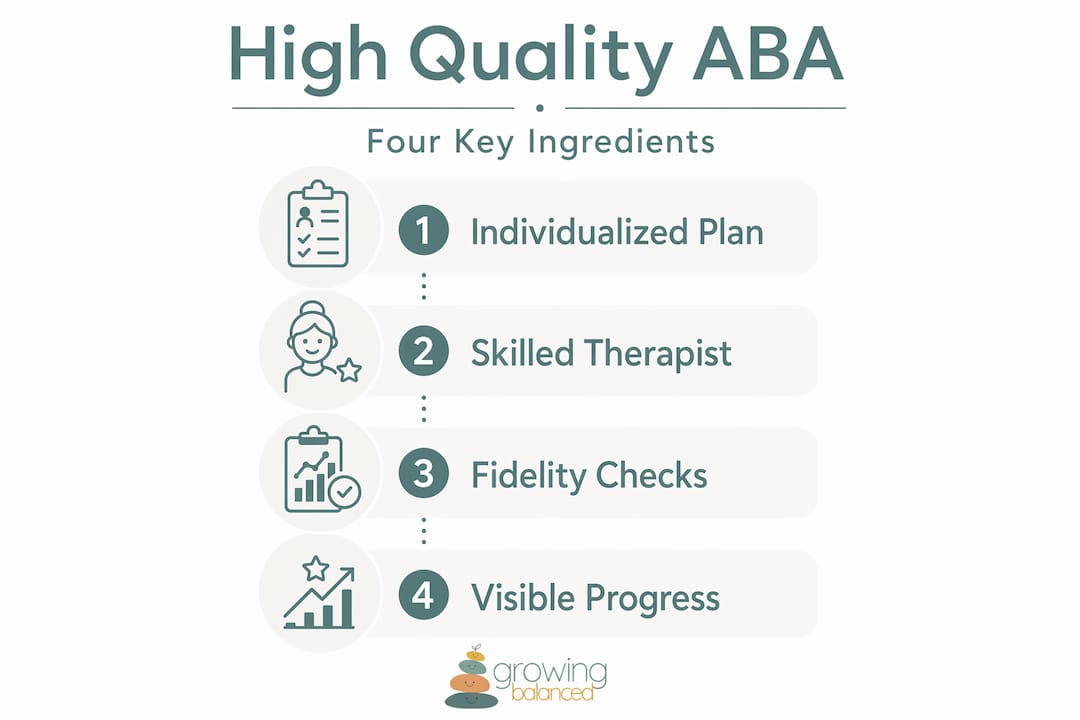
Board Certified Behavior Analysts (BCBAs) monitor fidelity using checklists and direct observation, with 80% fidelity serving as the standard benchmark for quality implementation. When a therapist’s fidelity drops below that threshold, retraining and additional supervision are required.
Pro Tip: Ask your child’s BCBA directly: “What is our current fidelity score, and how do you monitor it?” A quality provider will answer this without hesitation and show you the data.
Watch for these red flags in ABA delivery:
- Sessions that frequently run short or are poorly structured
- No written behavior intervention plan shared with the family
- Infrequent BCBA supervision of the Registered Behavior Technician (RBT)
- Progress data that is never reviewed or explained to parents
- Goals that never change despite months of therapy
Asking questions is not being difficult. It is being an informed advocate for your child.
Integrating ABA with broader behavior support plans
ABA therapy works best when it does not operate in a silo. The AAP advises combining behavioral, developmental, and educational strategies tailored to each child, and the research consistently supports personalized interdisciplinary approaches as producing the strongest outcomes.
Here is a practical framework for integrating ABA with other supports:
-
Coordinate with the school team. Share the child’s ABA goals with their teacher and special education staff. When behavioral support techniques are consistent across settings, children generalize skills much faster. A classroom behavior support plan that mirrors ABA targets creates that consistency.
-
Add occupational therapy for sensory needs. Many children in ABA programs also have sensory processing differences. Pairing ABA with sensory integration strategies addresses the full picture of what is driving behavior, not just the surface behavior itself.
-
Use visual supports at home and school. Visual behavior charts and daily schedules reduce anxiety, increase predictability, and support the skill-building happening in ABA sessions. A visual behavior chart gives children a concrete reference point for expectations, which reinforces what their therapist is teaching.
-
Include speech therapy when communication is a target. ABA and speech therapy overlap significantly in the area of functional communication. When both therapists coordinate on shared goals, progress accelerates.
-
Build home programs that reinforce ABA targets. Parents are not passive observers. OT-informed home programs and daily routines that embed ABA strategies give children more practice opportunities throughout the week.
My take on choosing and evaluating ABA therapy
I’ve worked alongside families navigating ABA decisions for years, and the pattern I see most often is this: parents focus almost entirely on getting hours approved and a provider lined up. That is understandable. Access is genuinely hard. But once therapy starts, the question shifts to quality, and most families are not equipped to evaluate that.
What I’ve learned is that the best ABA programs share one trait. They make progress visible. Goals are written in plain language, data is reviewed with families regularly, and the BCBA can explain exactly why each target was chosen. If you sit in a parent meeting and walk out more confused than when you walked in, that is a problem worth addressing.
I also think the field has undersold how much ABA complements other therapies. It is not an either-or choice between ABA and occupational therapy or speech therapy. The children I’ve seen make the most meaningful progress are the ones whose teams actually talk to each other and build plans that fit together. A neurodiversity-affirming approach to all of these supports, including ABA, produces better outcomes than any single modality alone.
Ask for the data. Ask about fidelity. And do not wait for the perfect program. Consistent, high-quality early intervention matters more than finding a flawless provider.
— Kelsey
Tools that support your child’s ABA goals at home
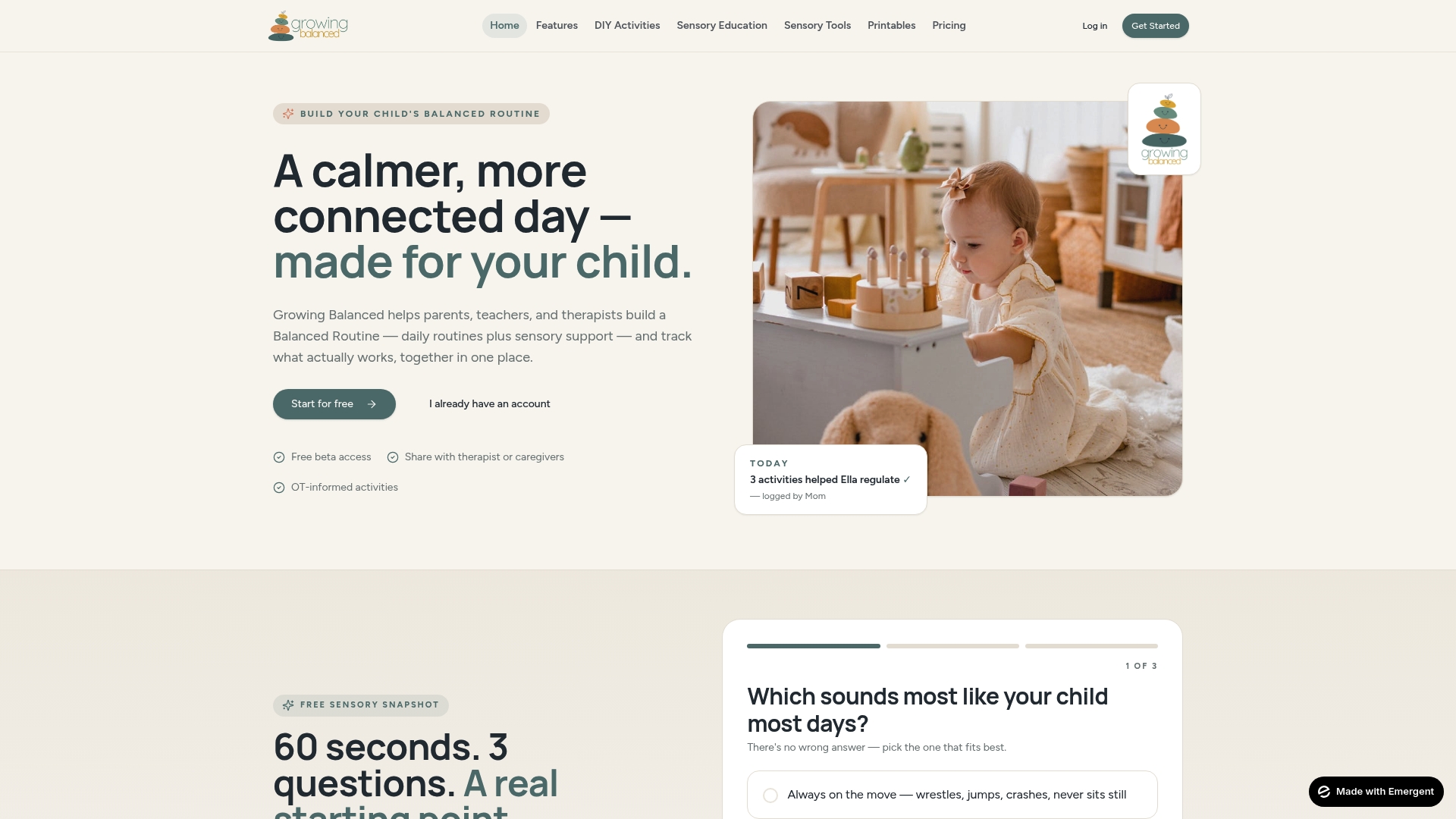
ABA therapy does not stop when the session ends. The routines, visual supports, and behavioral strategies your child’s therapist uses can and should carry into your home and classroom. Growingbalanced offers daily visual schedules and balanced routines designed specifically to complement behavior support plans and ABA intervention methods. Whether you are a parent trying to reduce morning meltdowns or an educator building structure into a classroom day, these tools translate therapy goals into everyday practice. Growingbalanced also provides sensory support resources, co-regulation scripts, and printable materials that make it easier to stay consistent with what your child’s ABA team is working toward.
FAQ
What is the role of ABA therapy in behavior support?
ABA therapy identifies the function behind a child’s behavior and teaches more effective, appropriate alternatives. It supports communication, social skills, and daily living alongside reducing harmful behaviors.
How many hours of ABA therapy does a child need?
Current guidelines recommend 30 to 40 hours per week for young children receiving intensive ABA treatment, sustained over two or more years for meaningful outcomes.
Does ABA therapy work for children who are not autistic?
ABA strategies for behavior are grounded in universal principles of learning and reinforcement. They are applied most widely with autistic children but can support any child with behavioral or developmental challenges.
How do I know if my child’s ABA therapy is high quality?
Ask the BCBA about fidelity monitoring, review progress data regularly, and confirm that goals are updated as your child meets targets. High-quality programs make progress measurable and transparent.
Can ABA therapy be combined with occupational therapy?
Yes, and research supports combining them. ABA addresses behavioral function while occupational therapy targets sensory processing and daily living skills, making the two approaches highly complementary.