How to Use Co-Regulation Scripts in School Settings
Learn to use co-regulation scripts in school settings for effective student support. Transform meltdowns into manageable moments with structured guidance.
How to Use Co-Regulation Scripts in School Settings
TL;DR:
- Effective co-regulation scripts help dysregulated students regain calm by providing predictable phrases and visual cues. Consistent use across staff, paired with proper preparation and gradual skill-building, ensures long-term success. Progress is measurable through shorter episodes, increased self-initiated regulation, and smooth reentries into learning activities.
When a student melts down in the middle of a math lesson, most educators don’t lack compassion. They lack a reliable script. Knowing how to use co-regulation scripts in a school setting transforms those overwhelming moments into structured, repeatable support. Co-regulation scaffolds reduce the emotional and cognitive load a dysregulated student simply cannot manage alone, giving their nervous system the external structure it needs to return to calm. This article walks you through exactly what to prepare, what to say, and how to know it’s working.
Table of Contents
- What you need before using co-regulation scripts in school
- Step-by-step script use during a dysregulated moment
- Common mistakes that undermine script effectiveness
- Evaluating whether co-regulation scripts are working
- My honest take on what actually makes this work
- Tools from Growingbalanced to support your classroom
- FAQ
What you need before using co-regulation scripts in school
Before any script leaves your mouth, the conditions for it to work need to be in place. Co-regulation is not a phrase you say once and move on. It is a scaffolding process: the adult temporarily supplies the regulation the student’s brain cannot access independently, with the deliberate goal of building the student’s own capacity over time.
Understanding tiered support
Schools that see lasting results typically organize co-regulation strategies within a tiered framework. A tiered support system moves from universal classroom practices at Tier 1 to targeted small-group strategies at Tier 2 and intensive individualized plans at Tier 3. Emily Burkart emphasizes that consistent pathways and adult collaboration across all tiers are what actually make co-regulation reliable for students.
Materials and preparation checklist
You will need more than good intentions. Gather these before you launch:
- Visual co-regulation cards with simple images representing breathing, body check, and next steps
- A designated calm corner stocked with sensory tools such as fidgets, weighted lap pads, or noise-reducing headphones
- Shared script language documented and distributed so every adult in the building uses the same phrasing
- Staff training time to practice tone, pacing, and physical positioning during dysregulation
- Family communication plan to align home and school language
Consistency is the largest implementation gap in schools. Standardized phased scripts with shared visual supports mean a student recognizes the cues whether it’s their classroom teacher, the PE coach, or a substitute standing in front of them.
Pro Tip: Before adopting a published script, walk it through your school’s specific culture and population. A phrase that lands well in a calm suburban classroom may feel sterile or confusing in a high-energy urban school. Tweak the words, keep the structure.
| Preparation element | Why it matters |
|---|---|
| Visual co-regulation cards | Reduce verbal demands during peak dysregulation |
| Consistent adult language | Prevent student confusion from mixed messages |
| Calm corner with clear protocols | Provide a predictable, safe regulation space |
| Tiered support plan | Match script intensity to student need |
Step-by-step script use during a dysregulated moment
Once the foundation is set, execution follows a clear sequence. Rushing or improvising breaks the process. Here is a practical, phased approach drawn from a four-phase co-regulation model that moves students progressively toward independence.
- Adult-led regulation. Move close, lower your voice, and use a calm, slow tone. Say something short and physical: “Feet on the floor. Hands still.” No questions. No explanations. The student’s brain cannot process complex language right now.
- Physical grounding script. Introduce a breathing cue: “Slow breath in… and out.” Repeat it two or three times while you breathe visibly with the student. Guided breathing patterns reduce student stress before any instruction can resume.
- Visual prompting. Hold up or point to a co-regulation card. This shifts the communication burden off spoken words and onto a predictable image the student already knows. Keep pointing without commentary until the student tracks it.
- Student identification. Ask the student to point to or name what they need next, only once they show signs of beginning to regulate. Lowered shoulders, slower breathing, or eye contact are your green lights.
- Self-initiation practice. Over time and repeated exposures, students begin reaching for the card or using the breathing cue without prompting. That is the goal. Script toward it by praising the attempt: “You used your calm breath. That worked.”
- Transition back to learning. Effective co-regulation scripts always include a clear step back into work. Try: “You’re ready. We’re going back to your seat. Your next step is…” Name the exact task waiting for them.
Pro Tip: Your body language carries more weight than your words during steps one and two. Crouch to eye level, avoid crossed arms, and keep your face neutral and open. A tense or hurried adult posture signals danger to an already dysregulated nervous system.
Common mistakes that undermine script effectiveness

Even well-intentioned educators make predictable errors. Catching them early saves months of inconsistent results.
The most common error is inconsistent use across staff. When the classroom teacher uses a script but the lunchroom aide asks “What’s wrong with you today?”, the student’s nervous system has to start over. Using the same cards and phrases across adults eliminates the relearning burden and builds genuine trust in the process.
The second mistake is verbal overload. Asking questions during active dysregulation, such as “Can you tell me what happened?” or “Why are you acting this way?”, floods a brain that is already at capacity. Avoid interrogation and replace it with naming, cueing, and clear next steps only.
Other frequent missteps include:
- Allowing the calm corner to become either a punishment or an unrestricted escape. Clear protocols including nonverbal access signals, five to ten minute time limits, and explicit reentry steps prevent both problems.
- Skipping the reentry routine and returning students to work without a named task, which causes immediate re-escalation.
- Neglecting teacher self-regulation. Teacher calm directly influences student behavior and outcomes. If you are flooded, your script will not land the way you intend.
Co-regulation is not a technique you apply to a child. It is something you do with them, and your own regulated state is half the equation.
Pro Tip: Loop in the school occupational therapist, behavioral specialist, and families when building individualized scripts. A behavior support plan that reflects the child’s sensory profile will outperform any generic template every time.
Evaluating whether co-regulation scripts are working
Knowing what success looks like keeps teams from abandoning strategies too early or sticking with ones that have stopped serving students.
Watch for these concrete indicators that a student is progressing:
- They reach regulation in fewer minutes than they did a month ago
- They begin using the visual card or breathing tool without prompting
- They can name what helped after the fact during a calm reflective conversation
- Dysregulation episodes decrease in frequency across the school week
Teacher reflections and student feedback gathered after calming moments are among the most underused tools in schools. A simple two-minute check-in, such as “What helped you get calm?” builds metacognitive skills and gives you real data.
| Indicator | What to track |
|---|---|
| Duration of dysregulation | Decreasing over weeks |
| Self-initiated regulation | Student uses tools without prompting |
| Reentry success rate | Returns to work without re-escalation |
| Reflective conversation quality | Student can name at least one strategy |
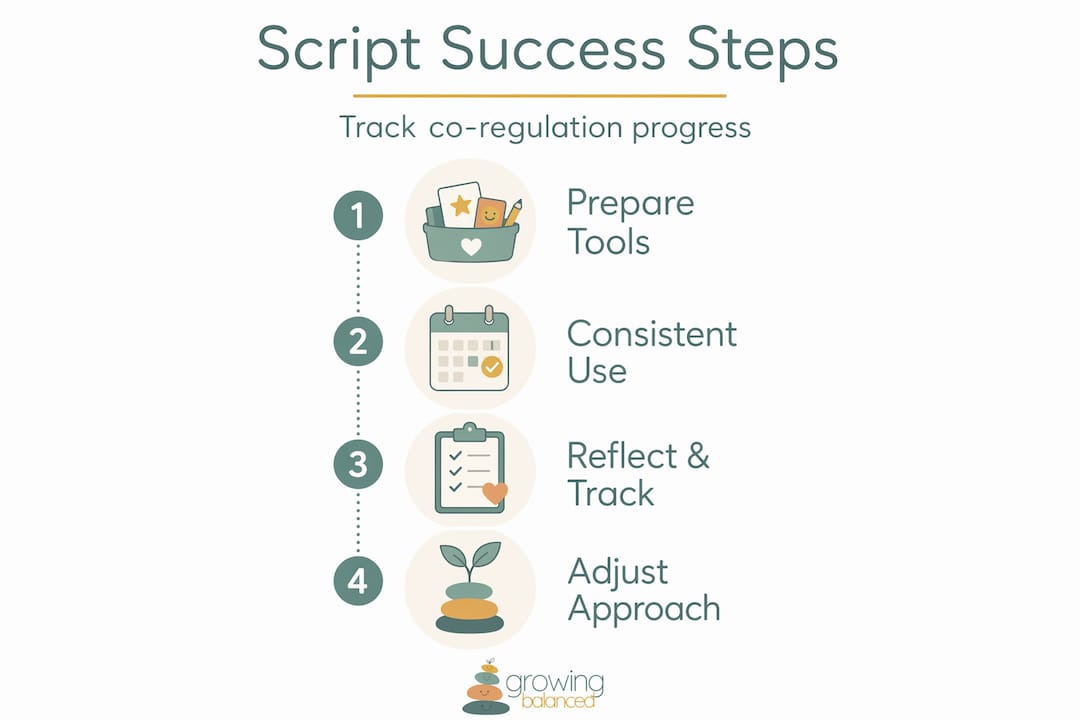
Pair your observations with a simple frequency log. Even a tally sheet noting the time, trigger, and minutes to regulation gives your team enough data to adapt the plan meaningfully.
My honest take on what actually makes this work
I’ve watched schools invest in beautiful calm corners, laminate every co-regulation card imaginable, and then see almost no change. The missing piece is almost never the materials. It is the adults.
In my experience, the programs that genuinely shift student outcomes are the ones where building leadership treats adult emotional regulation as a professional skill, not a personal trait. When staff feel supported, seen, and regulated themselves, they bring an entirely different quality of presence to dysregulated students. Individual teacher intuition-based plans fail consistently. What works is the whole community pulling in the same direction with the same language.
I also think we dramatically underestimate how long this takes. Expecting a student with significant sensory processing challenges to move from adult-led regulation to self-initiation in a few weeks is unrealistic. Progress in months, celebrate small wins weekly, and keep the team motivated by tracking the data. The neurodiversity-affirming lens reminds us that regulation is a skill like reading. You wouldn’t abandon a struggling reader after six weeks. Don’t abandon this either.
— Kelsey
Tools from Growingbalanced to support your classroom
Putting co-regulation into practice is much easier when the right materials are already built for you. Growingbalanced offers visual schedules and co-regulation tools designed specifically for educators, therapists, and parents working with sensory kids in home, school, and clinical settings. Every resource is grounded in occupational therapy principles, so they align directly with the strategies covered in this article.
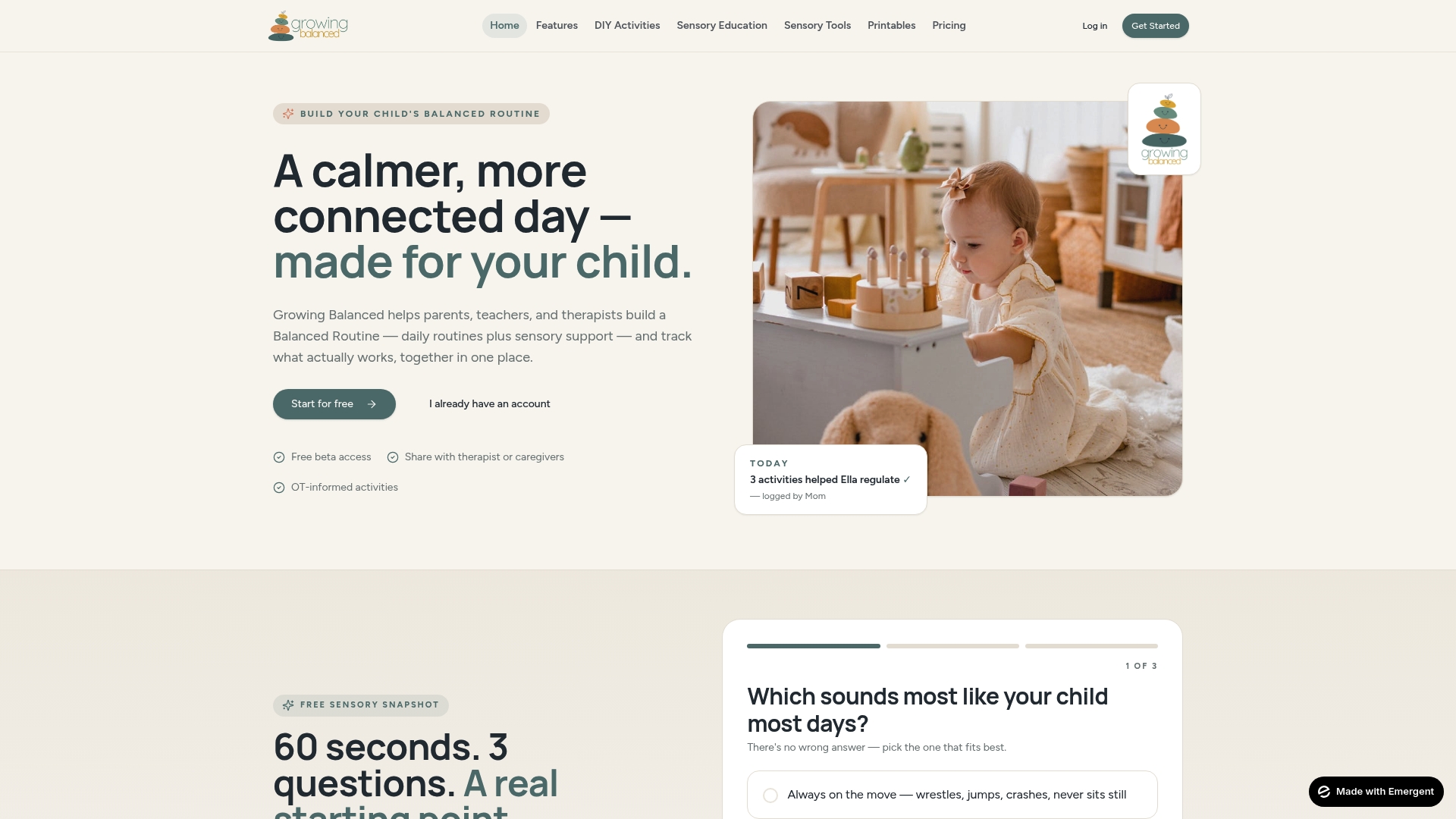
From printable visual co-regulation cards to sensory activity suggestions and customizable daily routines, Growingbalanced makes it straightforward to set up calm corners, align language across adults, and track student progress over time. The platform also supports family communication so home and school stay in sync. Whether you are starting from scratch or refining a plan that already exists, the tools at Growingbalanced are built to save you time and support real outcomes for students who need it most.
FAQ
What are co-regulation scripts for students?
Co-regulation scripts are short, predictable phrases and visual cues adults use to help dysregulated students return to calm. They reduce verbal demands and provide the external structure a student’s nervous system cannot supply alone in the moment.
How do you use co-regulation scripts in a classroom?
Start with low-demand physical cues such as “feet on the floor, slow breath in,” then move to visual prompting with co-regulation cards, and gradually support the student toward self-initiated regulation. Always include a clear step back to the learning task.
Why is consistency across staff so important?
When every adult uses the same script language and visual cues, students do not have to relearn the system with each new person. Inconsistent cues cause confusion and slow the progression toward self-regulation significantly.
How do you know if co-regulation scripts are working?
Look for shorter dysregulation episodes, increased student self-initiation of calming tools, and successful reentry to tasks. Simple frequency logs and brief reflective check-ins with students provide practical, trackable evidence of progress.
Can calm corners be used with co-regulation scripts?
Yes, and they work best together when the calm corner has clear protocols: a nonverbal signal to request access, a five to ten minute time limit, and a defined reentry routine that connects directly back to the co-regulation script language the student already knows.