What Is Positive Behavior Support (PBS) for Kids
Discover what is positive behavior support (PBS) for kids and how it transforms challenging behavior into positive growth for children.
What Is Positive Behavior Support (PBS) for Kids
TL;DR:
- Positive behavior support (PBS) shifts the focus from stopping challenging behavior to understanding and addressing the child’s needs. It uses functional behavior assessment and individualized plans to decode messages behind behaviors and teach appropriate replacements. Implemented across schools and homes, PBS promotes consistency, predictability, and respectful environmental adjustments to improve children’s well-being.
Many parents and educators assume that challenging behavior in children is willful defiance. That misunderstanding leads to consequences that do nothing but increase frustration on both sides. Positive behavior support PBS reframes the entire question: instead of asking “How do we stop this behavior?” it asks “Why is this happening, and what does this child need?” That shift changes everything about how support is designed, delivered, and sustained across home and school.
Table of Contents
- What is positive behavior support PBS?
- How PBS works in schools
- Understanding functional behavior assessment
- Practical PBS strategies for parents and educators
- My honest take on why PBS works and where it breaks down
- Support your PBS plan with Growingbalanced
- FAQ
What is positive behavior support PBS?
Positive Behavior Support is an evidence-based approach that reduces challenging behavior and improves quality of life by combining functional behavior assessment with individualized, data-driven support plans. “Evidence-based” here is not a buzzword. It means the methods have been studied, tested, and shown to produce real outcomes across diverse children and settings.
The core assumption of PBS is that behavior serves a function. A child who flips a table during math is not “bad.” They may be communicating frustration, sensory overload, or a need for attention. Every behavior is a message, and PBS works to decode that message before designing a response.
PBS is often confused with Applied Behavior Analysis (ABA) therapy, which makes sense since they share roots. But they differ meaningfully. While ABA focuses primarily on direct behavioral conditioning, PBS uses broader strategies that prioritize collaborative, respectful environmental adjustments to accommodate individual needs. You can think of ABA as one tool in the PBS toolbox, not a synonym. For a deeper look at how the two interact, the Growing Balanced article on ABA therapy breaks this down clearly.
Key components of a PBS plan typically include:
- Functional behavior assessment (FBA): Identifies the purpose a behavior serves
- Individualized behavior support plan: Built around the child’s specific triggers and needs
- Prevention strategies: Environmental changes that reduce the conditions leading to challenging behavior
- Replacement skills: Teaching children new, appropriate ways to meet the same need
- Data monitoring: Ongoing tracking to measure progress and adjust supports
Pro Tip: If you are reviewing a behavior plan and it does not mention what function the behavior serves, push back. A plan without that anchor will likely miss the mark.
How PBS works in schools
The school-based version of PBS is called PBIS, which stands for Positive Behavioral Interventions and Supports. PBIS is a three-tiered framework organized to match the intensity of support to the level of student need. It is not a curriculum or a fixed program. It is a decision-making structure that schools adapt to their own context.
Here is how the three tiers work in practice:
- Tier 1 (Universal): Applies to all students, school-wide. This includes teaching expected behaviors directly, using consistent routines, and creating a positive school climate. About 80% of students succeed with Tier 1 alone.
- Tier 2 (Targeted): For students who need more support than the universal layer provides. Small group social skills instruction, check-in/check-out programs, and structured mentoring are common examples.
- Tier 3 (Intensive): Individualized support for students with the most complex needs. This is where FBA and detailed behavior intervention plans become the foundation.
One of the most underrated benefits of positive behavior support in schools is how it changes adult behavior, not just student behavior. Teachers learn to be proactive rather than reactive. Expectations are taught explicitly, not assumed.
| PBIS tier | Focus | Example support |
|---|---|---|
| Tier 1 | All students | Teaching school-wide behavioral expectations |
| Tier 2 | Students at some risk | Check-in/check-out with a trusted adult |
| Tier 3 | Students with complex needs | Individualized FBA-based behavior plan |
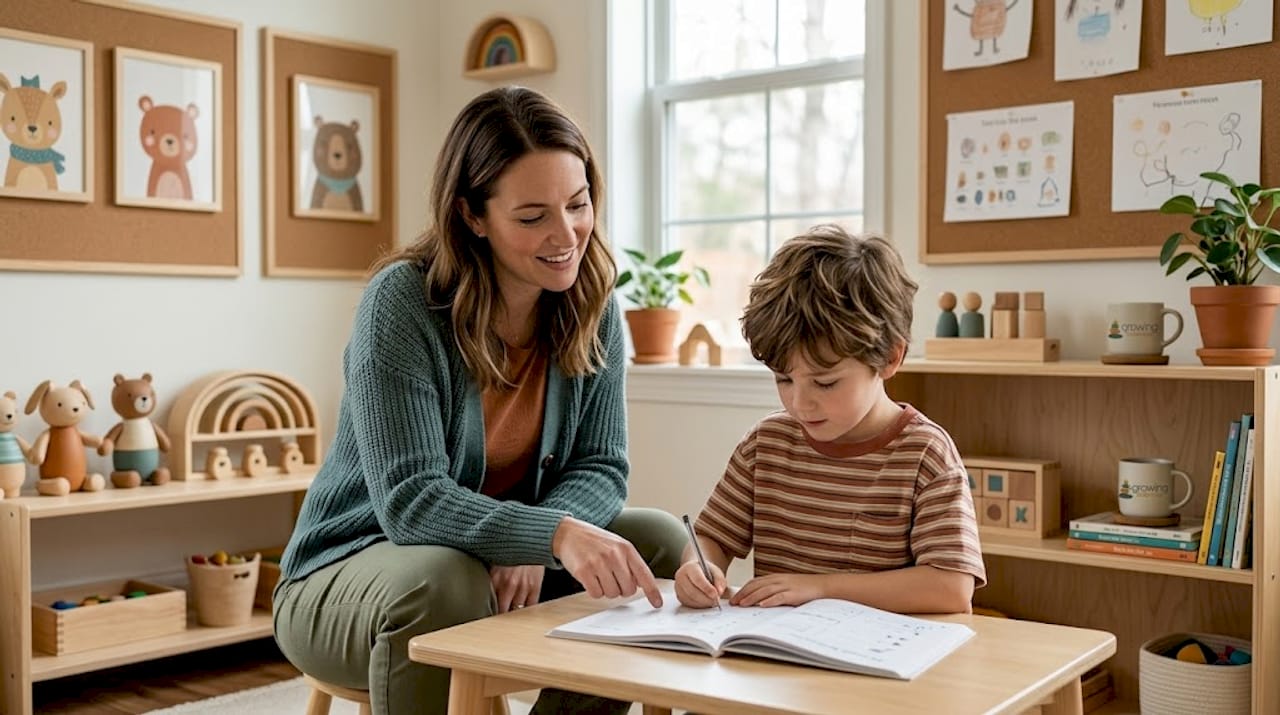
Effective PBIS implementation requires collaboration across teachers, counselors, administrators, and families. Consistency across settings is what makes it work. When the school response and the home response align, children experience a predictable environment, and predictability is one of the most powerful behavior supports that exists.
Understanding functional behavior assessment
An FBA is the backbone of any strong PBS plan. The FBA process systematically identifies why a challenging behavior occurs by analyzing what happens before it (antecedents) and what happens after it (consequences). That antecedent-behavior-consequence sequence, often called ABC data, forms the basis for a hypothesis about what function the behavior serves.
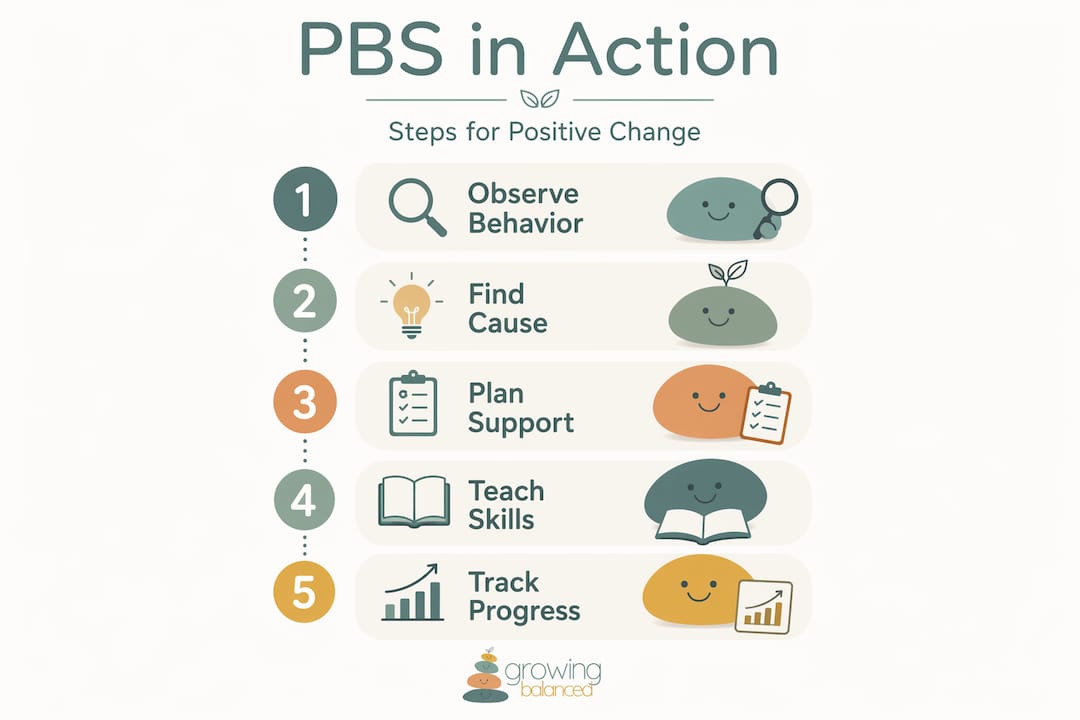
Behaviors typically serve one of four functions: gaining attention, gaining access to something preferred, escaping or avoiding a task or situation, and accessing internal sensory stimulation. Knowing which function is operating tells you exactly what the intervention needs to address.
Here is what effective FBA looks like in practice:
- Observation across settings: Data is collected in classrooms, hallways, the cafeteria, and sometimes at home to spot patterns
- Structured interviews: Teachers and parents share their observations and history with the behavior
- Hypothesis development: The team proposes a testable explanation for the behavior’s function
- Plan development: The behavior intervention plan is built directly from the hypothesis
Incorrect function hypotheses are one of the main reasons behavior plans fail despite everyone working hard. A child who throws materials to escape a noisy environment needs a sensory accommodation, not a social skills group. Misidentify the function and every subsequent intervention misses.
Pro Tip: Ask the school team to share the FBA data with you, not just the conclusions. If the hypothesis feels off based on what you see at home, say so. Parents hold data that no one in the building has.
Practical PBS strategies for parents and educators
The best positive behavior support examples are not dramatic or complicated. They are consistent, deliberate, and grounded in understanding what the child needs. PBS strategies focus on making problem behavior irrelevant, inefficient, and ineffective by changing the environment and teaching better alternatives.
Here are strategies you can start using now:
- Modify the environment: Reduce noise, offer movement breaks, adjust seating, or simplify transitions to remove common triggers before behavior escalates
- Teach replacement behaviors: If a child yells to get attention, directly teach them to raise their hand or use a card system, then reinforce that new skill consistently
- Use visual supports: Visual behavior charts and schedules give children a clear picture of expectations and routines, which significantly reduces anxiety-driven behavior
- Positive reinforcement: Catch the child doing it right. Specific, immediate praise tied to the expected behavior is more powerful than any token economy
- Align home and school: Share strategies, use the same language, and check in regularly so the child is not navigating two different systems
| Strategy | Works best when… |
|---|---|
| Environmental modification | Triggers are sensory or structural |
| Replacement skill teaching | Behavior serves a clear communication function |
| Visual schedules | Child needs predictability and routine |
| Positive reinforcement | Building new behavioral patterns |
| Home-school alignment | Behavior varies across settings |
For parents supporting sensory-sensitive children, the Growingbalanced resource on OT home program components offers PBS-compatible strategies built around sensory needs.
My honest take on why PBS works and where it breaks down
I’ve worked with enough families to know that PBS sounds elegant in theory and gets messy in practice. The framework is solid. The challenge is almost always implementation.
What I’ve seen work consistently: starting with genuine curiosity about the behavior instead of frustration. When adults shift from “How do I stop this?” to “What is this child trying to tell me?”, the whole dynamic changes. Prevention becomes more natural. Responses become calmer.
What I’ve seen derail good plans: inconsistency. One adult rewards the replacement behavior, another ignores it, and a third still reacts to the old behavior with attention. The child gets a mixed signal and the plan falls apart. PBS works as a system, not as something one committed person does in isolation.
My take is that the most underrated part of PBS is the family piece. School-wide approaches are powerful, but a child spends more waking hours at home than at school. Parents who understand what function a behavior serves and how to respond to it are genuinely irreplaceable partners, not just recipients of school communication.
— Kelsey
Support your PBS plan with Growingbalanced
Understanding PBS is one thing. Having the right tools to put it into practice daily is another.
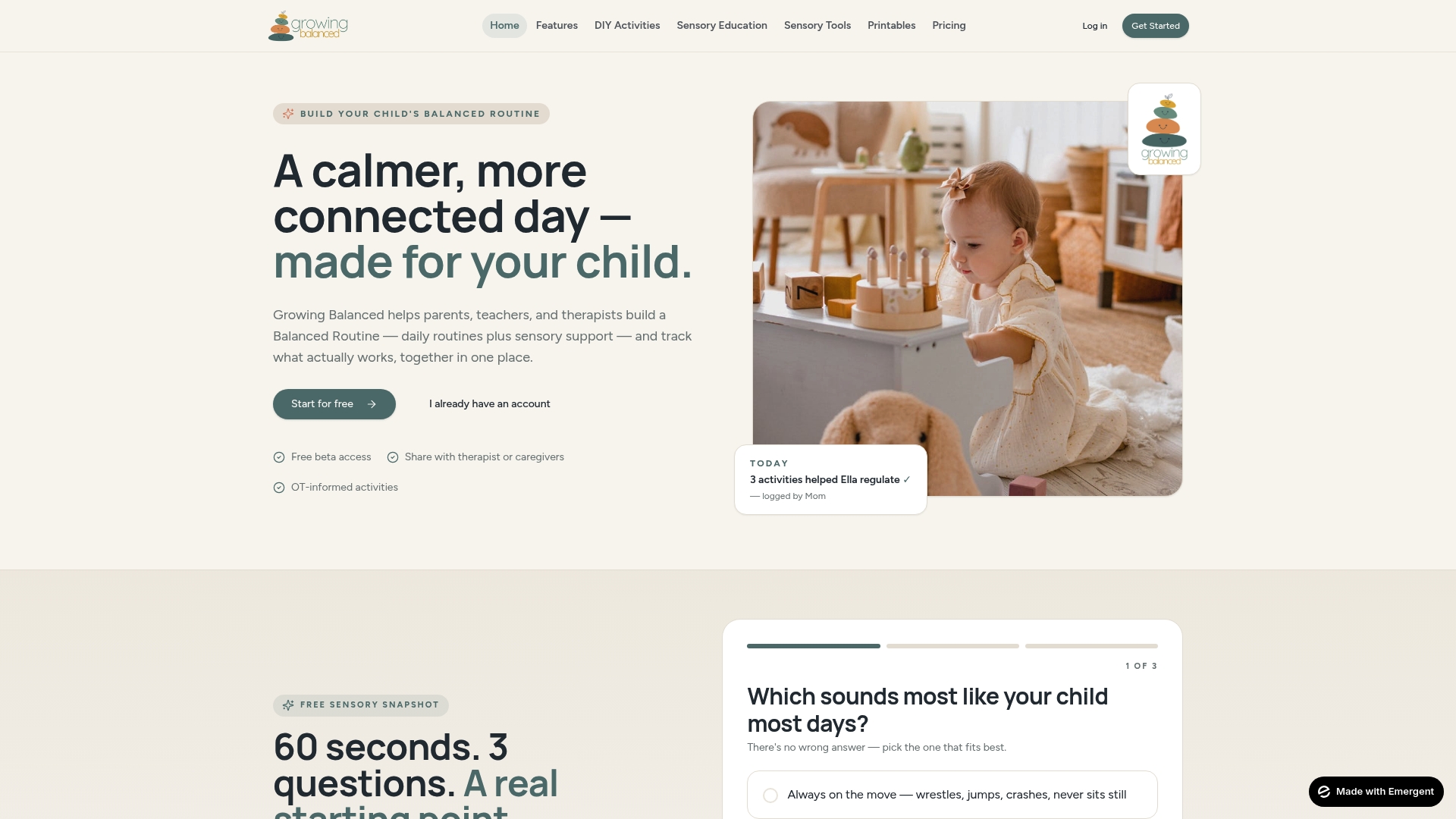
Growingbalanced is built for exactly this moment. The platform offers daily visual schedules and balanced routines designed around occupational therapy principles, which align directly with what PBS recommends: predictability, structure, and personalized sensory support. Whether you are a parent trying to create consistency at home or an educator building classroom routines that reduce triggering situations, the tools here are practical and immediately usable. You can also find free printable resources, co-regulation scripts, and sensory profiles that complement any behavior support plan. It is the kind of support that makes the “do it consistently” part of PBS actually achievable.
FAQ
What does PBS stand for in education?
PBS stands for Positive Behavior Support, an evidence-based framework that uses functional behavior assessment and individualized plans to reduce challenging behavior and improve quality of life for children.
How is PBS different from punishment-based discipline?
PBS focuses on understanding why a behavior occurs and teaching a replacement skill, while punishment-based discipline addresses only the surface behavior without resolving its root cause, which typically means the behavior returns.
What is a functional behavior assessment?
An FBA is a structured process that collects observation data, analyzes antecedents and consequences, and identifies the function a challenging behavior serves, which then guides the creation of a targeted behavior intervention plan.
Can parents use PBS strategies at home?
Yes. Core PBS strategies such as modifying the environment, using visual schedules, teaching replacement behaviors, and providing specific positive reinforcement are all applicable at home and work best when aligned with what the child’s school is doing.
What are the three tiers of PBIS?
Tier 1 provides universal supports for all students, Tier 2 offers targeted support for students showing some risk, and Tier 3 delivers intensive, individualized support for students with the most complex behavioral needs.