Behavior Escalation Warning Signs: A Parent's Guide
Learn what a behavior escalation warning sign is to help your child. Recognize key cues early and intervene before a crisis occurs.
Behavior Escalation Warning Signs: A Parent’s Guide
TL;DR:
- Behavior escalation warning signs are observable cues indicating a child’s emotional or behavioral distress is intensifying. Recognizing early signs such as vocal tension, body language, and emotional leakage allows caregivers to intervene before a crisis occurs. Responding with calm, structured support and consistent monitoring can prevent escalation and promote emotional regulation.
A behavior escalation warning sign is an observable cue that a child’s emotional or behavioral state is intensifying toward distress or crisis. These signs appear before a full behavioral outburst and include changes in vocal tone, body language, and emotional responses. According to The Behavior Studio, key early indicators include increased vocal intensity, clenched fists, pacing, and emotional leakage. Recognizing these cues early gives parents, educators, and caregivers a real window to step in before a situation becomes a crisis. The clinical term for this process is behavioral escalation, and understanding it is the foundation of effective behavioral support.
What is a behavior escalation warning sign?
A behavior escalation warning sign is any observable shift in a child’s vocal, physical, or emotional state that signals rising distress. Behavioral escalation manifests as increased vocal intensity, heightened emotional responses, unpredictable body language, and repetitive arguing. These are not random behaviors. They follow a predictable pattern that moves from calm to agitation to crisis, and each stage offers a chance to intervene.
The most common vocal warning signs include:
- Raised voice or yelling — volume increases sharply, often without a clear trigger
- Rapid or pressured speech — words come faster than usual, signaling internal overwhelm
- Argumentative or confrontational tone — the child challenges every instruction or comment
- Profanity or threatening language — a serious escalation indicator requiring immediate, calm response
These vocal shifts matter because they reflect rising emotional intensity before the child has the words or skills to say “I’m overwhelmed.” A child who suddenly starts speaking in short, clipped sentences or raises their voice mid-conversation is showing you their nervous system is under strain. Responding with curiosity rather than correction at this stage makes a measurable difference.
Pro Tip: Keep a brief log of the time, setting, and trigger each time you notice vocal warning signs. Patterns across a week often reveal predictable stress points you can address proactively.
Which physical cues signal early behavioral escalation?
Nonverbal cues such as sudden eye contact cessation, body posture shifts, and altered breathing often predict escalation earlier than verbal aggression. This is the insight most caregivers miss. By the time a child is yelling, the window for easy intervention has already narrowed.

The table below summarizes the most common physical warning signs and what each one signals:
| Physical Sign | What It Signals |
|---|---|
| Clenched fists or jaw | Physical tension building toward outburst |
| Pacing or restlessness | Nervous system in fight-or-flight mode |
| Heavy or rapid breathing | Physiological arousal indicating high stress |
| Avoiding eye contact | Withdrawal or shame response |
| Sudden fixed staring | Hypervigilance or defiance building |
| Fidgeting or inability to sit still | Sensory or emotional dysregulation |
The CDC’s workplace violence guidance confirms that observable physical tension signals, including clenched fists, raised voice, and increased pacing, indicate an impending outburst. The same physical cues apply in children. A child who is pacing the classroom or gripping the edge of a desk is communicating distress through their body before they can express it verbally.
Pro Tip: Scan for clusters, not single signs. One fidget is normal. Fidgeting combined with heavy breathing and averted eye contact is a cluster worth addressing immediately.
How do emotional and behavioral patterns reveal escalation?
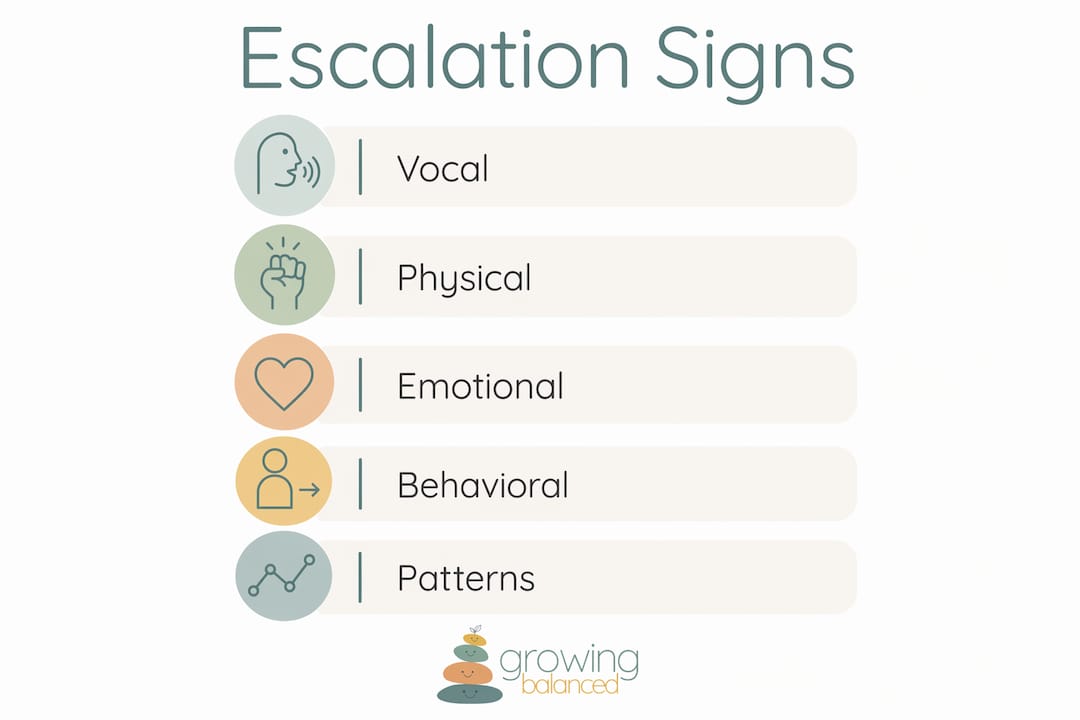
Emotional and behavioral patterns are the third layer of escalation indicators, and they are often the most misread. Three patterns stand out as reliable red flags.
Emotional leakage is the first. Emotional leakage occurs when intense feelings spill out through minor outbursts before a full behavioral crisis. A child might slam a pencil down, mutter under their breath, or cry briefly and then stop. These are not random acts. They are the emotional pressure valve releasing before a full explosion.
Resistance and refusal are the second pattern. A child who suddenly refuses every request, argues about rules they normally follow, or shuts down communication is showing you that their capacity to cope is maxed out.
Circular arguing is the third. Circular negative behavioral patterns involve repeated escalation cycles, often triggered when adults respond to resistance with punishment rather than structure. The child escalates, the adult reacts harshly, and the behavior worsens. Recognizing this loop is the first step to breaking it.
Common emotional warning signs to watch for:
- Sudden tearfulness or mood swings without clear cause
- Increased opposition to routines that were previously accepted
- Withdrawal from peers or preferred activities
- Repetitive complaints about the same frustration with no resolution
Understanding emotional regulation for children with special educational needs can help you interpret these patterns with more accuracy and less frustration.
When do warning signs indicate a mental health concern?
Not every escalation episode signals a clinical concern. The distinction lies in frequency, persistence, and functional impact. Behavioral patterns become clinically significant when they are frequent or persistent enough to interfere with a child’s social and cognitive functioning.
Watch for these additional indicators that suggest a deeper concern:
- Significant withdrawal from friends, family, or school activities lasting more than two weeks
- Sleep disturbances, including difficulty falling asleep, frequent waking, or nightmares
- Physical complaints like stomachaches or headaches with no medical cause
- A marked drop in academic performance or loss of previously mastered skills
- Escalation episodes that occur daily or in multiple settings
When these signs appear together, document them. Write down the date, setting, duration, and what happened before and after each episode. This record gives healthcare providers the specific information they need to assess the child accurately. Early intervention prevents patterns from becoming entrenched. Waiting for a crisis to seek help is the most common and costly mistake caregivers make.
What steps help parents and educators respond effectively?
The most effective response to escalation warning signs is calm, structured, and immediate. Discipline that focuses on structure and clear expectations produces better outcomes than punishment, which tends to reinforce the escalation cycle.
Follow these steps when you notice warning signs:
- Stay calm. Your regulated nervous system is the most powerful co-regulation tool available. A raised adult voice amplifies a child’s distress.
- Name what you see without judgment. Say “I notice you’re having a hard time right now” rather than “Stop acting out.”
- Reduce demands temporarily. Piling on instructions during early escalation accelerates the crisis. Simplify the environment.
- Offer a sensory or movement break. Physical movement helps discharge nervous system arousal quickly and effectively.
- Use visual supports. Visual schedules reduce anxiety by making expectations predictable and concrete.
- Seek professional support when patterns persist. A behavior support plan created with a specialist gives you a structured, consistent framework.
Pro Tip: Practice co-regulation scripts during calm moments, not crisis moments. Children learn the language of self-regulation when they are regulated, not when they are overwhelmed.
What i’ve learned from watching adults miss the window
Most escalation crises I’ve seen were preventable. The warning signs were there. Adults either dismissed them as “just frustration” or waited for verbal aggression before responding. That delay is the problem.
Early dismissal of escalation signs as mere frustration misses the preventative window for co-regulation and trauma-informed care. Once a child reaches full crisis, the adult’s job shifts from prevention to damage control. Those are very different conversations.
The other mistake I see constantly is adults personalizing the behavior. A child pacing and clenching their fists is not being defiant at you. They are showing you they need help regulating. The moment you take it personally, your response stops being therapeutic and starts being reactive.
What actually works is consistent, patient observation over time. You learn a child’s specific escalation pattern. You recognize their version of emotional leakage. You catch the pacing before the yelling. That knowledge is built through attention, not intuition. Building emotional resilience in neurodiverse children requires exactly this kind of informed, steady presence.
Early recognition does not require a clinical degree. It requires you to watch, document, and respond before the situation demands it.
— Kelsey
How Growingbalanced supports families navigating escalation signs
Growingbalanced is built for exactly this situation. When you know what warning signs to look for, the next step is having tools that help children stay regulated before those signs appear.

Growingbalanced offers daily visual schedules and balanced routines grounded in occupational therapy principles. These tools reduce the unpredictability that triggers escalation in the first place. Parents and educators can build personalized sensory support plans, access co-regulation scripts, and share resources across home and school settings. The platform also includes behavioral regulation strategies and printable materials designed to support children at every stage of their regulation journey. Prevention starts with structure, and Growingbalanced makes that structure accessible.
FAQ
What is a behavior escalation warning sign in children?
A behavior escalation warning sign is an observable cue that a child’s emotional or behavioral state is intensifying toward distress or crisis. Common examples include raised voice, clenched fists, pacing, and emotional leakage.
How early do physical warning signs appear before a behavioral outburst?
Physical cues like altered breathing, body tension, and avoidance of eye contact often appear before verbal aggression. Catching these nonverbal signals gives caregivers the earliest and most effective window for intervention.
What is emotional leakage and why does it matter?
Emotional leakage occurs when intense feelings spill out through minor outbursts, such as slamming objects or brief crying, before a full behavioral crisis. It represents a near-peak warning stage and signals that immediate, calm support is needed.
When should a parent seek professional help for escalation behaviors?
Seek professional help when escalation episodes are frequent, occur across multiple settings, or interfere with a child’s social or academic functioning. Persistent withdrawal, sleep disturbances, and physical complaints alongside behavioral escalation are additional indicators.
Does punishment stop behavior escalation in children?
Punishment typically worsens escalation by reinforcing circular negative behavioral patterns. Structure, clear expectations, and calm co-regulation are more effective at reducing escalation cycles over time.
Recommended
- Sensory Seeking Behavior Explained for Parents · Growing Balanced Blog
- Adaptive Equipment in Pediatric OT: A Parent’s Guide · Growing Balanced Blog
- Behavioral Regulation Classroom Strategies Explained · Growing Balanced Blog
- Behavioral Support Strategies for Elementary Teachers · Growing Balanced Blog