Behavioral Regulation Classroom Strategies Explained
Discover effective behavioral regulation classroom strategies explained. Learn proactive methods to enhance self-regulation and reduce disruptions!
Behavioral Regulation Classroom Strategies Explained
TL;DR:
- Proactive behavioral regulation strategies focus on teaching self-regulation skills before problems occur, promoting long-term positive outcomes.
- Effective approaches include explicit instruction, environmental design, teacher self-regulation, and consistent routines, especially during high-risk transitions.
Behavioral regulation classroom strategies are proactive techniques teachers use to help students develop self-regulation skills, reduce disruptive behavior, and build the social-emotional foundation needed for learning. The industry standard term for this work is social-emotional and behavioral health (SEBH) skill instruction, and it sits at the core of frameworks like Positive Behavioral Interventions and Supports (PBIS) and co-regulation. Research consistently shows that prevention-focused SEBH instruction outperforms reactive discipline in both short-term compliance and long-term student outcomes. For educators and caregivers, understanding how these strategies work together is the difference between managing behavior and actually changing it.
What are the key components of behavioral regulation strategies?
Effective behavioral regulation classroom strategies share a common structure: they are built before a problem occurs, not after. OSPI guidance recommends identifying which SEBH skills students are missing, teaching those skills explicitly with clear examples, and reminding students of expectations before transitions rather than reacting once behavior has already escalated. That last point matters more than most educators realize. Transitions are the highest-risk moments in any school day, and treating them as teaching opportunities rather than tests of compliance shifts the entire classroom dynamic.
The core components of effective behavioral regulation include:
- Explicit SEBH skill instruction: Teach skills like emotional identification, frustration tolerance, and flexible thinking as you would any academic concept, with modeling, practice, and feedback.
- Teacher self-regulation: ASCD research shows that a teacher’s vocal tone, facial expressions, and gestures directly affect students’ regulation states. A calm adult is a regulatory tool.
- Clear expectations and predictable routines: Students with behavioral regulation needs rely on structure to reduce cognitive load and anxiety. Consistent routines lower the frequency of dysregulation before it starts.
- Environmental design: Lighting, noise levels, and visual clutter all influence a student’s ability to self-regulate. Reducing sensory overload in the physical space is a low-cost, high-impact adjustment.
- Well-designed instruction: Engaging, relevant lessons reduce disruptive behavior by keeping students cognitively active. Boredom and confusion are two of the most underrated triggers for behavioral escalation.
Pro Tip: Place brief SEBH reminders at every transition point in your schedule. A five-second verbal cue before a class change (“We’re moving to math now. Take a breath and check your body”) costs nothing and reduces the number of behaviors you respond to later.
How do replacement skills and co-regulation techniques support students?

Reactive punishment fails because most behavioral challenges signal a missing skill, not a character flaw. Cult of Pedagogy explains that teaching coping skills during a meltdown is ineffective. The student’s brain is in a stress response and cannot absorb new learning. The replacement skills approach requires teaching the skill during calm, low-demand moments so the student has it available when stress arrives.
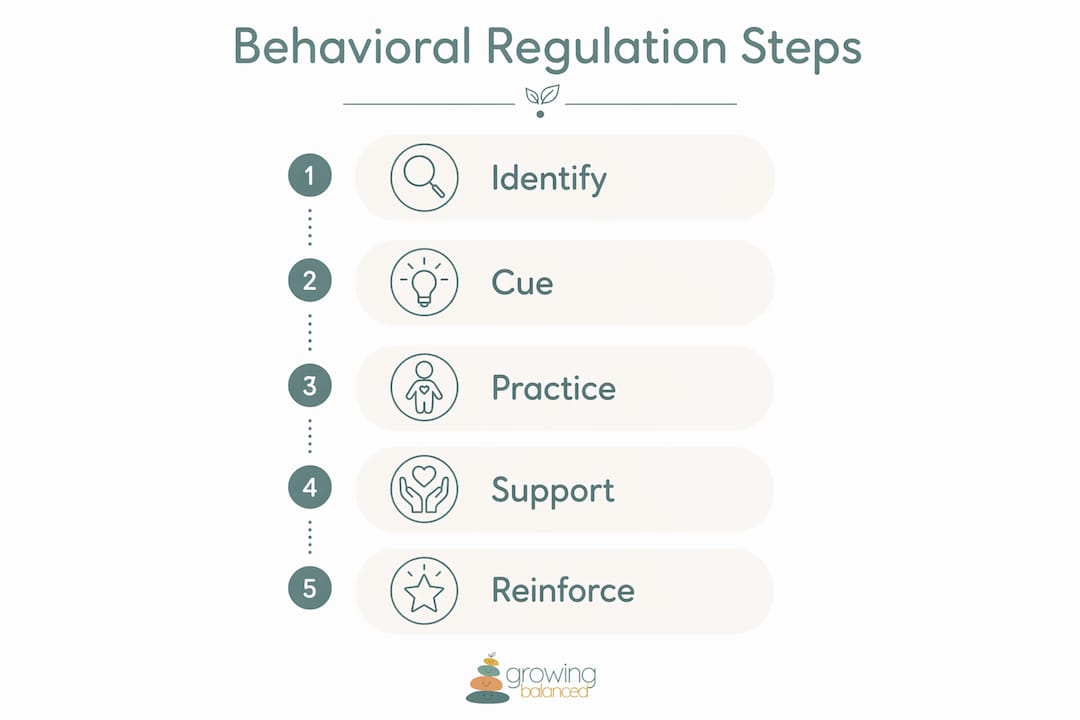
Here is a practical sequence for implementing replacement skills and co-regulation in your classroom:
- Identify the function of the behavior. A student who shouts during group work may be seeking escape from frustration, not attention. The replacement skill must serve the same function.
- Teach the skill explicitly during calm time. Practice deep breathing, requesting a break, or using an emotion chart when nothing is wrong. This builds the neural pathway before it is needed.
- Use co-regulation during escalation. ASCD recommends sequencing co-regulation steps: first reduce your own activation as the adult, then process the student’s feelings, and only then return to academic tasks. Skipping step one is the most common error.
- Introduce nonverbal cues and silent signals. A hand signal for “I need a break” or a color-coded emotion chart gives students a low-barrier way to communicate regulation needs without disrupting the class.
- Debrief after calm is restored. A brief, non-punitive conversation after an incident builds self-awareness and reinforces the replacement skill for next time.
Consistent practice over time is what makes coping skills stick. Cult of Pedagogy advises committing to a single coping skill for at least two weeks with micro-routines before introducing anything new. This is the part most educators skip, and it is why many strategies feel like they “don’t work.”
Pro Tip: Build micro-routines into low-demand moments, like the first five minutes of morning meeting, to practice one coping skill daily. Two weeks of consistent reps embeds the skill far more reliably than any crisis intervention.
What role does PBIS play in behavioral regulation?
Positive Behavioral Interventions and Supports (PBIS) is a three-tier, data-driven framework that provides the schoolwide structure behavioral regulation strategies need to be sustainable. PBISRewards outlines four core mechanisms: explicit teaching of behavioral expectations, immediate positive reinforcement, predictable routines, and data-guided interventions. Each tier increases in intensity based on student need, from universal classroom supports at Tier 1 to individualized plans at Tier 3.
The contrast between PBIS and traditional reactive discipline is significant:
| Approach | Focus | Timing | Outcome |
|---|---|---|---|
| PBIS | Skill-building and prevention | Before behavior occurs | Improved climate, reduced referrals |
| Reactive discipline | Consequence delivery | After behavior occurs | Short-term compliance, skill gap remains |
| PBIS with data | Individualized intervention | Ongoing and adjusted | Sustainable behavioral change |
| Punishment-only | Behavior suppression | After escalation | Increased anxiety, no skill growth |
Washington school districts using prevention-first training reported up to a 68% reduction in restraint and a 95% decline in isolation practices. That result is not accidental. It reflects what happens when PBIS is implemented with fidelity across an entire system, not just in individual classrooms. Schoolwide consistency is what separates PBIS from a collection of classroom tricks. When every adult in a building uses the same language, the same expectations, and the same reinforcement systems, students with behavioral regulation needs experience the predictability their nervous systems require.
For a deeper look at how positive behavior support applies specifically to children, Growingbalanced offers a clear breakdown of PBS principles and reinforcement techniques.
How can educators and caregivers apply these strategies for diverse learners?
No two students regulate the same way, and effective behavioral strategies for educators require individualization from the start. A student with ADHD may need movement breaks embedded into the schedule, while a student with anxiety may need advance notice before any routine change. Both needs can be addressed within the same classroom when the structure is flexible by design.
Practical steps for applying behavioral regulation strategies across diverse learners include:
- Use visual supports. Visual schedules, emotion charts, and posted classroom expectations reduce the verbal processing load for students who struggle with auditory instruction. Visual supports are especially effective for learners with autism, ADHD, and sensory processing differences.
- Align home and school strategies. Caregivers who use the same co-regulation language and coping skills at home accelerate generalization. Share your classroom scripts and co-regulation approaches directly with families.
- Build a behavior support plan. For students who need more than universal supports, a written plan that documents triggers, replacement skills, and reinforcement strategies creates consistency across all adults. Growingbalanced offers a practical guide on building a behavior support plan for classroom use.
- Debrief and reflect. After a behavioral incident, a structured debrief with the student builds metacognitive awareness. Ask what the student noticed in their body before the escalation, not what they did wrong.
- Integrate support into Multi-Tiered Systems of Supports (MTSS). Sustainable behavioral outcomes require district-level professional development, data use, and leadership alignment. Individual teacher effort matters, but systemic support is what makes it last.
What I’ve learned about prevention over reaction
The most common mistake I see educators make is treating behavioral regulation as something you do after a student falls apart. The entire premise of effective behavioral regulation classroom strategies is that the work happens before the crisis. Skill-building in calm moments, environmental design, and teacher self-regulation are not supplementary. They are the strategy.
The second thing I would push back on is the idea that these approaches are too time-consuming for a busy classroom. In my experience, the time spent teaching a coping skill during morning meeting is a fraction of the time lost to managing a full escalation. Prevention is not idealistic. It is efficient.
Adult dysregulation is the most underacknowledged variable in this work. When a teacher’s voice tightens or their body language closes off, students with sensitive nervous systems pick it up immediately. Your calm is not a soft skill. It is a direct intervention. The research from ASCD on co-regulation makes this explicit, and it is the piece most professional development programs still underemphasize.
Finally, systemic support matters. Individual teachers cannot sustain these strategies in isolation. When MTSS, professional development, and leadership are aligned, the outcomes are transformative. The Washington school district data is not an outlier. It is what fidelity looks like.
— Kelsey
How Growingbalanced supports your behavioral regulation toolkit
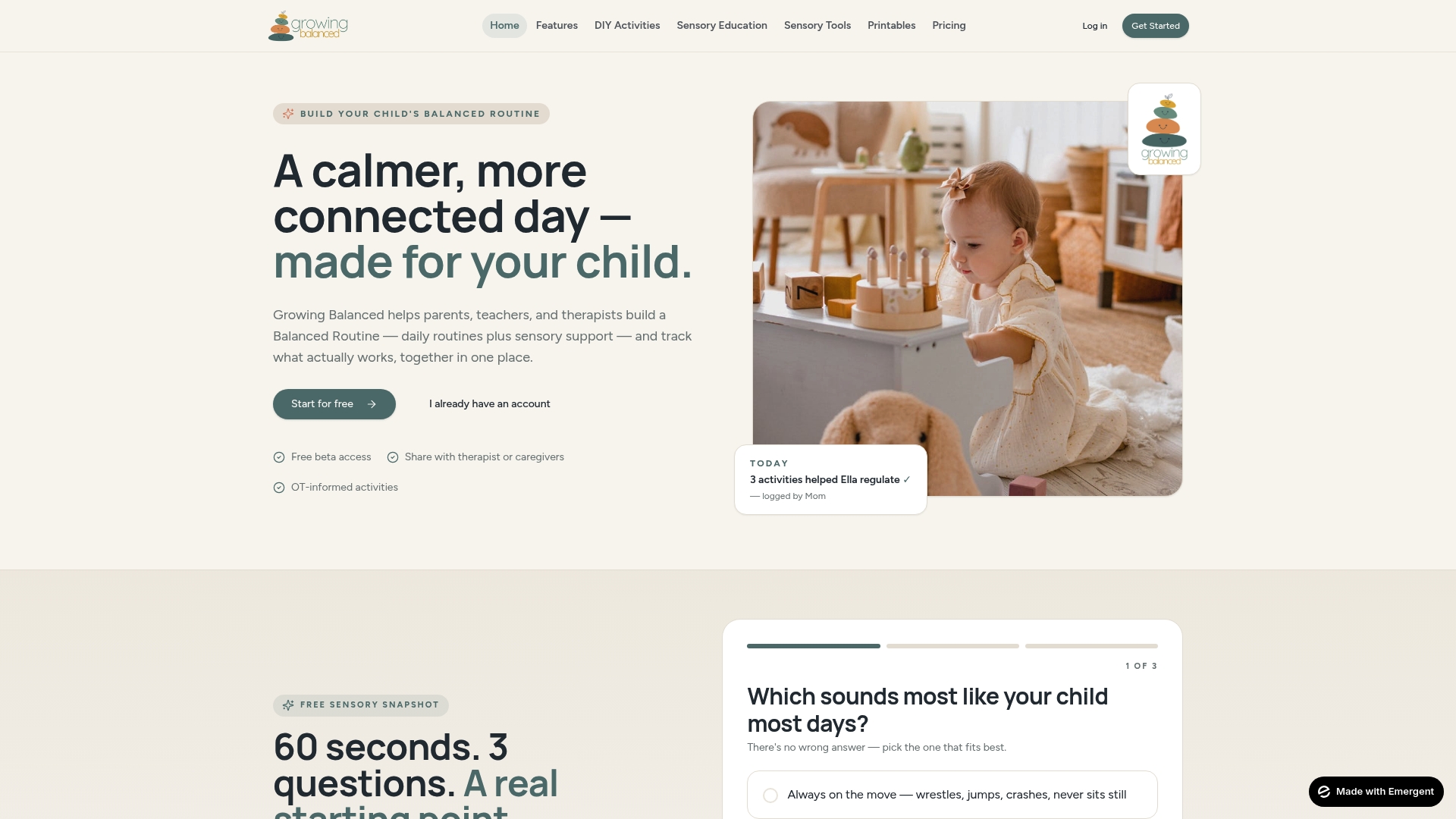
Growingbalanced is built specifically for educators and caregivers who want to put behavioral regulation strategies into daily practice without starting from scratch. The platform offers daily visual schedules and balanced routines grounded in occupational therapy principles, giving students the predictability and structure that reduce behavioral challenges before they start. Visual schedules increase consistency across home and school settings, which is one of the most reliable ways to support students with self-regulation needs. Growingbalanced also provides co-regulation scripts, sensory profiles, and printable resources that align directly with the PBIS and replacement skills approaches covered in this article. If you are ready to move from reactive management to proactive support, Growingbalanced gives you the tools to do it.
FAQ
What are behavioral regulation classroom strategies?
Behavioral regulation classroom strategies are proactive, skill-based techniques educators use to help students develop self-regulation, reduce disruptive behavior, and build social-emotional competencies. They include PBIS frameworks, co-regulation, replacement skills instruction, and environmental design.
Why does punishment alone fail to improve student behavior?
Punishment addresses the behavior but not the missing skill driving it. Cult of Pedagogy explains that students who lack coping skills need explicit instruction in those skills during calm moments, not consequences during crisis.
When should coping skills be taught in the classroom?
Coping skills must be taught and practiced during calm, low-demand periods. Teaching during a behavioral crisis is ineffective because the student’s brain is in a stress response and cannot absorb new learning.
How does teacher self-regulation affect student behavior?
A teacher’s vocal tone, facial expressions, and body language directly influence students’ regulation states. ASCD research shows that adult calm reduces student activation and creates the conditions needed for learning to resume.
What is the PBIS framework and how does it support behavioral regulation?
PBIS is a three-tier, data-driven system that teaches behavioral expectations explicitly, reinforces positive behavior consistently, and uses student data to guide interventions. It provides the schoolwide structure that makes individual classroom strategies sustainable.