
Attention & Focus for Kids
Every parent has said 'FOCUS!' too many times. But attention isn't a choice — it's a skill built on sleep, environment, sensory input, movement, and interest. This is the central hub for every attention and focus resource on Growing Balanced.
What is attention & focus?
Your child isn't a problem to solve. They're a nervous system to understand — and support. Growing Balanced gives you the tools to do exactly that.
How this shows up in real life
Focus is the doorway into so many other skills:
School success
Homework, reading, writing — attention is the foundation.
Self-esteem
Kids who feel constantly behind carry that story. Small wins matter.
Friendships
Playdates, games, group activities — sustained attention makes them work.
Independence
Getting ready in the morning, packing a bag, following a routine — all executive function.
Family peace
Fewer nagging cycles. More trust. Calmer homework hours.
Signs your child may benefit from extra support
These aren't diagnoses — just patterns some parents recognize. If they resonate, this hub is a great place to start.
Loses focus within a minute or two on non-preferred tasks
Can hyperfocus on some things but not others
Forgets 3-4 step instructions almost immediately
Struggles to start tasks — even ones they don't hate
Homework battles that never seem to end
Gets restless, wiggly, or distracted more than same-age peers
Practical tips parents can try today
Small, actionable strategies you can weave into today. No prep required.
Environment first, effort second
Minimize clutter, reduce noise, define a workspace, add natural light. Half the focus battle is setup.
Move BEFORE focus
5 minutes of wall push-ups, animal walks, or a jump break wakes up the prefrontal cortex.
Chunk the task
Break it into micro-steps: 'first read one sentence, then check one box.' Reduce the leap.
Use a visible timer
Not to pressure — to externalize time. Time-blind kids need visual scaffolding.
Try body doubling
Sit nearby and work quietly on your own task. Proximity + parallel work regulates focus.
Fidgets aren't distractions
For the right kid, a fidget or a piece of gum LOCKS focus in. Test to find out.
Try one this week
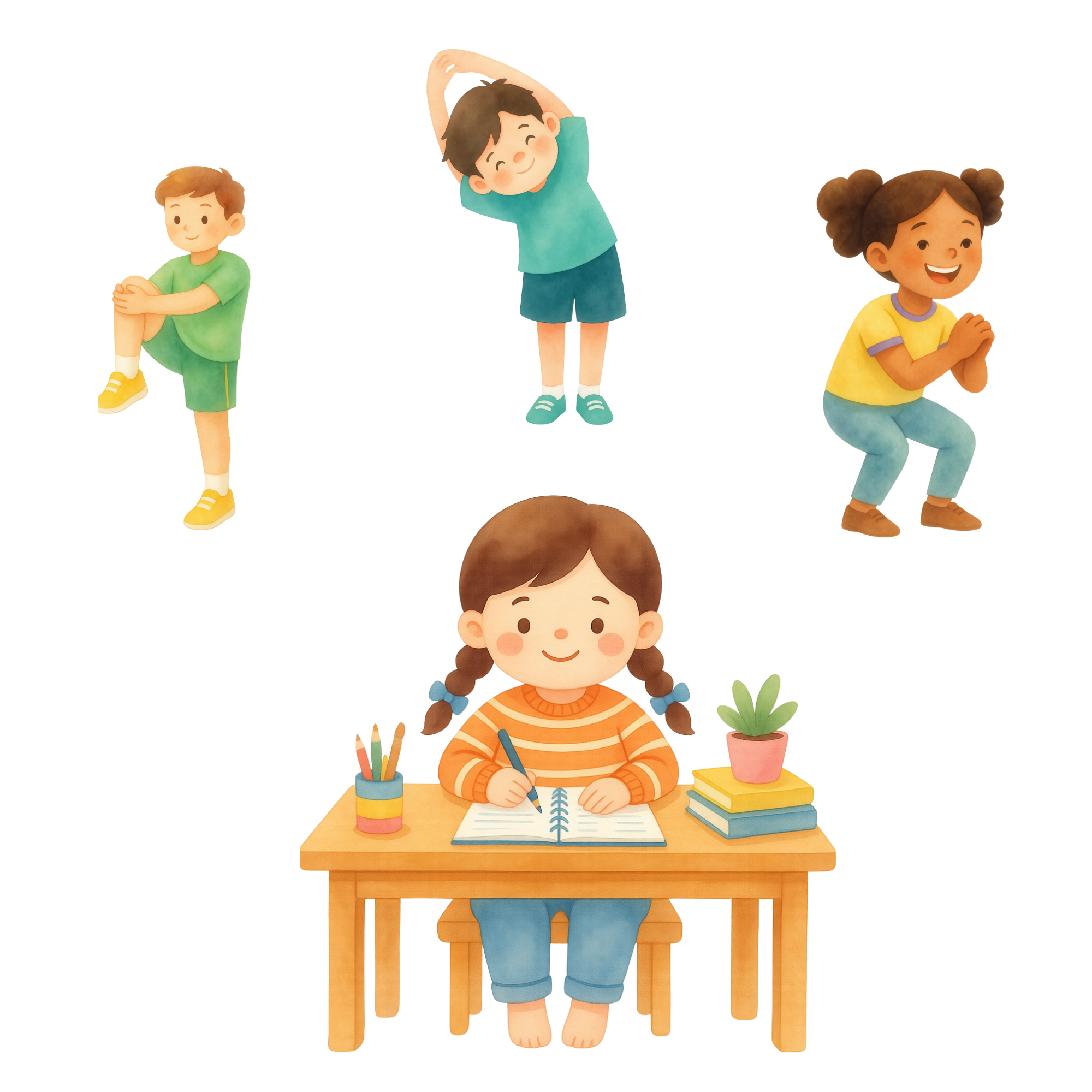
5-2-5 Homework Timer Stations
Tiny timed work sprints with mini movement breaks built in.
Try this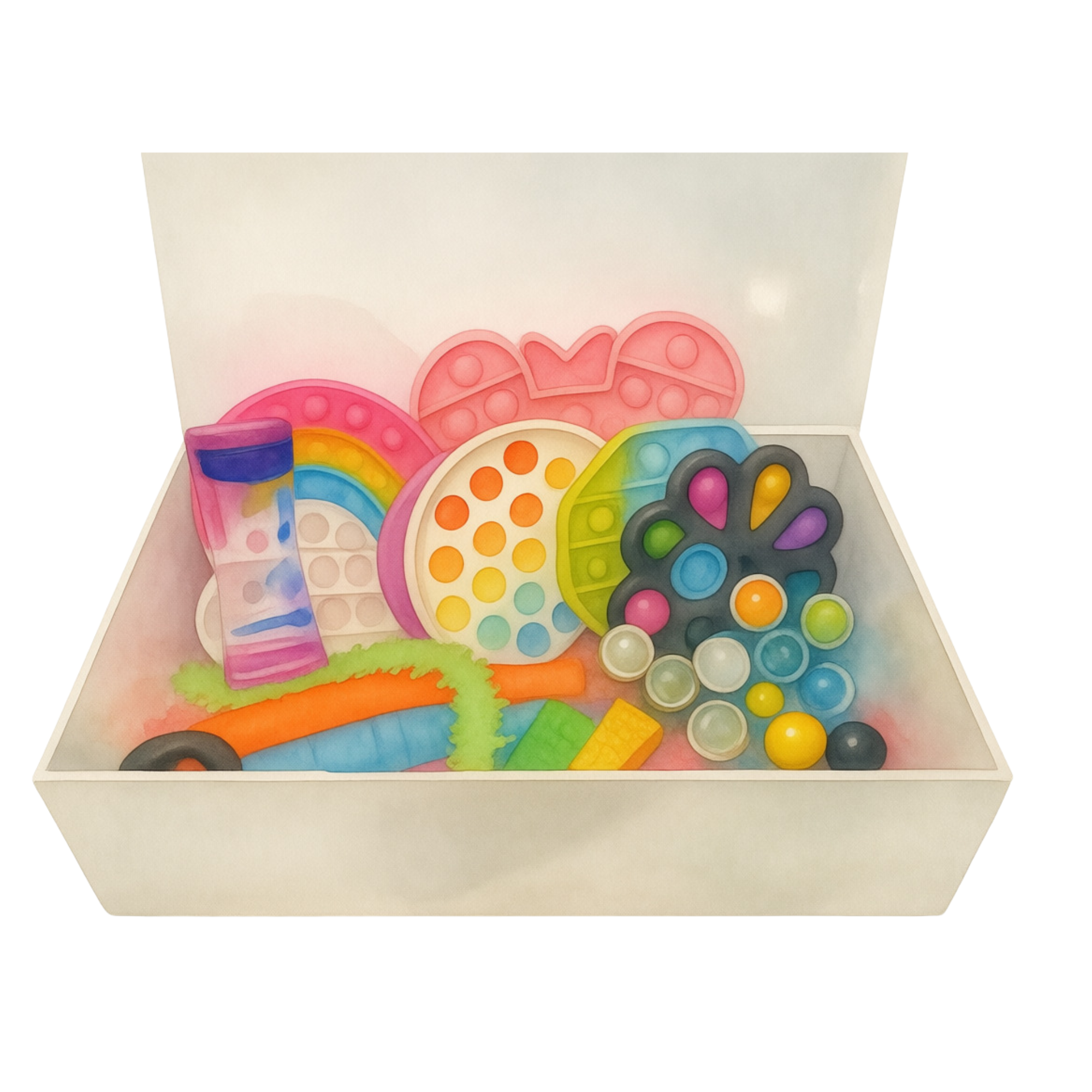
DIY Desk Fidget Toolkit
A tiny tray of low-noise fidgets that channel restless hands into focused minds.
Try this
Velcro Focus Checklist
A tactile homework checklist that lets kids physically 'rip off' done tasks.
Try thisGuided Help built for this topic
Free educational resources anyone can explore — roadmaps, activities, articles, and printables. No sign-up required.
Focus Education Center
How focus actually works — plus practical strategies parents can try today.
ExploreFocus Activities
Free DIY focus and attention activities you can layer into homework or play.
ExploreParent Toolbox Overview
See the full library of OT-designed strategies that support focus and follow-through.
ExploreFree Printables
Focus environment checklists, movement break cards, and homework micro-step sheets.
ExploreDeepen your knowledge
Attention & Focus Strategies for Kids Who Struggle to Sit Still
Practical, OT-informed strategies to help kids build attention and focus — including ADHD-friendly tips and sensory-supported ways to concentrate.
Read guideExecutive Function Skills by Age: What to Expect
What executive function is, how it develops from toddlerhood through high school, and what parents can actually do to support it at every stage.
Read guideHelping Kids with Transitions Without the Meltdowns
Why transitions are the hardest part of a child's day, and 15+ OT-informed strategies to make them smoother — for toddlers, preschoolers, and school-age kids.
Read guideLatest attention & focus articles
Grab-and-go printable supports
Practical printables you can put on the fridge, in a backpack, or on the wall today.
Focus Environment Checklist
Room-by-room checklist to set up a distraction-quiet workspace.
Browse printablesHomework Micro-Steps Sheet
Break assignments into manageable chunks with visual checkboxes.
Browse printablesGo deeper with our parent guides
Written by a pediatric OT. Free starter guides and full complete guides available.
Complete Parent Guide
The full playbook — strategies, scripts, printables, and expert guidance.
Explore the Full GuideKeep exploring attention & focus
A few gentle next steps parents find most helpful — pick whatever fits your family right now.
Attention & Focus — full hub
Help your child build the focus muscles they need — through the body, the environment, and the right tools.
Explore topicAttention & Focus Strategies for Kids Who Struggle to Sit Still
Practical, OT-informed strategies to help kids build attention and focus — including ADHD-friendly tips and sensory-supported ways to concentrate.
Read guideAttention & Focus activities to try today
Low-prep, parent-friendly DIY activities you can weave into today.
See activitiesAttention & Focus printables
Charts, cards, and worksheets you can print today.
Browse printablesVisual Schedules
Externalize focus with a predictable routine your child can follow independently.
See it in actionComplete Parent Guide
The full playbook — strategies, scripts, printables, and practical implementation.
Explore the Full GuideUnlock unlimited access to Guided Help, personalized recommendations, premium resources, and everything Growing Balanced has to offer.
Frequently asked about attention & focus
Warm, honest answers to the questions parents ask most.
How can I tell if my child has an attention problem or just typical kid focus?
Look at intensity, persistence, and impact. Kids who can hyperfocus on preferred activities but can't focus on anything else, who struggle across settings (school AND home), and whose lives are meaningfully impacted deserve a professional evaluation.
Does exercise really help attention?
Yes — the research is overwhelming. Even short bursts of vigorous movement (5-10 min) improve attention for 30-60 min after. Recess and PE aren't luxuries; they're brain fuel.
Can screens help or hurt attention?
Fast-paced screens (short videos, games with constant reward) can make sustained attention harder over time. Longer-form content (chapter books on audio, slow films) can support attention. Content matters as much as time.
How can I help my child focus on homework?
Movement break BEFORE, snack + water, quiet defined space, timer, break the task into micro-steps, work alongside them (body doubling), celebrate effort. Growing Balanced's Homework Helper is built for this exact moment.
Should I take away toys or screens to force focus?
Punishment rarely builds attention — it builds resentment. Instead, meet the underlying need: movement, sensory input, connection, or a smaller task. Focus grows when the nervous system is regulated.
My child has ADHD. What's different?
Kids with ADHD have executive function skills that develop 2-3 years behind neurotypical peers. They need MORE external scaffolding (checklists, timers, visuals), MORE co-regulation, and less expectation of internal follow-through. That's not permissive — it's developmentally accurate.
Are fidgets actually helpful?
For the right kid, absolutely. Fidgets are a low-cost way to give the sensory system enough input to let the thinking brain focus. Test different types — squishy, textured, motion-based — and let the child choose.
Parents exploring attention & focus may also find these helpful
Sensory Regulation for Kids
Understand your child's sensory needs, then build a calming daily rhythm that works for real life.
Explore topicEmotional Regulation for Kids
Everything you need to help your child understand, express, and move through big feelings — from an OT.
Explore topicRoutines & Visual Schedules
Predictable routines calm the nervous system. Visual schedules make them stick.
Explore topicReady to take the next step?
Explore practical tools, activities, visual schedules, and parent guides designed to help your family thrive.