
A daily visual schedule your child can actually follow.
Growing Balanced turns the chaos of the day into a calm, picture-based plan — with tasks, chores, meals, transitions, and supports all in one place. Built for the way real families actually move through their days.
Predictable days. Fewer daily battles.
When your child can see what's coming next, transitions get smoother, meltdowns get shorter, and you stop feeling like a full-time reminder machine. The visual schedule is the calm anchor for the whole day.
- See the whole day at a glance — no more 'what next?'
- Chores, meals, habits, transitions, and supports in one flow
- Kid View kids can run themselves — parent view stays in control
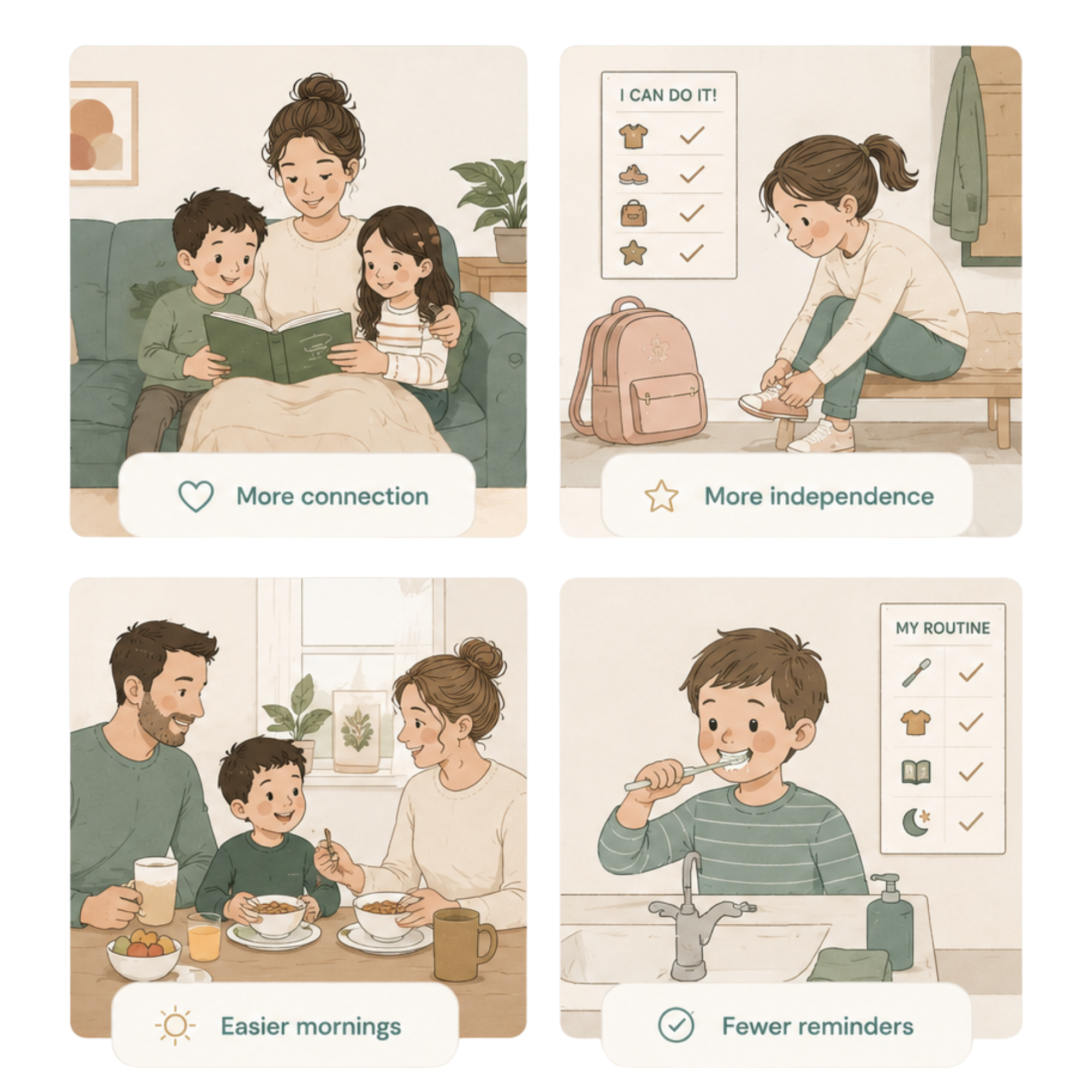
Four small steps to a calmer day.
- STEP 1
Start with a template or personalize.
Pick from ready-made age-banded routines (morning, after-school, bedtime, chores) or answer a few quick questions and we'll draft a plan tailored to your child.
- STEP 2
Drag, drop, and tuck in supports.
Add tasks, chores, meals, transitions, and quick sensory or emotional supports right where they're needed — no blank pages, no complicated setup.
- STEP 3
Choose the schedule mode that fits.
Simple checklist, timed steps, or gentle alerts — the same routine can look different for parents (edit view) and kids (locked Kid View).
- STEP 4
Repeat what works, adjust what doesn't.
Save routines, copy them across days, and refine them over time as your family's rhythm changes.
Everything you need to run the day.
The Growing Balanced schedule isn't just a checklist — it's a full family planner with the supports and rewards your child already needs, tucked right into the routine.
- Drag-and-drop schedule builder with friendly Lucide icons
- Ready-made starter routines for morning, after-school, chores, and bedtime
- Locked Kid View so children can check off steps without editing the plan
- Star rewards, streaks, treasure boxes, and daily spin baked into the flow
- Habit tracker, chore lists, meal plans, and to-do lists — all in one place
- Share the schedule with caregivers, teachers, or therapists
Because Parents Deserve Support Too.
While your child follows their visual schedule, you can stay organized with your own built-in Parent Dashboard. Keep everything in one place — no more switching between planners, grocery apps, notes apps, and habit trackers.
- Family schedules and your own planning in one place
- Build healthy habits and stay on top of everyday tasks
- Grocery lists, reminders, and to-dos without app-hopping
- Stay organized while your child builds independence
Start free — you'll have a picture-based schedule your child can follow in under 10 minutes.
Start Free TrialKeep exploring routines & visual schedules
A few gentle next steps parents find most helpful — pick whatever fits your family right now.
Routines & Visual Schedules — full hub
Predictable routines calm the nervous system. Visual schedules make them stick.
Explore topicWhy Visual Schedules Work: The Science and the Story
The research-backed reasons visual schedules reduce meltdowns, support autistic and ADHD kids, and make everyday transitions calmer. From a pediatric OT.
Read guideDIY activity library
180+ OT-informed activities across sensory, emotional, focus, and play.
Browse activitiesRoutines & Visual Schedules printables
Charts, cards, and worksheets you can print today.
Browse printablesVisual Schedules
Build a picture-based routine your child can actually follow in under 10 minutes.
See it in actionRoutines & Visual Schedules — Quick Guide
5 pages · free · delivered to your inbox.
Get the Starter GuideCreating Calm Through Routines & Visual Supports
The full playbook — strategies, scripts, printables, and practical implementation.
Explore the Full GuideUnlock unlimited access to Guided Help, personalized recommendations, premium resources, and everything Growing Balanced has to offer.
Visual schedules, answered
Practical answers from a pediatric OT.
Why do visual schedules work so well for kids?
Visual schedules give children an external anchor for their day — they can see what's happening next instead of relying on verbal reminders. This reduces transition anxiety, cuts down on meltdowns, and builds independence over time. For kids with autism, ADHD, or sensory sensitivities, visuals are especially powerful because they don't rely on working memory or interpretation.
What age is Growing Balanced's visual schedule for?
The visual schedule builder is designed for ages 2 through 10. Younger children benefit from picture-based tasks with short blocks, while older kids can use timed checklists and independent chore lists. You can adjust the view (icons only, icons + text, or text only) so it grows with your child.
How do I start using a visual schedule?
Start small. Pick one part of the day that feels hardest — mornings, after-school, or bedtime — and build a 3-to-5-step routine using our ready-made templates. Introduce it during a calm moment (not during a meltdown), walk through it once together, then let your child lead. Add complexity over the next few days as they get comfortable.
Can I create different routines for different days?
Yes. Growing Balanced supports weekday and weekend variations, school vs. no-school days, and one-off routines like doctor visits or travel days. You can also duplicate a routine and adjust it for a co-parent or grandparent household.
Will my child actually follow it?
Most kids respond to visual schedules within a week or two of consistent use, especially when parents narrate the schedule ('Look, snack is next') instead of enforcing it. We also weave in gentle rewards, streaks, and celebration moments so kids feel proud of following their routine, not compliant with it.
Do visual schedules help with autism or ADHD?
Yes — visual schedules are one of the most research-backed strategies for autistic children and children with ADHD. They reduce demand on working memory, make transitions predictable, and support executive function. Growing Balanced's templates are designed with neurodivergent kids in mind.