Behavioral Intervention Classroom Tools: 2026 Guide
Discover the top types of behavioral intervention classroom tools to enhance emotional and behavioral regulation, improving student success in 2026.
Behavioral Intervention Classroom Tools: 2026 Guide
TL;DR:
- Behavioral intervention classroom tools include visual supports, sensory regulation aids, and digital tracking systems that promote emotional, sensory, and behavioral regulation. Effective implementation relies on establishing strong routines, clear expectations, and relationships before layering these tools for student success. Data-driven use and connection-focused strategies enhance classroom behavior management and support diverse student needs.
Behavioral intervention classroom tools are defined as structured resources that support children’s emotional, sensory, and behavioral regulation by providing clear expectations and real-time feedback in learning environments. The most effective types of behavioral intervention classroom tools fall into three core categories: visual supports, sensory regulation aids, and digital tracking systems. Each category serves a distinct function, and proactive classroom management can prevent up to 80% of disruptions before they occur. That statistic means the right tools, used early and consistently, do more than react to problems. They stop most problems from starting.
1. visual behavioral intervention tools
Visual tools are the most widely used behavioral support tools in classroom settings, and for good reason. They make expectations concrete, reduce verbal reminders, and give students a reference point they can check independently. Common formats include behavior charts, visual schedules, and posted classroom rules with icons.
Behavior charts come in several designs:
- Participation charts track whole-class engagement and reward group effort
- Frog charts use color-coded levels to show behavioral status at a glance
- Bike charts represent progress toward a goal, keeping motivation visible
PBIS guidelines recommend 3–5 clear expectations per classroom, stated positively and in observable terms. “Keep hands to yourself” outperforms “No hitting” because it tells students exactly what to do. Visual schedules serve a similar function by reducing transition anxiety. When students know what comes next, they spend less energy on uncertainty and more on learning.
Pro Tip: Post visual expectations at student eye level, not teacher eye level. Students refer to them most during independent work, not during direct instruction.
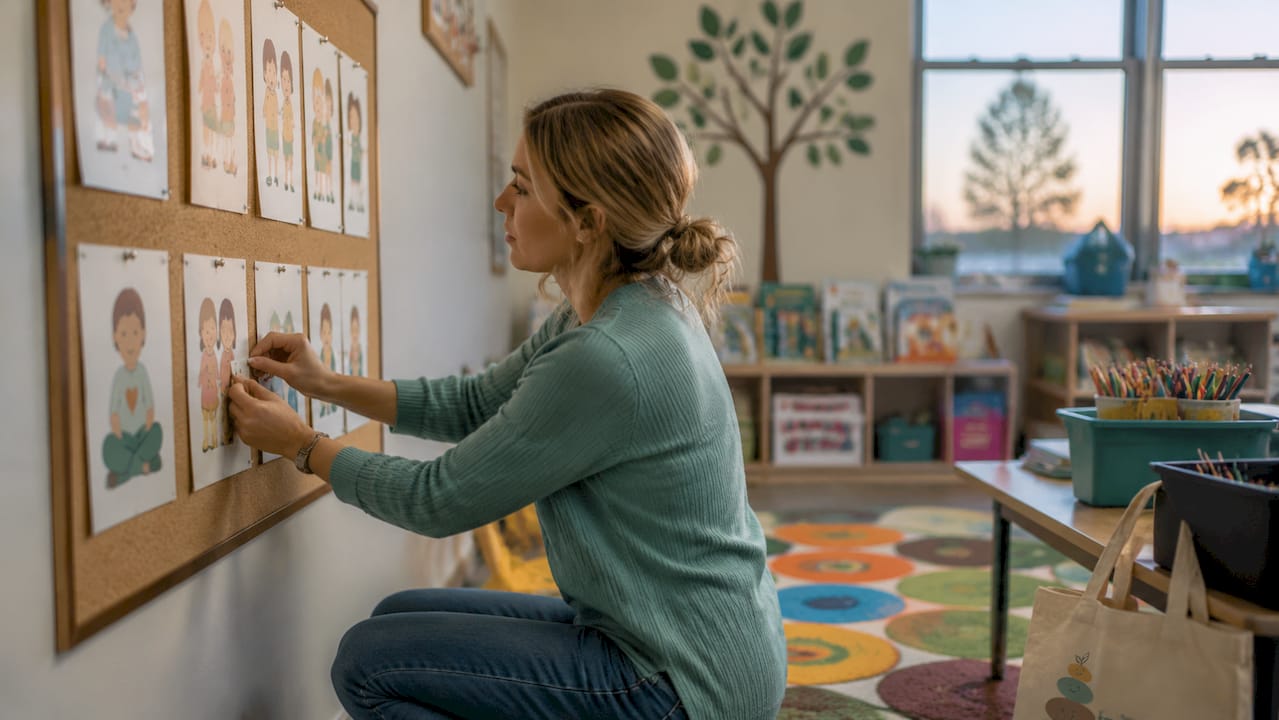
Visual timers and whiteboards also support behavioral time management by making abstract time concrete. A student who can see five minutes draining away on a timer transitions more smoothly than one who hears “five more minutes” from across the room.
2. sensory tools for emotional regulation
Sensory tools address the root cause of many classroom behavior incidents: sensory overload or under-stimulation. When a child’s nervous system is dysregulated, behavioral compliance drops regardless of how clear the expectations are. Sensory supports help students return to a regulated state so learning can happen.
Core sensory tools used in effective classroom management include:
- Fidget tools (textured rings, stress balls, tangle toys) for students who need tactile input to focus
- Noise-canceling headphones for students sensitive to auditory stimulation during independent work
- Resistance bands on chair legs for students who need movement without leaving their seat
- Weighted lap pads to provide calming proprioceptive input
- Calm-down corners stocked with sensory items, visual breathing guides, and emotion cards
Classroom setup matters as much as the tools themselves. Reducing visual clutter, creating defined zones, and using soft lighting in designated areas all reduce sensory load. For a deeper look at how these tools fit into a broader support plan, sensory tools in classrooms is a practical starting point.
Pro Tip: Introduce sensory tools during calm moments, not crisis moments. Students need to practice using a calm-down corner when they are regulated so they can access it when they are not.
3. digital and data-driven behavioral tools
Digital behavior trackers give teachers the ability to log incidents, recognize patterns, and adjust interventions without disrupting instruction. The best tools allow behavior logging under 10 seconds, which is the threshold for practical classroom use. Any longer and teachers stop using them.
| Tool | Primary Function | Best For |
|---|---|---|
| ClassDojo | Real-time behavior points and parent communication | K–8 classrooms |
| Classcraft | Gamified behavior tracking and engagement | Middle school |
| Google Forms | Custom incident logging and data export | Any grade, data-focused teachers |
| PBIS Rewards | Schoolwide point systems and reporting | Whole-school implementation |
ClassDojo reports over 50 million users across 180 countries. That scale reflects how strongly teachers value tools that connect behavior data to parent communication in one step. Classcraft adds a game layer that works especially well with students who respond to extrinsic motivation. Google Forms costs nothing and gives teachers complete control over what they track.
The key principle behind data-driven intervention techniques for students is that patterns reveal what single incidents hide. A student who disrupts class every Tuesday after lunch is telling you something about their schedule, not their character.
4. comparing tool types: strengths and best uses
Choosing the right behavior modification resource depends on your classroom’s specific profile. The table below compares the three main categories across practical factors.
| Factor | Visual Tools | Sensory Supports | Digital Trackers |
|---|---|---|---|
| Ease of setup | High | Medium | Medium |
| Student engagement | High | High | Medium to High |
| Cost | Low | Low to Medium | Free to $10/month |
| Best age group | PreK–5 | PreK–12 | Grades 3–12 |
| Data output | None | None | High |
| Works without tech | Yes | Yes | No |
Visual tools work best as the foundation for any classroom. Sensory supports layer on top for students with identified regulation needs. Digital trackers add accountability and communication for teachers who need to document behavior for IEPs, 504 plans, or parent conferences. For students with autism or other neurodiverse profiles, autism-specific classroom strategies offer additional guidance on combining these tool types effectively.
5. positive reinforcement tools and behavior charts
Positive reinforcement is not just a philosophy. It is a measurable classroom behavior strategy. Research shows a 4–5 positive interactions for every corrective comment improves classroom culture and reduces the frequency of behavioral incidents over time. That ratio is harder to hit than it sounds, which is why structured tools help.
Token economy systems, praise cards, and class-wide reward charts all make positive reinforcement visible and consistent. A token board gives a student a concrete record of their progress toward a reward. A class-wide chart builds community by tying individual behavior to a shared goal. Both approaches shift the classroom dynamic from reactive to proactive.
Treating challenging behavior as communication is the mindset shift that makes these tools work. A student who throws materials during math is not being defiant. They are telling you something is wrong. Positive reinforcement tools help you catch the moments when things go right, so you can build on them.
6. how to select and implement tools effectively
Selecting behavioral support tools without a foundation in place is the most common mistake educators make. Layering interventions without Tier 1 supports in place consistently leads to failure. Tier 1 means clear routines, consistent expectations, and strong relationships before any specialized tool is added.
A practical implementation sequence looks like this:
- Start with visual expectations. Post 3–5 rules in student-friendly language before adding any tracking system.
- Teach expectations explicitly. Behavioral expectations need to be taught like academic content, with modeling, practice, and feedback.
- Add sensory supports for specific students. Identify students with regulation needs and introduce tools during calm periods.
- Layer digital tracking last. Once routines are stable, add a tracker to identify patterns and communicate with families.
Pro Tip: Start with one tool and use it consistently for three weeks before adding another. Teachers who adopt five tools at once rarely sustain any of them.
For a structured approach to building this foundation, building a behavior support plan walks through the process step by step.
What 15 years of classroom observation taught me about these tools
The most common mistake I see is teachers reaching for a new tool when what a student actually needs is a stronger connection. A behavior chart does not work if the student does not trust the adult holding it. A calm-down corner collects dust if no one ever co-regulates with the child using it.
The tools in this article are genuinely useful. But they are multipliers, not solutions. They amplify what is already working in a classroom relationship. When I see a classroom where tone and connection drive compliance rather than enforcement, every tool in that room performs better. Start there. Add tools second.
The other thing I have learned: data matters more than instinct when it comes to adjusting interventions. Teachers who track behavior patterns, even informally, make better decisions than those who rely on memory. A two-week log of when and where incidents happen will tell you more than a month of guessing.
— Kelsey
How Growingbalanced supports your classroom practice
Growingbalanced is built for exactly the kind of work described in this article. The platform offers visual schedules and routines grounded in occupational therapy principles, designed for teachers, parents, and therapists to use together. You can build personalized sensory support plans, access printable behavior tools, and find co-regulation scripts that fit real classroom moments.
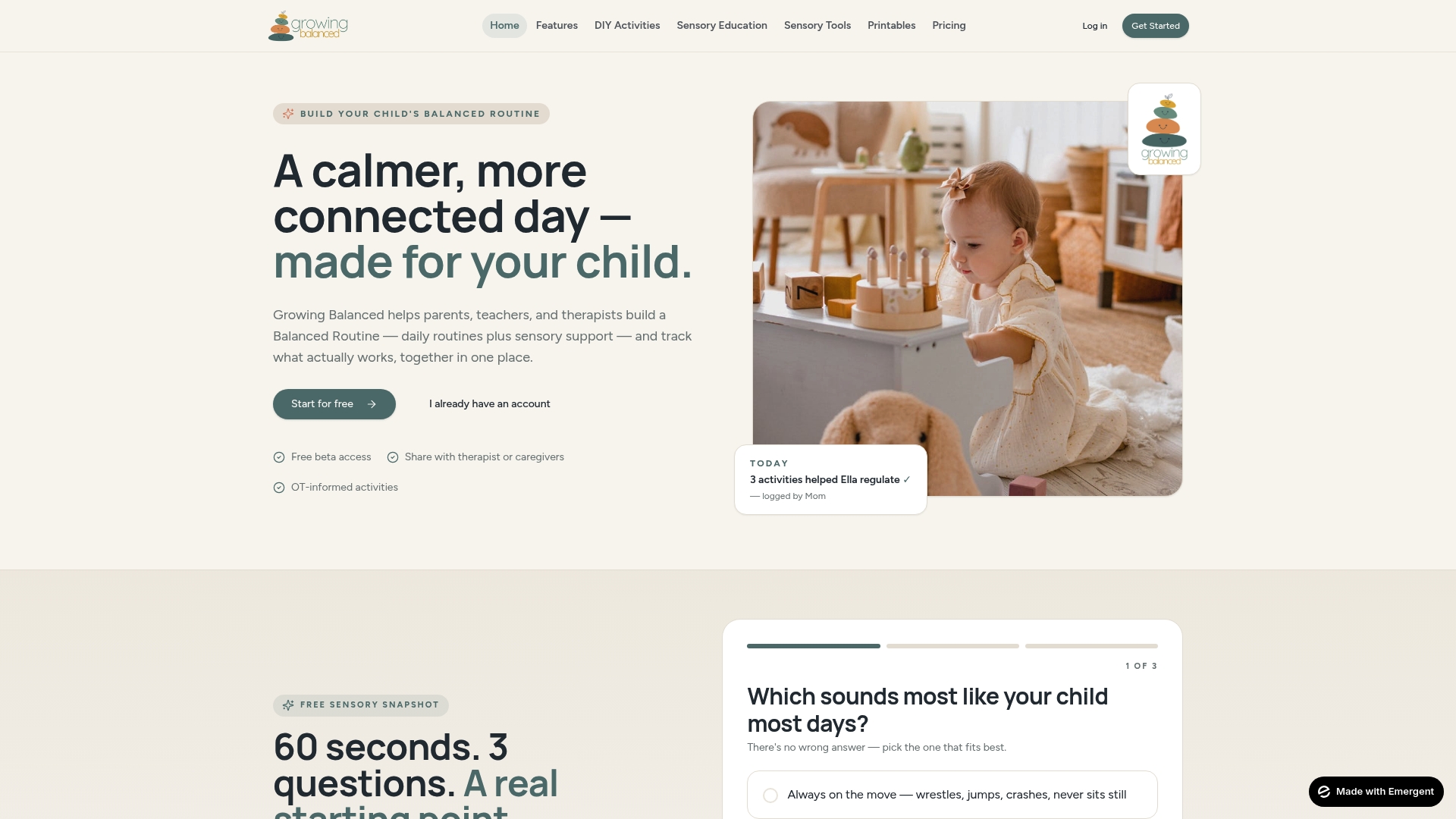
Growingbalanced also provides a resource library with sensory profiles, educational articles, and tools aligned with PBIS frameworks. Whether you are supporting one student with significant regulation needs or building a whole-class system, the platform gives you a structured starting point. Explore adaptive tools for special education to see how these resources connect to broader student support.
FAQ
What are the main types of behavioral intervention tools?
The three main types are visual supports (behavior charts, visual schedules), sensory regulation tools (fidgets, calm-down areas, noise-canceling headphones), and digital behavior trackers (ClassDojo, PBIS Rewards, Google Forms). Each type serves a different function and works best when layered on a strong classroom foundation.
How many classroom expectations should be posted?
PBIS guidelines recommend 3–5 positively stated, observable expectations. More than five creates confusion and reduces the likelihood that students will remember or follow them consistently.
When should a teacher add a digital behavior tracker?
Add a digital tracker after visual expectations and classroom routines are stable, typically three to four weeks into a consistent system. Tracking behavior before routines are established produces noisy data that is hard to interpret.
Do sensory tools work for all students?
Sensory tools are most effective for students with identified sensory processing differences, but many tools like visual timers and movement breaks benefit the whole class. Introduce tools proactively and teach students how to use them before a regulation crisis occurs.
What is the biggest mistake when implementing behavioral tools?
The most common error is adding multiple interventions before Tier 1 classroom supports are firmly in place. Strong routines, clear expectations, and consistent relationships must come first. Tools added on top of a weak foundation rarely produce lasting change.
Recommended
- Behavioral Regulation Classroom Strategies Explained · Growing Balanced Blog
- Behavioral Support Strategies for Elementary Teachers · Growing Balanced Blog
- How to build a behavior support plan for your classroom · Growing Balanced Blog
- Sensory Tools in Classrooms: What Educators Need to Know · Growing Balanced Blog