
Types of Sensory Accommodations in the Classroom: 2026 Guide
Discover effective types of sensory accommodations classroom strategies. Enhance learning with practical tips for teachers and parents in our 2026 guide.
Types of Sensory Accommodations in the Classroom: 2026 Guide
TL;DR:
- Sensory accommodations in classrooms include visual, auditory, and physical strategies that support children’s regulation and focus. Effective designs involve proactive, individualized plans that integrate sensory spaces, tools, and routines, developed through collaboration among parents, educators, and therapists. These accommodations benefit all students by creating a calmer, more manageable learning environment.
Sensory accommodations in the classroom are defined as specific environmental adjustments, tools, and strategies that help children with sensory regulation challenges focus, stay calm, and learn effectively. The types of sensory accommodations classroom educators and parents use most fall into six categories: visual adjustments, auditory controls, flexible seating, dedicated sensory spaces, handheld sensory tools, and structured sensory breaks. Each category targets a different sensory channel, and sensory-inclusive classrooms work best when they give learners control over their sensory environment through clarity, choice, and calm. Whether you are a parent advocating for your child or a teacher redesigning your room, this guide gives you the concrete options that actually work.
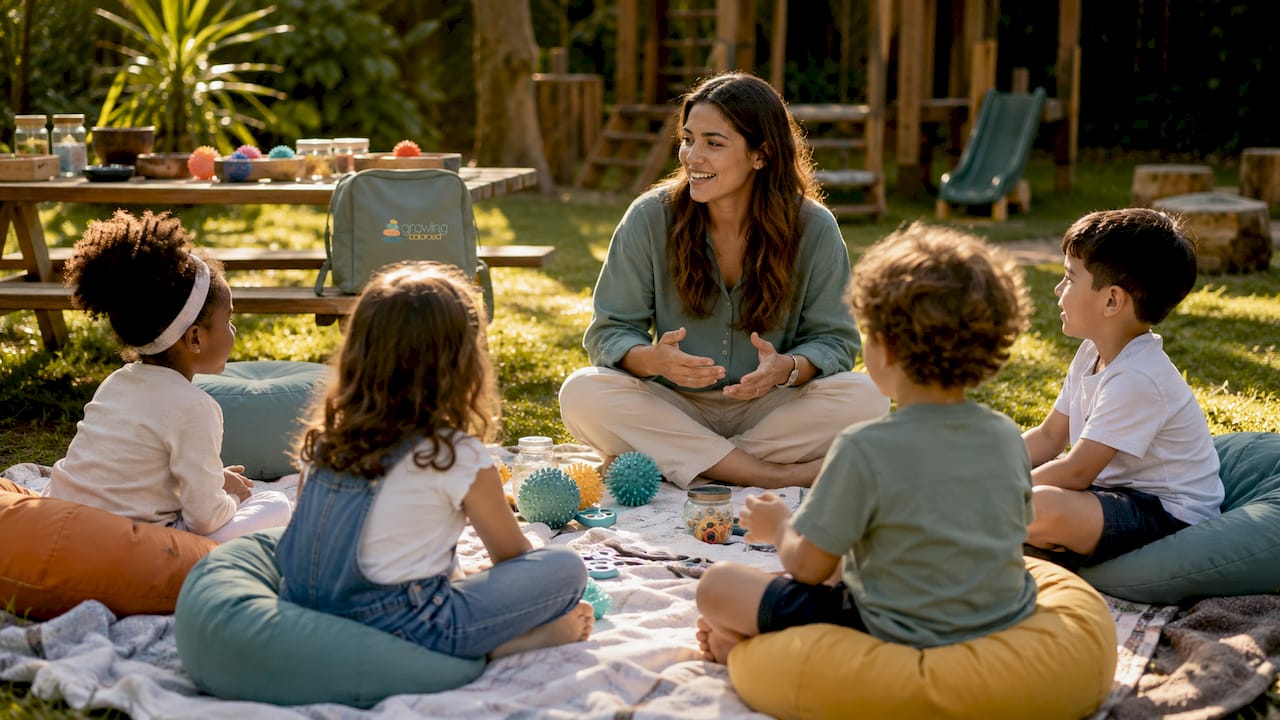
1. Types of sensory accommodations classroom educators use for visual input
Visual overload is one of the most common triggers for classroom distress. Visual clutter and busy patterns cause sensory overload and anxiety, which means a wall covered in bright posters is not decorative. It is a barrier to learning for many children.
Practical visual accommodations include:
- Neutral wall colors such as soft gray, pale blue, or warm white instead of primary colors
- Organized, minimal displays that keep teaching walls clear and rotate materials rather than layering them
- Portable privacy screens or curtains to define individual work zones and reduce visual noise from movement
- Avoiding reflective surfaces including glossy whiteboards and shiny floors that scatter light
- Seating away from windows and high-traffic areas, or with the child’s back to the wall, to reduce peripheral visual distraction
The “prospect and refuge” principle explains why back-to-wall seating reduces overload. Children feel safer when they can see the room without being surrounded by movement on all sides.
Pro Tip: Before buying anything, walk through your classroom at a child’s eye level. You will immediately spot the visual hotspots that adults overlook, such as cluttered shelves at desk height or flickering overhead lights.
2. Auditory accommodations to control noise and improve acoustic comfort
Classroom acoustics significantly affect concentration, and reducing echo and background noise through acoustic design is one of the highest-impact changes a school can make. This matters especially for autistic learners, for whom unpredictable, layered sensory input such as sudden loud noises and buzzing equipment is a core trigger for distress.
Effective auditory accommodations include:
- Acoustic panels and soft furnishings such as rugs, curtains, and upholstered seating to absorb sound
- Noise-canceling headphones or earplugs for students who need personal noise management during independent work
- Turning off unnecessary equipment including fans, projectors, and HVAC units during quiet tasks
- Physically separating noisy and quiet activities so group work does not bleed into reading time
- Giving advance warnings before loud events such as fire drills, assemblies, or transitions with bells
A classroom acoustic audit, which involves identifying frequent noise sources like projectors and fans, should happen before adding individual tools. Removing the source is always more effective than managing the symptom.
3. Flexible seating and furniture choices for movement and regulation
Flexible seating options like wobble cushions, therapy balls, spin seats, and soft furniture help regulate sensory input and support movement needs. This is not about giving children permission to fidget. It is about recognizing that proprioceptive and vestibular input, meaning the body’s sense of position and movement, directly supports the nervous system’s ability to stay regulated.
Furniture options worth considering:
- Wobble cushions placed on standard chairs to allow subtle movement without leaving the seat
- Therapy or stability balls as chair alternatives for children who need more active input
- Stand-up desks or adjustable-height tables for learners who regulate better when standing
- Soft seating zones such as bean bags or floor cushions for independent reading or calm-down time
- Spin seats for children who seek rotational vestibular input
Allowing children to choose their seating location also matters. Learner control over furniture and position leads to better engagement and regulation. Choice is itself a sensory accommodation.
Pro Tip: Introduce flexible seating gradually and teach children how to use each option. A wobble cushion used incorrectly becomes a distraction. A brief five-minute orientation turns it into a regulation tool.
4. Dedicated sensory spaces: quiet rooms vs. sensory rooms
Not all sensory spaces serve the same purpose. Quiet rooms provide low sensory input for children experiencing dysregulation or overload, while sensory rooms offer high stimulation for children who are sensory seeking. Confusing the two leads to mismatched accommodations that do not help and can make things worse.
| Feature | Quiet room | Sensory room |
|---|---|---|
| Primary user | Hypersensitive (sensory avoider) | Hyposensitive (sensory seeker) |
| Lighting | Dim, soft, adjustable | Colored lights, fiber optics |
| Sound | Minimal or white noise | Music, sound effects |
| Equipment | Weighted blankets, soft seating, fidgets | Swings, trampolines, tactile walls |
| Purpose | Calm and reset | Stimulate and regulate |
| Access model | Proactive and voluntary | Scheduled or on request |
Calm-down corners should be part of the environment proactively, not introduced only after a behavioral incident. Reactive-only use creates a punitive association that makes children less likely to use the space when they need it most. Build access into the daily routine so the space feels safe and normal.
5. Sensory tools and scheduled sensory breaks
Handheld sensory tools and structured breaks are among the most practical classroom sensory strategies because they require no renovation and can be introduced immediately. Tools recommended by occupational therapists include fidget spinners, textured chew necklaces, weighted lap pads, compression vests, and noise-muffling earmuffs. You can find a detailed breakdown of these options in Growingbalanced’s guide to sensory tools in classrooms.
Effective sensory break practices include:
- Scheduling breaks proactively rather than waiting for dysregulation to appear
- Keeping breaks brief and structured, typically two to five minutes, to avoid disrupting the lesson flow
- Matching the break activity to the child’s need, such as heavy work like wall push-ups for proprioceptive seekers or quiet breathing for hypersensitive children
- Using visual timers so children know when the break starts and ends without verbal reminders
Structured sensory breaks reduce stress, behavioral escalation, and the risk of school exclusion. That finding from a 2026 Frontiers in Psychiatry case series confirms what occupational therapists have observed for years: prevention through scheduled input is more effective than crisis management after the fact.
Pro Tip: Build a “sensory menu” with three to five approved break options and let the child choose. Self-selection increases buy-in and teaches children to identify their own regulation needs, a skill that transfers well beyond the classroom.
What I’ve learned about sensory accommodations after years in this field
The biggest mistake I see educators and parents make is treating sensory accommodations as a checklist. They add a wobble cushion, hang some acoustic panels, and call it done. What actually transforms a classroom is matching accommodations to individual sensory profiles, specifically whether a child is hypersensitive and avoiding input or hyposensitive and seeking it. Those two children need opposite environments.
Proactive sensory design prevents distress far more reliably than reactive tools. When sensory breaks, flexible seating, and low-stimulation zones are woven into the daily routine rather than pulled out during a meltdown, children stop associating them with failure. They start using them as self-regulation skills.
The most effective classrooms I have seen are built through collaboration between parents, educators, and occupational therapists. No single person has the full picture. Parents know the child’s home triggers. Teachers know the classroom dynamics. Therapists know the sensory science. Bring all three together and you get a plan that actually holds.
— Kelsey
Build sensory routines with Growingbalanced
Sensory accommodations work best when they are embedded in a predictable daily structure, not applied randomly when a child is already overwhelmed.
Growingbalanced is an occupational therapy-inspired platform that helps parents and educators build visual schedules and daily routines that incorporate sensory supports from the start of the day. The platform includes sensory activity suggestions, printable sensory profiles, and co-regulation scripts you can use alongside the classroom accommodations covered in this guide. If you are ready to move from individual tools to a full sensory support plan, explore Growingbalanced’s adaptive tools for special education to find the right fit for your child or classroom.
FAQ
What are the main types of sensory accommodations in classrooms?
The main types are visual adjustments, auditory controls, flexible seating, dedicated sensory spaces such as quiet rooms and sensory rooms, handheld sensory tools, and scheduled sensory breaks. Each targets a different sensory system to support regulation and focus.
How do quiet rooms differ from sensory rooms?
Quiet rooms are low-stimulation spaces designed for hypersensitive children who need to calm down, while sensory rooms provide high stimulation for sensory-seeking children who need more input to regulate. Using the wrong space for the wrong child produces the opposite of the intended effect.
What sensory tools do occupational therapists recommend for classrooms?
Occupational therapists commonly recommend weighted lap pads, fidget tools, compression vests, noise-canceling headphones, and chew necklaces. The right tool depends on whether the child is seeking or avoiding sensory input.
How often should sensory breaks be scheduled?
Sensory breaks are most effective when scheduled proactively throughout the day rather than offered only after dysregulation occurs. Brief two-to-five-minute breaks built into the routine reduce behavioral escalation and exclusion risk according to 2026 research.
Can sensory accommodations benefit all students, not just those with diagnoses?
Yes. Sensory-friendly classroom options such as reduced visual clutter, acoustic panels, and flexible seating improve focus and comfort for all learners. Children without a formal diagnosis still experience sensory variation, and a well-designed environment supports the whole class.
Recommended
- Sensory Tools in Classrooms: What Educators Need to Know · Growing Balanced Blog
- Types of Adaptive Tools for Special Education · Growing Balanced Blog
- How to build a behavior support plan for your classroom · Growing Balanced Blog
- What Is a Sensory-Friendly Activity for Kids? · Growing Balanced Blog