
Heavy Work Activities Therapy: A Parent's Guide
Discover the role of heavy work activities therapy in helping kids with sensory regulation challenges. Learn practical strategies for success!

Heavy Work Activities Therapy: A Parent’s Guide
TL;DR:
- Heavy work activities involving pushing, pulling, and carrying provide proprioceptive input that calms and organizes children with sensory challenges. Implementing these activities before demanding tasks helps regulate their nervous system, improving focus and emotional control. Tailoring activity intensity and timing to your child’s sensory profile enhances their overall regulation and behavior.
Heavy work activities therapy is the use of pushing, pulling, lifting, and carrying movements to deliver deep proprioceptive input that calms and organizes the nervous system in children with sensory regulation challenges. Occupational therapists (OTs) call this approach proprioceptive input therapy, and it sits at the core of Ayres Sensory Integration practice. The role of heavy work activities therapy is not to tire children out. It is to give their nervous system the structured feedback it needs to feel grounded, focused, and ready to engage. Practical examples include carrying books, doing wall push-ups, pushing a grocery cart, and pulling a wagon.
How do heavy work activities support sensory regulation?
Heavy work activities for sensory integration work by stimulating the proprioceptive system, which is the body’s internal sense of muscle tension and joint position. When a child pushes, pulls, or carries something with resistance, their muscles and joints send strong signals to the brain. Those signals help the nervous system organize incoming sensory information more effectively. The result is a calmer, more focused child who can manage emotions and transitions with less friction.

Children who need proprioceptive input often show clear physical cues before they reach a meltdown. Recognizing these cues early gives you a window to intervene with heavy work before behavior escalates.
Common signs your child needs proprioceptive input:
- Crashing into furniture or people repeatedly
- Chewing on clothing, pencils, or nonfood items
- Difficulty sitting still or staying in a chair
- Seeking rough play or tight hugs
- Appearing “zoned out” or disconnected from surroundings
Proprioceptive input cues like crashing and chewing signal that the nervous system is searching for grounding feedback. Brief heavy work doses at those moments help children feel organized and ready. The impact of heavy work activities on therapy outcomes is significant because it addresses the root sensory need rather than managing surface behavior alone.
Pro Tip: Keep a short mental checklist of your child’s top two or three sensory cues. When you spot them, offer a quick heavy work activity before redirecting to a task. You will likely see a faster, calmer response than any verbal prompt alone.
What are the best heavy work activities for children at home?
Heavy work techniques for children do not require special equipment or a clinic visit. Many of the most effective activities fit naturally into daily routines, which makes them easier to sustain. Purposeful, job-like tasks such as carrying groceries, pushing a laundry basket, or digging in the garden provide better proprioceptive input than generic exercise because they engage the child’s attention and give them a sense of contribution.
Here are practical heavy work activities organized by setting:
- At home: Carry bags of groceries from the car, push a full laundry basket down the hallway, help move dining chairs before meals, or do wall push-ups in the kitchen while waiting for food.
- In the yard: Dig in a garden bed, push a wheelbarrow, rake leaves into a pile, or pull a wagon loaded with outdoor toys.
- At school: Carry a stack of books to another classroom, push in chairs after group time, or use a resistance band looped around chair legs for seated foot pushing.
- During play: Tug-of-war with a rope or towel, climbing on playground equipment, or carrying a weighted backpack on a short walk.
Heavy work activities must be developmentally appropriate, safe, and never used as punishment. Avoid activities that strain small joints, such as carrying loads that are too heavy for the child’s size. The goal is calm focus, not physical fatigue.
Pro Tip: Turn a daily chore into a heavy work opportunity. Asking your child to carry the recycling bin to the curb or push the vacuum across the living room gives them purposeful input and builds a sense of responsibility at the same time.
How do you tailor heavy work therapy to your child’s needs?
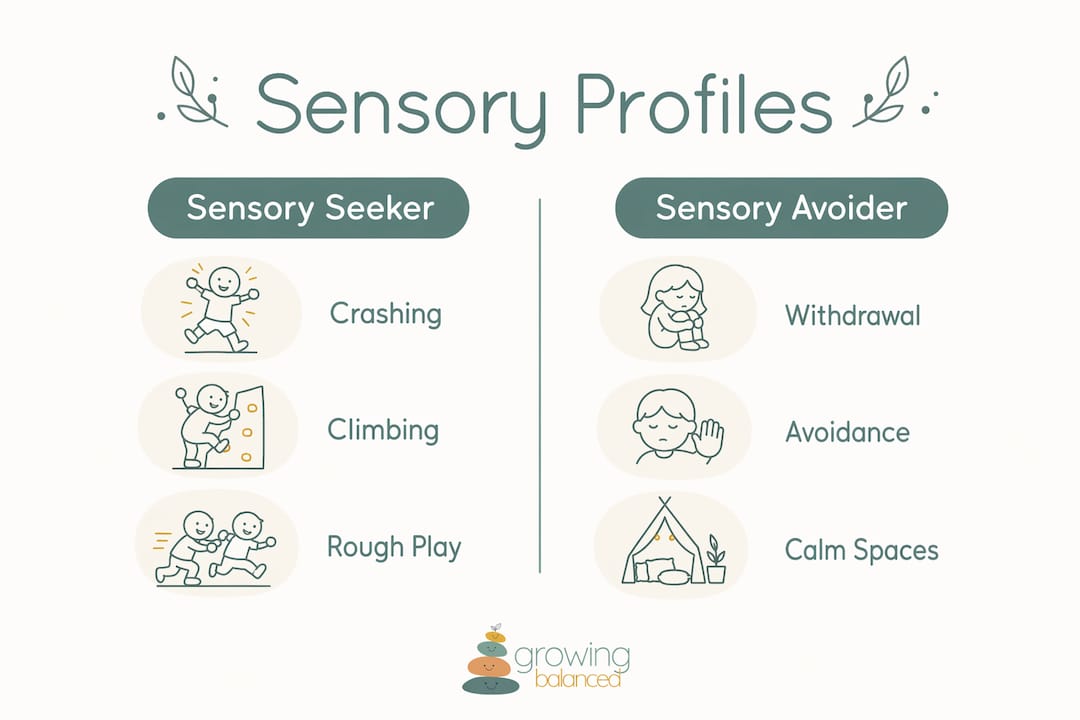
Every child’s sensory profile is different. Some children are sensory seekers who crave intense proprioceptive input constantly. Others are sensory avoiders who find heavy resistance uncomfortable or overwhelming. Understanding where your child falls on that spectrum shapes which activities you choose and how you deliver them.
Key factors to adjust when personalizing heavy work:
- Intensity: Start light and increase resistance gradually based on your child’s response.
- Duration: Short bursts of 5–10 minutes are often more effective than long sessions.
- Environment: Reduce competing sensory input like loud music or bright lights during heavy work to help the child focus on the proprioceptive feedback.
- Timing: Offer heavy work before demanding tasks, not after the child is already dysregulated.
The table below compares sensory seeking and sensory avoiding profiles to help you match activities to your child’s needs.
| Feature | Sensory Seeker | Sensory Avoider |
|---|---|---|
| Typical behavior | Crashing, climbing, rough play | Withdrawing, refusing physical contact |
| Best activity intensity | Moderate to high resistance | Low to moderate resistance |
| Preferred environment | Active, slightly stimulating | Quiet, low sensory input |
| Warning signs | Rarely overwhelmed by input | Distress, crying, shutting down |
| Example activity | Tug-of-war, carrying heavy bags | Wall push-ups, gentle kneading dough |
Overdoing heavy work can cause distress or dizziness, so watch your child’s face and body language throughout. If they seem agitated, flushed, or tearful, stop and reduce intensity at the next session. Heavy work activities occupational therapy specialists recommend building a toolbox of strategies rather than relying on a single activity, because children’s needs shift with their environment and stress levels. You can find a broader framework for this approach in Growingbalanced’s guide to neurodiversity-affirming OT.
When should you schedule heavy work throughout the day?
Timing is the variable most caregivers underestimate. Heavy work is most effective when offered immediately before a sensory or emotional demand, not after the child has already lost regulation. OTs describe this as the “input before demand” principle, and it changes how you structure your child’s day.
Here is a practical daily timing framework:
- Before school: 5–10 minutes of carrying a backpack, doing wall push-ups, or pushing a chair into place helps the child arrive at class ready to learn.
- Before homework: A short heavy work break after school resets the nervous system following hours of sensory demands in the classroom.
- During transitions: Offer a quick activity between settings, such as carrying a bag from the car to the house, to smooth the shift from one environment to another.
- After high-energy play: When a child comes in from recess or a party, heavy work helps them downshift before a quieter activity is expected.
Starting with 2–3 activities and observing your child’s response before adding more is the safest way to build a routine. Track which activities produce the calmest, most focused behavior and repeat those consistently. Consistency matters because the nervous system responds better to predictable sensory input than to random bursts of activity. For guidance on building these strategies into a structured home program, Growingbalanced’s resource on OT recommendations for sensory kids is a strong starting point.
What i’ve learned about heavy work that most articles get wrong
The biggest misconception I see parents carry into heavy work is that it works by wearing kids out. It does not. Effective heavy work provides structured sensory feedback that calms and organizes the nervous system. A tired child and a regulated child look completely different. A regulated child can focus, make decisions, and tolerate frustration. A tired child just shuts down.
The second thing I would push back on is the idea that heavy work is a standalone fix. It works best when it is part of a broader sensory-informed activity plan matched to your child’s full sensory profile. I have seen families do wall push-ups religiously and wonder why nothing changes, only to realize the child also needed adjustments to their sound environment or sleep routine.
The third insight is about caregiver confidence. You do not need a clinic to deliver heavy work. You need observation skills and a willingness to adjust. The parents who see the best outcomes are the ones who treat it like a science experiment: try something, watch the response, refine the approach. That mindset beats any single technique.
— Kelsey
How Growingbalanced helps you put this into practice
If you are ready to move from understanding heavy work to actually building it into your child’s daily life, Growingbalanced was designed for exactly that moment.
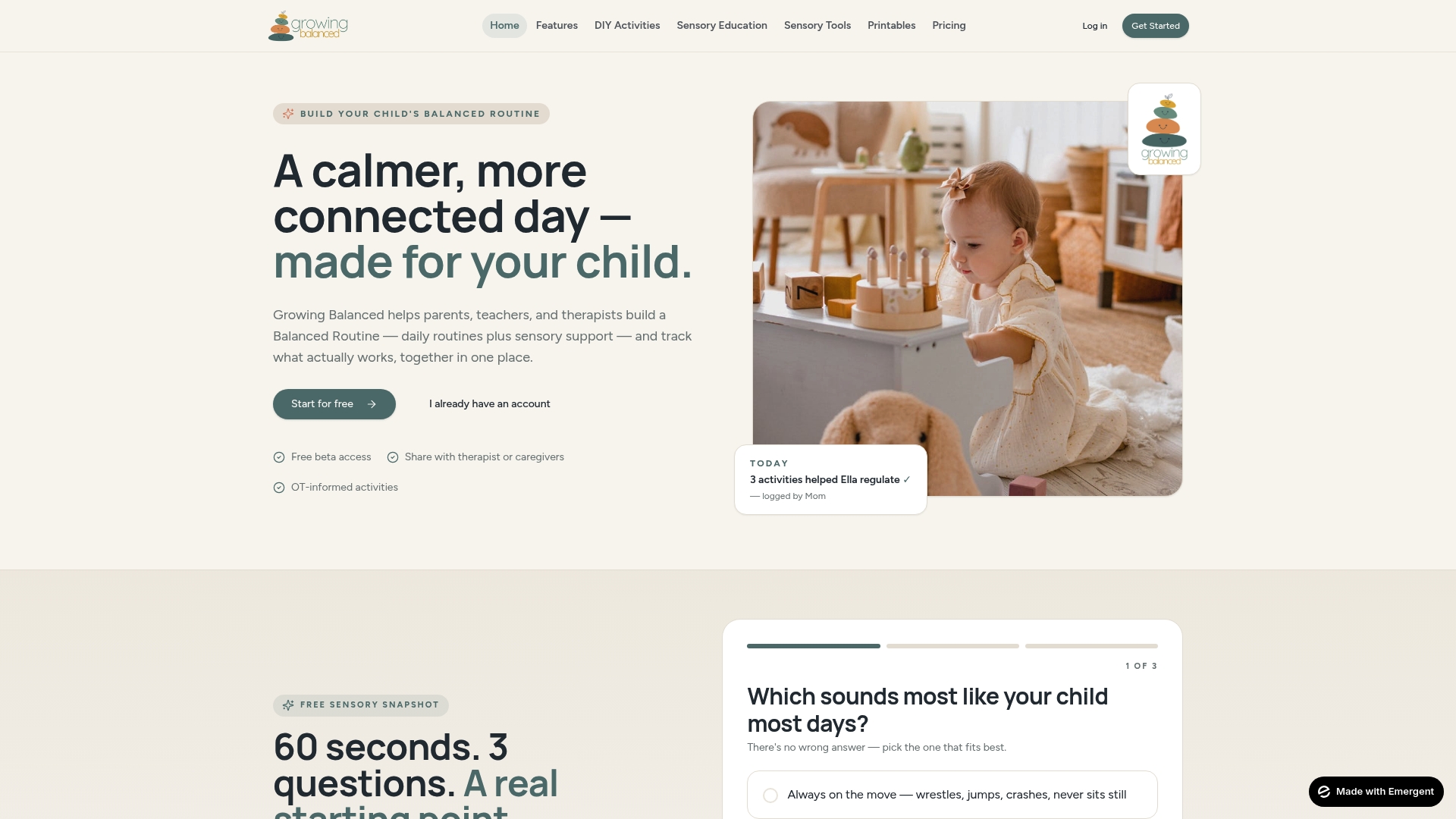
Growingbalanced offers visual scheduling tools, sensory activity libraries, and printable sensory profiles that help you map heavy work into your child’s morning, school, and evening routines. The platform is built on occupational therapy principles and designed for parents, not clinicians. You can create a personalized daily routine plan that includes heavy work timing, tracks your child’s responses, and shares the plan with teachers or therapists. It removes the guesswork and gives your child the consistent, predictable sensory support their nervous system needs.
FAQ
What is heavy work in occupational therapy?
Heavy work in occupational therapy refers to activities that provide proprioceptive input through pushing, pulling, lifting, or carrying. These movements help calm and organize the nervous system in children with sensory regulation challenges.
How does heavy work therapy help with emotional regulation?
Heavy work reduces disruptive behaviors by organizing sensory input, which makes it easier for children to manage emotions and comply with daily demands. The proprioceptive feedback signals the brain to shift into a calmer, more focused state.
How long should a heavy work session last?
Sessions of 5–10 minutes are typically sufficient, especially when timed before a demanding task or transition. Starting with 2–3 activities and observing your child’s response is the safest way to calibrate duration and intensity.
Can heavy work activities be done at home without a therapist?
Yes. Activities like wall push-ups, carrying groceries, and pulling a wagon are safe for home use when matched to the child’s size and sensory tolerance. A pediatric OT can help you build a personalized plan, but many families implement home-based heavy work successfully with basic guidance.
What are signs that heavy work is too intense for my child?
Watch for distress, dizziness, flushing, or tearfulness during or after an activity. These signals mean the input is too much. Reduce resistance or duration at the next session and avoid automatically escalating intensity when a child seems unresponsive to lighter input.
Recommended
- Adaptive Equipment in Pediatric OT: A Parent’s Guide · Growing Balanced Blog
- What Is a Just-Right Challenge in OT: Parent’s Guide · Growing Balanced Blog
- Neurodiversity-affirming OT: a complete parent’s guide · Growing Balanced Blog
- The Role of ABA Therapy in Behavior Support · Growing Balanced Blog