Supporting Your Child's Development Through Play
How everyday play builds your child's biggest developmental skills — no flash cards required.

Inside this free guide
- Why play is the developmental engine for kids 0–6
- Fine motor + gross motor milestones parents actually notice
- How to spot a delay vs. a difference (and when to ask an OT)
- Free play ideas that build focus, coordination, and language
- How to set up play spaces that invite skill-building
- The one thing OTs wish every parent knew about praise
Built for real families.
Ages 0–6
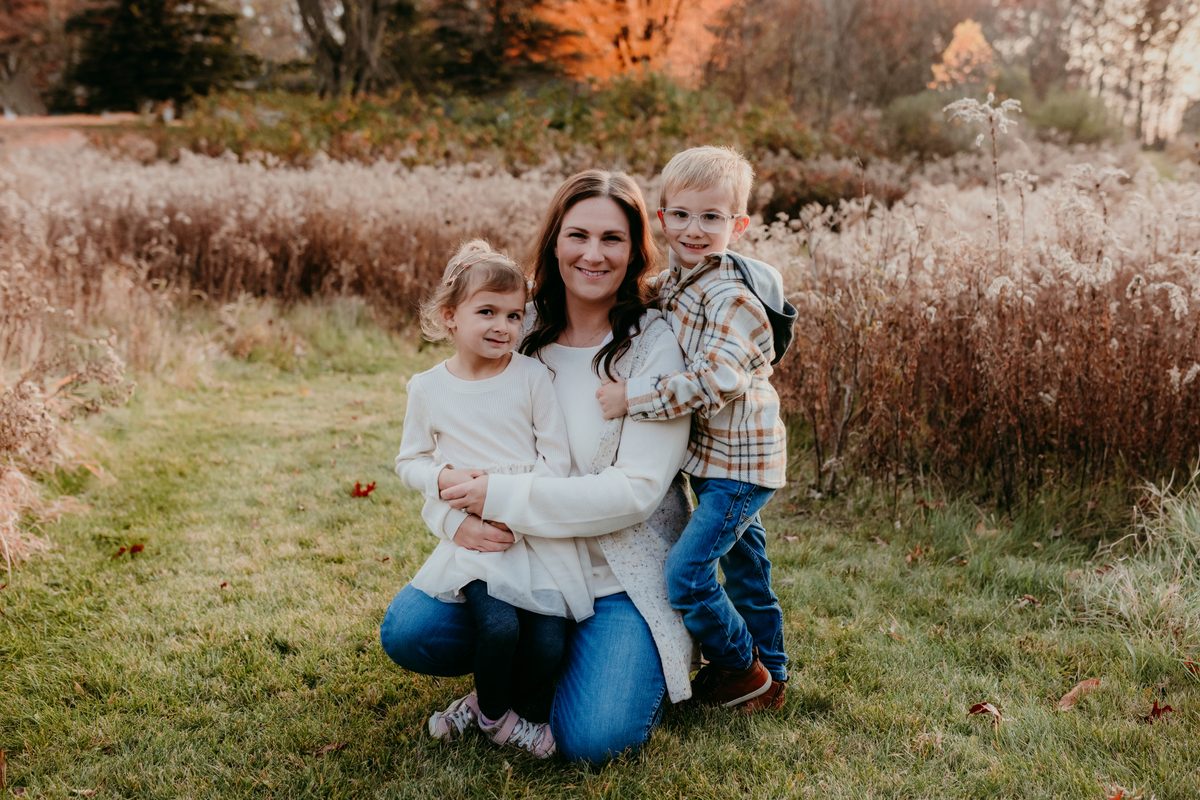
Meet Kelsey
Pediatric Occupational Therapist · Founder, Growing Balanced
I'm Kelsey — a pediatric OT and mom. I built Growing Balanced because so many of the families I worked with kept saying the same thing: "This is helpful, but I need it in a way I can actually use on a Tuesday morning."
So that's what this is. Practical, evidence-informed OT strategies packaged for real parenting — not textbooks, not lectures. My hope is that every guide, every article, and every tool here leaves you feeling a little less overwhelmed, and a little more confident.
Grab your free copy — sent straight to your inbox.
No account required. We'll email you the 7-page PDF plus an occasional note when we publish something new (unsubscribe anytime).
Three ways to go deeper
Everyone starts somewhere. Pick the depth that fits your family right now.
Best for getting started
A quick, parent-friendly intro. Read it in one sitting — try one strategy this week.
Explore related articles
More strategies, examples, and practical tips across the Development & Play hub.
Most comprehensive
The full workbook: printable worksheets, tools, and complete OT strategies for real families.
The guide teaches. The app helps you use it every day.
Build the routines this guide describes into real family life — with visual schedules, sensory activities, co-regulation scripts, and progress tracking, all in one place.
- Development Journey tracker
- Play prompts
- Age-banded activities
- Fine + gross motor library
Keep reading from the Learning Library
Child Development Milestones: A Parent's Reassurance Guide
Developmental milestones are ranges, not deadlines. Most kids hit each one somewhere in a wide window, and every child develops unevenly across skill areas. Track your child against themselves three months ago — not against another kid — and trust your gut if something feels persistently off.
Executive Function Skills by Age: What to Expect
Executive function is the set of brain skills that help kids start tasks, remember, plan, shift, and control impulses. It develops slowly from age 2 to about age 25 — so scaffolding like visuals, checklists, and timers is developmentally appropriate for far longer than most parents think.
Questions parents ask before downloading
Everything you might want to know before entering your email.
Is this really free?
Yes — completely free. Enter your email and we'll send you the PDF.
What ages is this for?
Focused on ages 0–6 (the sweet spot for play-based development), with a few notes on how to extend the ideas for older children.
My child is a little behind milestones. Should I read this?
Yes — the guide includes an OT's view on when a delay warrants a professional look, and when it's a typical variation.
Do I need to buy educational toys?
Not at all. Every activity uses free or household materials.
Will this help children with autism or ADHD?
Yes. The guide is neurodiversity-affirming and every strategy is drawn from pediatric OT practice.
Ready to try one thing this week?
Download the guide. Try one small change. See how it feels.