
DIY Activity
Sensory Bin Basics
6 min read
Tactile
Open-ended
Independent play
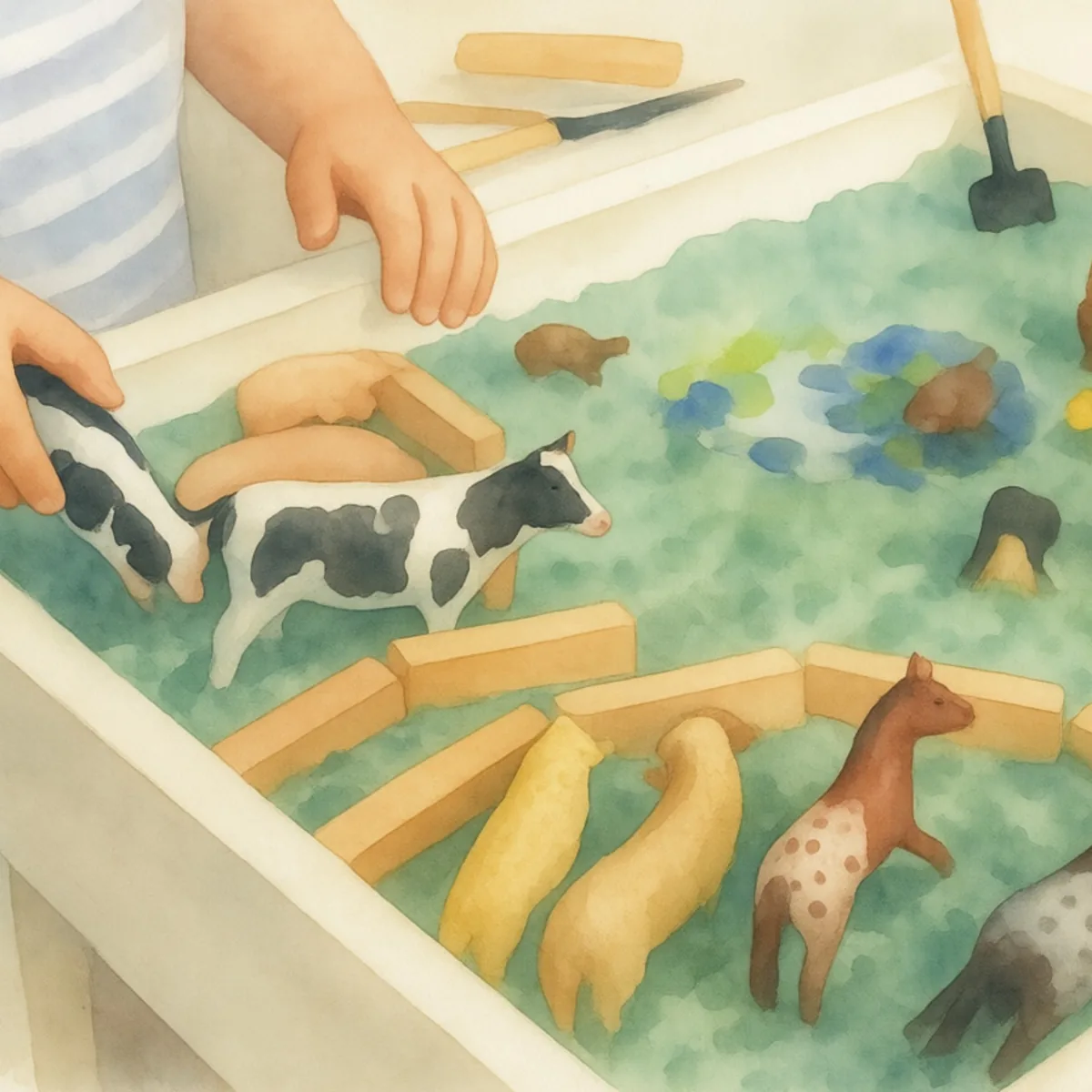
A sensory bin is just a shallow container with a textured filler and a few tools. The magic is in how long kids will stay regulated while they scoop, pour, hide, and dig.
What you'll need
- A shallow bin (a cake pan, baking tray, or under-bed storage box)
- A filler — dry rice, dry beans, oatmeal, kinetic sand, or shredded paper
- A few scoops, cups, and tongs from the kitchen
- Hidden "treasures" — small toys, pom-poms, alphabet letters
How to make it
- Pour 2–3 cups of filler into the bin.
- Hide a few treasures in the filler.
- Add 2–3 tools (cup, spoon, tongs).
- Sit on a sheet for easy cleanup. Set a timer if you want a clear ending.
Tips & variations
- Rotate the filler every week or two to keep it novel.
- Theme it — rainbow rice, ocean blue with shells, pumpkin spice.
- Use the bin as a quiet anchor while you're cooking dinner.
Why it helps
Tactile play activates touch receptors that help calibrate the rest of the nervous system. A 15-minute sensory bin can be more regulating than 15 minutes of screen time — and kids often gravitate toward it on their own.
Safety note
Use larger fillers (beans, pasta) only with kids past the mouthing stage. For toddlers, oatmeal or cooked pasta is safer.
Want personalized routines?
Growing Balanced builds calming, alerting, and focus activities right into your child's daily schedule.
Try it free